World · United States of America
US Supreme Court to review bond hearings for detained immigrants
The justices will consider the Trump administration’s interpretation requiring certain undocumented immigrants to remain detained while deportation cases proceed. Lower federal courts have divided over the policy.
The Supreme Court will review whether certain immigrants may be detained throughout deportation proceedings without bond hearings. The case follows conflicting lower-court rulings and arose from the detention of Ricardo Aparecido Barbosa da Cunha.
- The policy followed administration guidance issued in July 2025.
- Barbosa da Cunha was arrested in Massachusetts in September 2025.
- A court ordered a bond hearing, and he was released.
- Federal appeals courts have divided over mandatory detention.
- The ACLU says millions of noncitizens could be affected.
What's new
- The Supreme Court accepted the detention-policy case for its new term.
- The case arose after Ricardo Aparecido Barbosa da Cunha was denied a bond hearing.
- A lower-court order eventually enabled Barbosa da Cunha to seek release on bond.
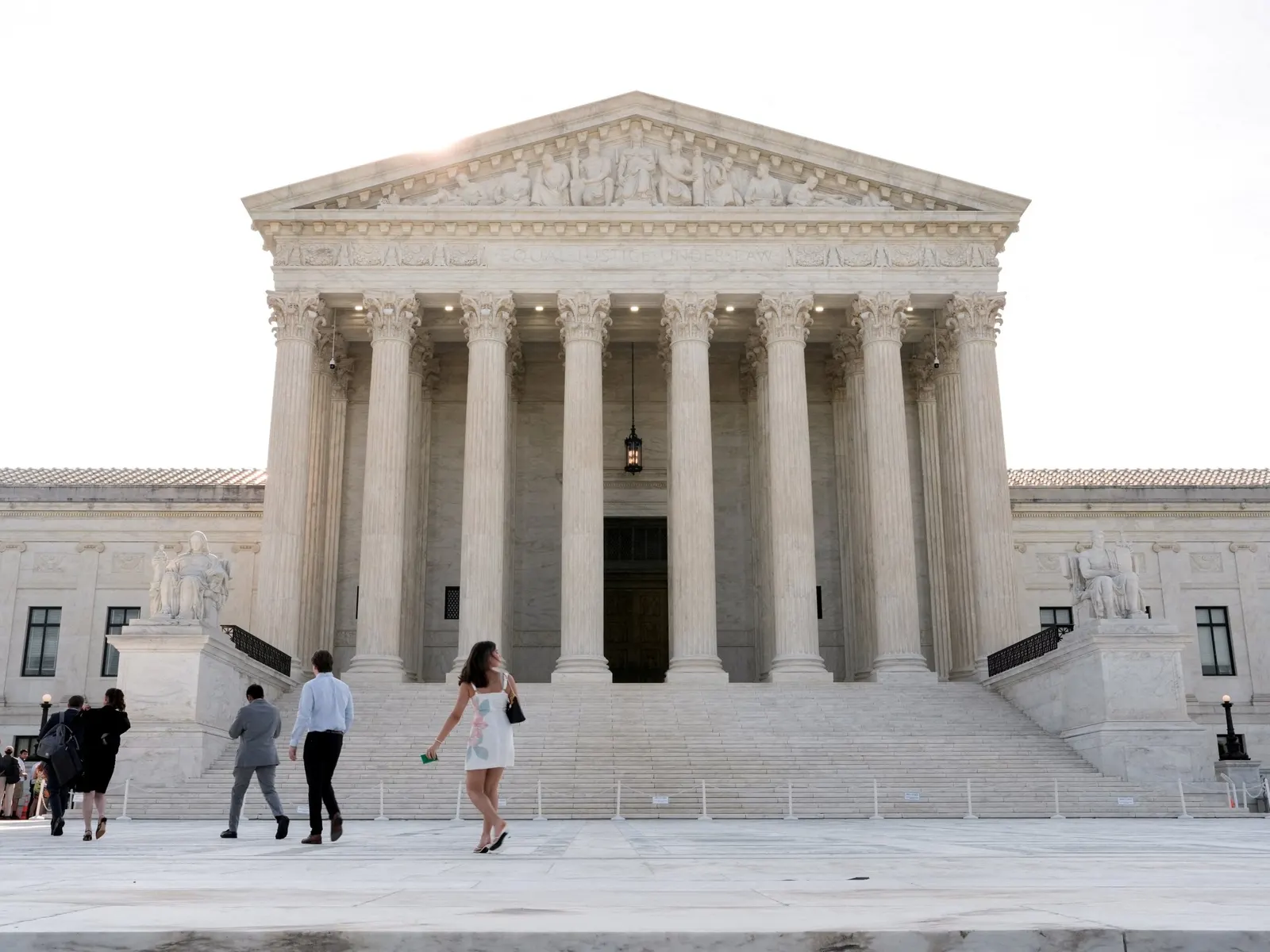
The US Supreme Court said on Oct 1, 2026, that it would review the Trump administration’s policy of detaining certain undocumented immigrants without bond hearings while their deportation proceedings are pending in the United States. The case concerns Brazilian citizen Ricardo Aparecido Barbosa da Cunha, who was arrested in Massachusetts and later released on bond.12
A change in detention policy
The dispute follows guidance introduced by the administration in July 2025. According to Al Jazeera, the guidance directed federal immigration authorities to hold undocumented immigrants covered by the policy for the full duration of deportation proceedings, without giving them a hearing to seek release on bond. The outlet described the measure as a reversal of an interpretation used for decades, under which some immigrants could be released while their cases continued.2
The Guardian reported that the administration reinterpreted the relevant statute to require detention for migrants who entered the country illegally while their legal proceedings remained unresolved. Under the earlier approach described by the newspaper, undocumented immigrants could obtain release on bond if they were not considered a danger to public safety or likely to flee.1
The American Civil Liberties Union, which represents the plaintiffs, said the potential reach of the new interpretation was extensive. Its attorneys said: “Millions of noncitizens could be affected by the government’s new interpretation”. The dossier does not independently confirm how many people would be detained or otherwise affected.2
The case before the justices
Barbosa da Cunha is a Brazilian citizen who, according to The Guardian, had lived in the United States for more than 20 years when immigration officers detained him. The newspaper reported that he owns a home in Massachusetts, operates a small construction business, has a wife and two children born in the United States, and has never faced a criminal charge.1
Immigration and Customs Enforcement officers arrested Barbosa da Cunha while he was driving to work in Massachusetts in September 2025, according to Al Jazeera. The Guardian reported that he was then transferred to an immigration detention centre in Buffalo, New York. He was initially refused a bond hearing but subsequently obtained one and was released on bond.12
According to The Guardian, a district court ordered the government to provide the hearing, and an appeals court upheld that order after the administration challenged it. The case reaching the Supreme Court stems from the ruling involving Barbosa da Cunha in the 2nd US Circuit Court of Appeals.1
Federal courts divided
The administration asked the Supreme Court to resolve disagreement among federal appellate courts about whether the statute makes detention mandatory. Al Jazeera reported that most appeals courts to consider the issue concluded that immigrants could not be held without access to a bond hearing, while the 5th and 8th Circuit Courts found that certain immigrants must remain detained during deportation proceedings.2
According to The Guardian, the administration’s reading was rejected by over 500 district judges and by nine of the 11 federal appeals courts considering similar disputes. According to the newspaper, judges generally concluded that the provision applied only to people apprehended on arrival at a port of entry.1
Trump administration lawyers said differing rulings were interfering with the operation of immigration law. In their description, “The result is an unworkable patchwork of inconsistent immigration enforcement”. Al Jazeera reported that the Supreme Court was expected to hear arguments when its new term began.2
Why it matters
For readers in Europe, the case provides a measure of how the United States’ highest court may define access to release hearings within the country’s immigration detention system. Its reach could be substantial: the ACLU says millions of noncitizens could be affected, although that scale has not been independently confirmed in the dossier.2
Videos
Related stories


Version history
- version 1 ·