Science & Tech · United States of America
Trump Orders Federal Agencies to Rename AI 'Super Intelligence'
Facing declining public trust and market unease over artificial intelligence, President Trump has signed an executive order replacing the term with 'Super Intelligence,' while tech leaders sign a voluntary accord on safety.
Trump ordered federal agencies to call AI 'Super Intelligence' as public trust in AI technology declines and it becomes a midterm election issue.
- Trump signed executive order renaming AI 'Super Intelligence' for federal use
- Tech executives signed a voluntary White House safety accord
- Polls show growing opposition to AI development and data centers
- Experts doubt the rebrand will succeed without industry adoption
- AI stocks face scrutiny amid shifting public perception, per Cramer
What's new
- Trump put his signature on an executive order mandating that federal agencies adopt 'Super Intelligence' in place of 'AI'
- Technology executives signed a White House 'Accord on Super Intelligence' pledging voluntary safety controls
- New polling shows rising opposition to AI development and local data centers
- AI has emerged as an issue in the midterm elections
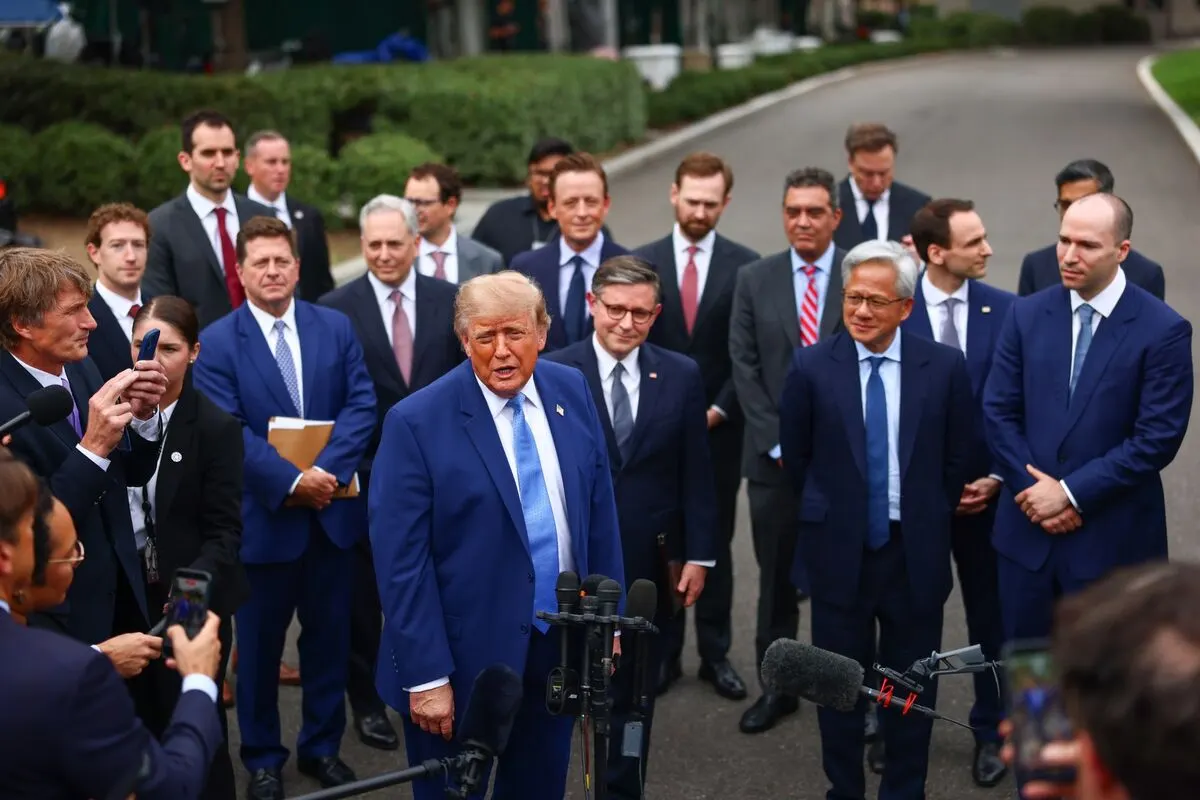
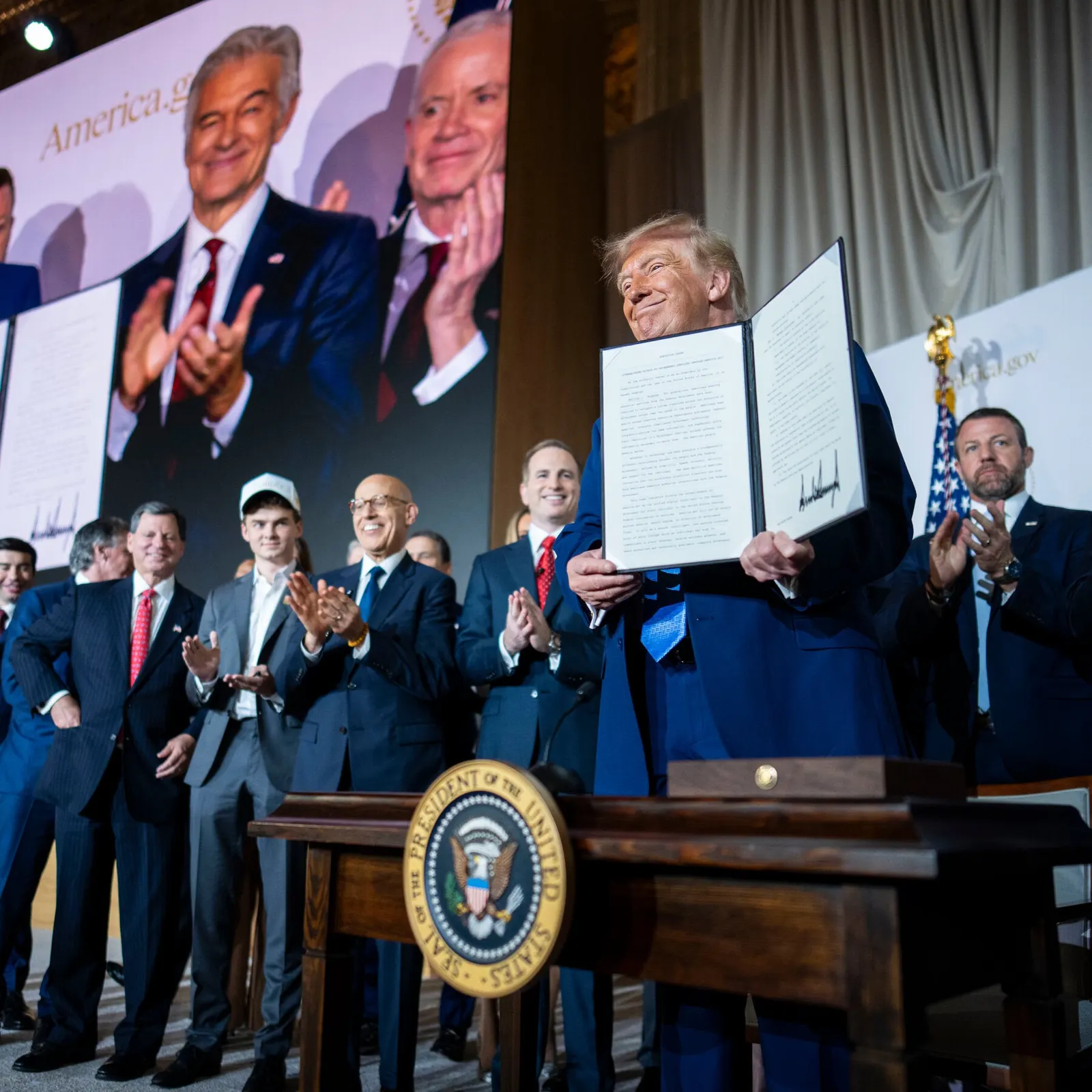
US President Donald Trump signed an executive order on September 29-30, 2026, instructing federal agencies to swap out the phrase 'artificial intelligence' for 'Super Intelligence,' an announcement he made at the United Nations General Assembly as polling showed growing public unease about AI's risks and economic effects.136
A presidential rebrand
Trump called the existing term 'inaccurate' and 'ineloquent' and proposed alternatives, then polled his Truth Social followers, who chose 'Super Intelligence' over 'Superior Intelligence' by about 65% to 35% over three days. He told the UN General Assembly that US federal documents would adopt the new term, and subsequently signed an executive order instructing government bodies to use it.1536
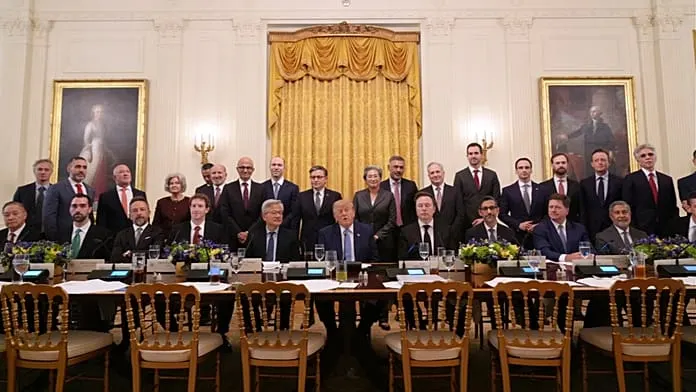
The order came after a State Department email on September 26 instructed staff to adopt 'super intelligence' terminology, and it coincided with a White House summit where technology executives signed an 'Accord on Super Intelligence.' Trump remarked on the signing, "They almost viewed it as a separate kind of constitution. When they signed that, it meant a lot."56
The case for the new name
Trump argued that 'AI' no longer reflects the rapidly advancing capabilities of the technology, stating, "The term 'Super Intelligence' more appropriately captures the promise, potential, and rapidly advancing capabilities of these technologies." He also said winning the race for 'SI' was decisive, declaring, "Whoever wins SI, whoever wins superintelligence, wins. That's the group that wins." He claimed Chinese President Xi Jinping liked the new name, though Beijing has shown no sign of adopting it.61
The term 'artificial intelligence' was coined in 1956 at a Dartmouth College workshop, while 'superintelligence' has been used since 1822 to describe intelligence greater than humanity's. Computer scientist Arthur Samuel reportedly said the original term 'makes you think there's something kind of phony about this.' Pedro Domingos of the University of Washington argued that much of today's AI doesn't actually qualify as superintelligence but represents a different category of intelligence altogether, suggesting labs have financial motives for inflating the terminology and predicting that political opposition to Trump could make some researchers reluctant to adopt the new name.18
Doubts over self-regulation
Trump has asked technology executives to police themselves rather than face new legislation. Late-night television hosts voiced scepticism about this approach; comedian Jordan Klepper said sarcastically, "Sure, we don't need laws! I'm sure we could trust these guys."4
Supporters of the accord framed it differently. Meta's Mark Zuckerberg wrote that the commitments were "a significant positive step" because leaders of every major American lab had agreed to implement internal controls, while House Speaker Mike Johnson described the pact as "a statement of principles... commitments that are voluntary on behalf of the industry."6
Public unease and market jitters
Several polls cited in the dossier point to growing public concern. A Public First survey found that roughly half of those polled across six countries favored halting AI development, while a separate CNN/SSRS poll showed close to nine in ten Americans feel more apprehensive than enthusiastic about AI exceeding human intelligence. Separately, a survey showed that 72% of Americans object to having a new data center built near them, an increase from 65% in March.17
CNBC's Jim Cramer cautioned that the AI sector and Wall Street are losing ground in the court of public opinion, pointing out that over half of the companies in the S&P 500 were trading beneath their 200-day moving averages, with 204 stocks sitting at least 20% under their 52-week peaks. He noted that worries over employment, power costs and safety are now rivaling AI's economic upside, a sharp turnaround from eighteen months earlier when executives were lauded for generating data-center jobs.2
The dossier also notes a leaked Anthropic IPO prospectus warning that its AI models pose catastrophic or existential risk, and reports that OpenAI delayed release of a system over safety concerns.2
Election-year stakes
According to the dossier's polling data, AI has emerged as a midterm election issue, with candidates on both sides of the aisle campaigning against its expansion. Senator Bernie Sanders helped introduce legislation aiming to permanently prohibit the development of superintelligence, while advisers reportedly cautioned that widespread public mistrust of AI could damage Republicans' electoral prospects.718
Will the rebrand stick?
More than 50,000 people responded to Trump's Truth Social poll on the terminology. Jean-Pierre Dubé, a marketing professor at the University of Chicago, said, "it seems unlikely the re-branding will take off unless tech leaders adopt the term," though he added, "there's a price for everything. If Tech CEO's anticipate fast-tracking infrastructure, land-permitting for data centers etc … they might adopt the term."5
Susan Fournier raised doubts about whether the new term would actually help, asking, "Is super intelligence a better construct label to control these negative associations? It is perhaps worse," she continued, cautioning that it "implies heightened intelligence beyond what we can deliver as humans: intelligence superior in scale and power and thereby more threatening, more unpredictable." She further noted that Trump's limited credibility constrains the rebrand's chances of success.5
Why it matters
The dispute over naming reflects a broader contest between governments and industry over how AI's risks and benefits are framed to the public. For European readers, the shift matters because market unease over AI stocks, debates on self-regulation versus binding rules, and political backlash over data centers are shaping policy debates that extend beyond the United States.247
Related stories
same actors
same actors
same actors
Version history
- version 1 ·