Climate · Türkiye, Australia
COP31 opens in Antalya with shared leadership and unresolved finance disputes
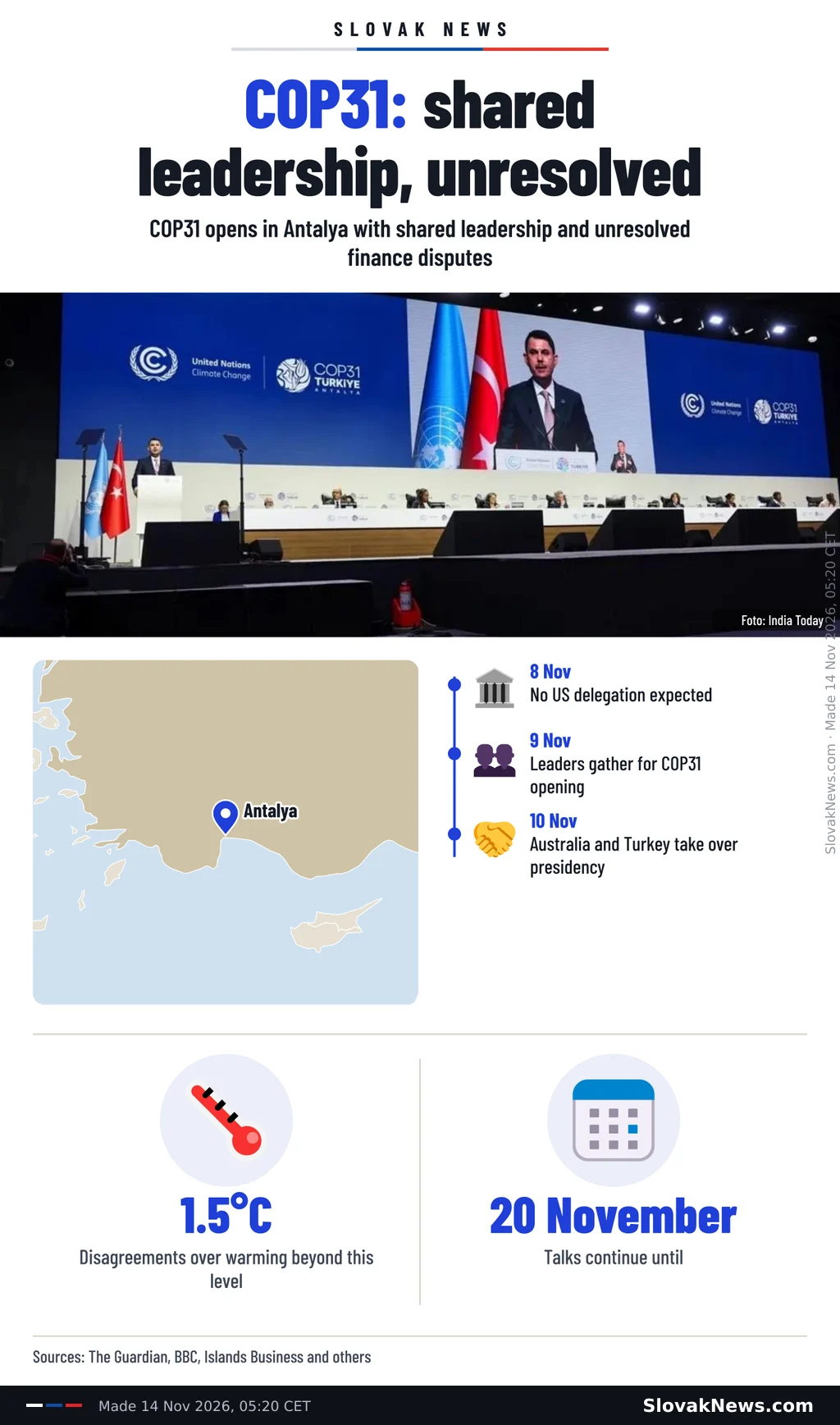
Australia directs negotiations while Turkey oversees the action agenda under a hosting compromise reported by the Guardian. Opening discussions left disagreements over adaptation funding and warming beyond 1.5°C unresolved, according to India Today.
Listen to the story
Short version
COP31 has opened in Antalya under a shared Australian-Turkish leadership arrangement. India Today reports unresolved disagreements over adaptation funding and warming beyond 1.5°C.
- The Guardian says Australia directs negotiations and Turkey controls the action agenda.
- India Today reports climate-finance discussions secured a place on the agenda.
- Islands Business says talks continue until 20 November.
- The BBC reports Berkeley Earth expects a new annual temperature record.
Infographic
What's new
- Australia and Turkey assumed the summit presidency, India Today reported.
- Negotiators added the Climate Finance Work Programme after overnight discussions, according to India Today.
- Berkeley Earth forecasts a 95% probability that 2026 will break the annual temperature record, the BBC reported.
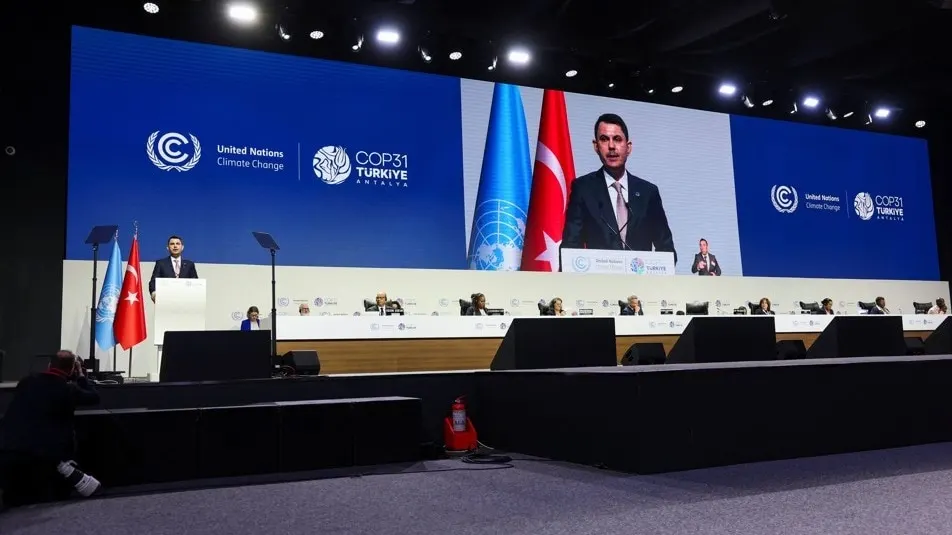
World leaders and negotiators gathered in Antalya, Turkey, on 9 November for COP31 climate talks, with Australia directing negotiations under a hosting compromise reported by the Guardian. The conference runs until 20 November and brings together 198 parties, including 14 Pacific countries, according to Islands Business.123
Infographic
Responsibilities divided
The arrangement places Australian climate and energy minister Chris Bowen in charge of the daily negotiations, while Turkey’s government controls the summit’s action agenda, according to the Guardian. The newspaper reported that UN climate chief Simon Stiell would oversee the talks and act as a link between the two hosts.1
Australia and Turkey formally assumed the presidency from Brazil at the opening, India Today reported. Its account described an opening day that ended without resolving disagreements over finance for adaptation or the threat of warming exceeding the Paris Agreement’s 1.5°C threshold.4
Finance on the agenda
The Climate Finance Work Programme was added to the conference agenda following overnight discussions, with the Africa Group securing its inclusion, according to India Today. The outlet also reported calls from Pacific representatives for faster emissions cuts, a shift to renewable energy and more climate funding.4
The BBC reported that wealthier countries had agreed to increase climate finance for developing nations threefold, to at least $85bn by 2035. Countries had reached roughly one-third of that figure as of 2024, it said. The UN says damage from climate change is already substantial and funding needs could be much greater.2
Funding commitments also face pressure from other spending priorities. According to the BBC, many governments have redirected aid towards defence and short-term financial support for households. The UK government has faced criticism over aid cuts and its inability to meet earlier climate-funding commitments.2
Temperature forecasts frame talks
Berkeley Earth estimates a 95% chance that 2026 will exceed the temperature record set in 2024, the BBC reported. Its account attributes the expected record to climate change and El Niño. The World Meteorological Organization offers a broader forecast, placing 2026 among the four warmest years recorded.2
The WMO also expects an unusually strong El Niño to persist into 2027 and raise temperatures further, according to the BBC. Islands Business reported that average temperatures over the first nine months of 2026 were approximately 1.47°C above pre-industrial levels.23
Against that background, the High Ambition Coalition called for deeper emissions reductions and measures to limit warming beyond the temperature threshold, India Today reported. Nepal sought greater attention to climate risks facing mountain communities. German climate minister Heike Henn said: “We need to listen to the science”.4
Why it matters
The BBC reports that rising heat has recently brought extensive wildfires across Europe. For European governments, the talks also concern climate-funding commitments at a time when, according to the broadcaster, many countries have shifted aid towards defence and immediate household support.2
Videos
Related stories

Version history
- version 1 ·