Climate · United Kingdom
UK names Madeleine Alessandri as special representative for climate security
The appointment links Britain’s climate diplomacy with security preparedness. It comes alongside criticism of the government’s fossil-fuel decisions.
Britain has appointed Madeleine Alessandri to a dedicated climate-security role, announced at COP31.
- Alessandri will focus on climate threats, resilience and preparedness.
- The Guardian describes the position as a world first.
- Britain retains its 2050 net-zero commitment.
- Greenpeace welcomed the appointment but criticised North Sea gas drilling.
What's new
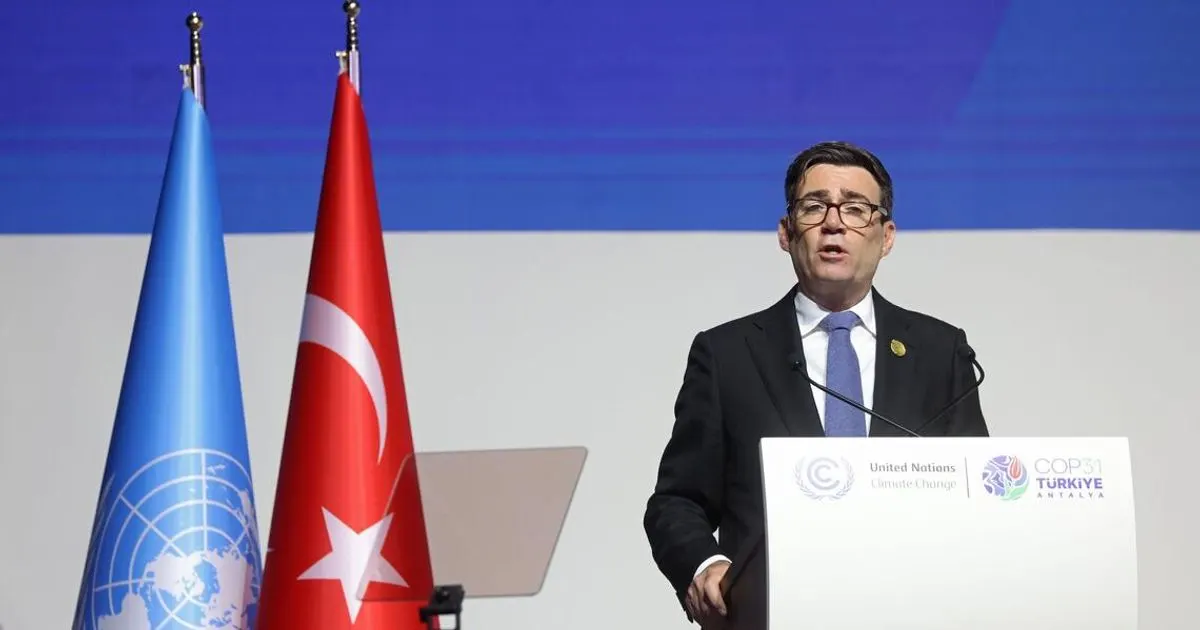
- Andy Burnham announced the appointment at COP31 in Antalya, The Straits Times reported on Nov 12.
- Madeleine Alessandri will work with government and international partners on climate threats and preparedness.
- Britain will support a proposed goal of 35% electrification by 2035.
Britain has appointed Madeleine Alessandri as its special representative for climate security, with Prime Minister Andy Burnham announcing the role at the UN’s COP31 summit in Antalya, Turkey, according to The Straits Times on Nov 12, 2026. The Guardian reported the appointment on Nov 11, describing it as the first such position worldwide.12
A role focused on preparedness
Alessandri, identified by The Straits Times as the former head of Britain’s Joint Intelligence Committee, said she would work across government and with international partners to improve understanding of climate threats, strengthen resilience and prepare for future challenges. The Guardian reported that she had already begun work.12
“Climate is a national security issue,” Burnham said. Cosima Cassel, an expert at the climate thinktank E3G, distinguished the appointment from existing climate envoy positions: while those roles can include security responsibilities, she said this was the first envoy dedicated specifically to climate security.2
The appointment follows warnings about risks reaching Britain from environmental damage abroad. According to The Guardian, a report produced with the Joint Intelligence Committee warned that ecosystem collapse overseas could have consequences for UK national security within five years, including food shortages, higher food prices, mass migration and conflict involving nuclear-armed countries.1
The Guardian also reported that the report had been suppressed under former prime minister Keir Starmer before being revealed and partly published. Alessandri’s emphasis was on prevention: “The best time to address these risks is before they develop into crises,” she said.1
Heat, energy and finance
Both newspapers reported that Britain had experienced its hottest summer on record. The Straits Times said western Europe had also registered a record summer, with heatwaves and wildfires, and reported tens of thousands of excess deaths across the continent associated with the heat.12
According to The Guardian, Britain is maintaining its 2050 net-zero commitment and backing a proposal for electrification to reach 35% by 2035. It also described plans to mobilise £5bn in private investment for clean-energy projects internationally.1
Those announcements sit alongside criticism of the government’s energy policy. The Guardian reported that Britain had approved the Jackdaw gasfield and was considering the Rosebank oilfield. Mohamed Adow, director of Power Shift Africa, accused Britain of applying different standards to clean development abroad and fossil-fuel expansion at home.1
Greenpeace welcomed the climate-security appointment but criticised Burnham’s authorisation of North Sea gas drilling, according to The Straits Times. The Guardian also reported reductions in British climate finance as resources were redirected towards military spending. The COP31 negotiations are scheduled to finish on Nov 20, The Straits Times reported.12
Why it matters
For European readers, the appointment connects climate policy with questions of security and preparedness. The Straits Times reported record summer heat in Britain and western Europe, alongside tens of thousands of heat-related excess deaths across the continent.2
Related stories


same actors

Version history
- version 1 ·