COP31 ends without agreement on Antalya pact
The EU, UK and developing countries rejected the proposed main outcome. Murat Kurum acknowledged that consensus had failed, although decisions on related matters passed.
Listen to the story
Short version
COP31 ended without agreement on the Antalya pact after the EU and other countries rejected it. Related decisions passed despite the failure to agree on the main outcome.
- Kurum confirmed that the proposed main outcome lacked consensus and was not adopted.
- The EU, UK and many developing countries rejected the pact.
- The text omitted explicit fossil-fuel language and retained carbon-capture provisions.
- Decisions on related matters, including a just transition, passed.
What's new
- The Antalya pact was not adopted after COP31 talks ran beyond their scheduled Friday finish.
- The European Union, United Kingdom and many developing countries rejected the proposed main outcome, The Guardian reported.
- Decisions on related matters, including a just transition, passed despite the breakdown over the pact.
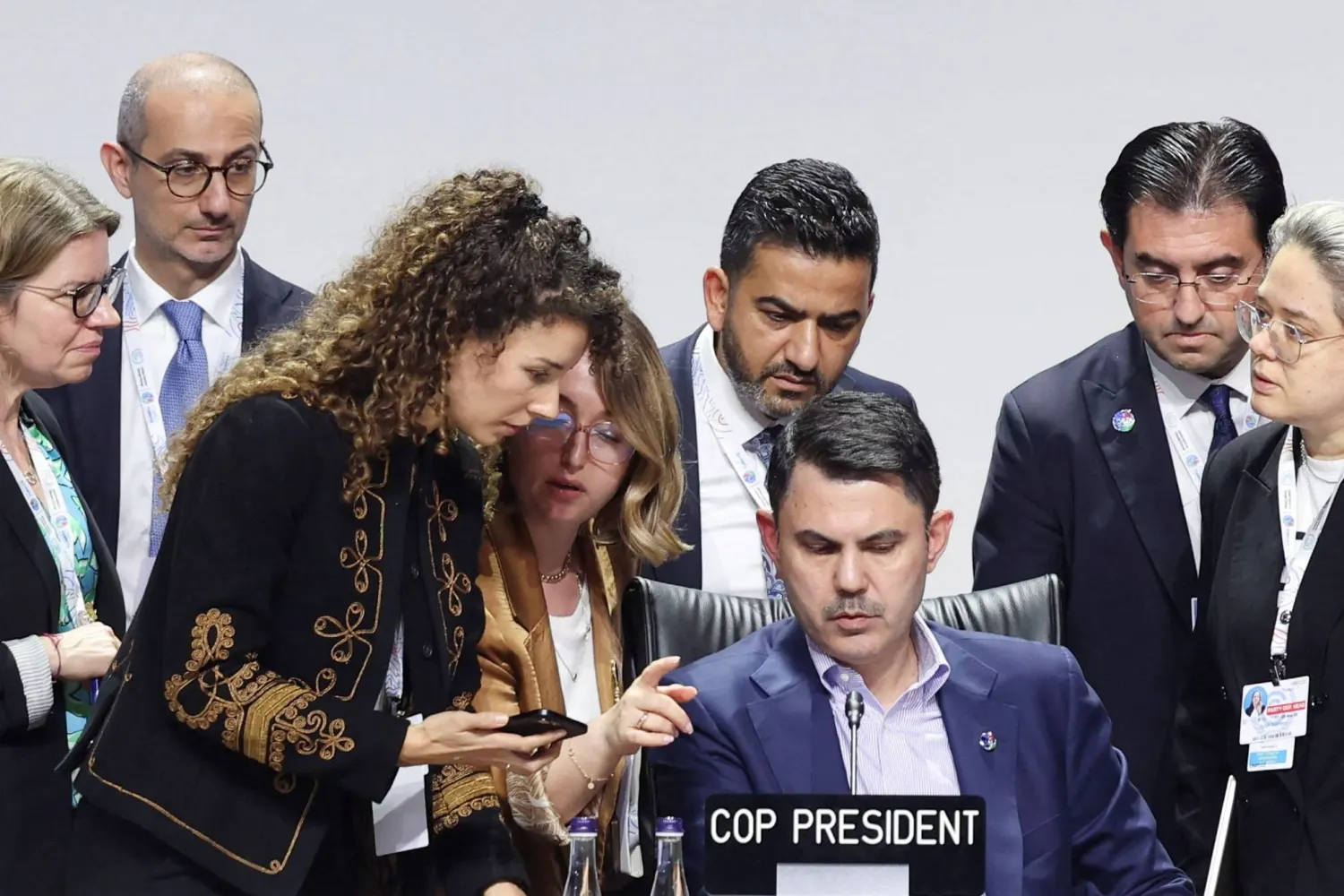
COP31 talks in Antalya, Turkey, ended without agreement on their proposed main outcome after the European Union, United Kingdom and many developing countries rejected the Antalya pact. Turkey's COP president Murat Kurum acknowledged that the document lacked consensus and had not been adopted. Decisions on related matters, including a just transition, nevertheless passed, The Guardian reported.25
A package for approval
The proposed Antalya pact failed to secure consensus after talks extended beyond their scheduled Friday conclusion. The Guardian reported that the European Union, United Kingdom and many developing countries rejected the proposed main outcome. At the closing plenary, Kurum acknowledged that the document had not been adopted.25
Turkey and Australia's joint presidencies drafted the pact following negotiations involving close to 200 countries. Earlier, Kurum had said the revised package addressed concerns about fossil fuels and financial support for developing countries' adaptation, and could win agreement from all parties.234
Australia's task was to reconcile the needs of countries vulnerable to climate change with the interests of economies that produce or consume fossil fuels. Turkey supported that effort. The two countries jointly presided over the talks, which brought close to 200 countries together for two weeks.234
Fossil fuels and funding
According to The Straits Times, nations disagreed on the timetable for adopting cleaner energy, the use of technology to capture carbon and aid for developing countries.3
The proposed pact did not explicitly mention fossil fuels or endorse a transition away from them, The Guardian reported, despite demands for a transition from more than 130 countries. According to Middle East Eye, the newest version cited past decisions such as the Dubai agreement but did not directly mention fossil fuels.25
The Guardian reported that the proposed pact called for rich countries to provide financial support for poorer countries' adaptation to climate impacts. Earlier, the BBC reported that the draft specified no adaptation-finance amount and deferred that decision to future meetings.12
Representing the European Union, Irish Environment Minister Darragh O’Brien said the bloc would reject any main outcome that left out fossil fuels. The proposed pact retained controversial provisions on carbon capture and storage, which Saudi Arabia defended, The Guardian reported.2
Middle East Eye reported that the Marshall Islands, Panama, Norway and Vanuatu formally objected to the pact. Panama said the text failed to address its demands, while the Marshall Islands warned that it threatened vulnerable island nations' security. The Guardian reported that the Africa Group, China and Pakistan did not object, despite reservations among some participants.25
The warming threshold
The 2026 conference is the first since the UN environmental body confirmed that warming was set to exceed 1.5 degrees Celsius, a threshold beyond which extreme weather impacts intensify. The Guardian reported that the proposed pact called on countries to minimize the overshoot of that threshold.234
The failure to adopt the Antalya pact did not prevent all decisions at the summit. The Guardian reported that the presidencies passed decisions on related matters, including a just transition.2
Why it matters
The breakdown leaves COP31 without an agreed main outcome on climate action and financial support. The EU rejected a pact that omitted explicit fossil-fuel language, while the proposed text addressed an overshoot of the 1.5C warming threshold, beyond which extreme weather impacts intensify.234
Videos
Related stories
Version history
- version 3 · The update replaces pending approval with the Antalya pact's rejection and non-adoption, explains the objections, and distinguishes the failed main outcome from related decisions that passed.
- version 2 · The update leads with uncertainty over an agreement as talks near a close, adds the reported disputes over clean energy and carbon capture, and records Kurum's account of compromise.
- version 1 ·