World · Ethiopia
Ethiopian forces retake Mekelle as ally claims wider Tigray control
Federal troops are patrolling Tigray’s capital after the TPLF withdrew. A government-aligned force’s broader claim of near-total regional control remains unverified.
Listen to the story
Short version
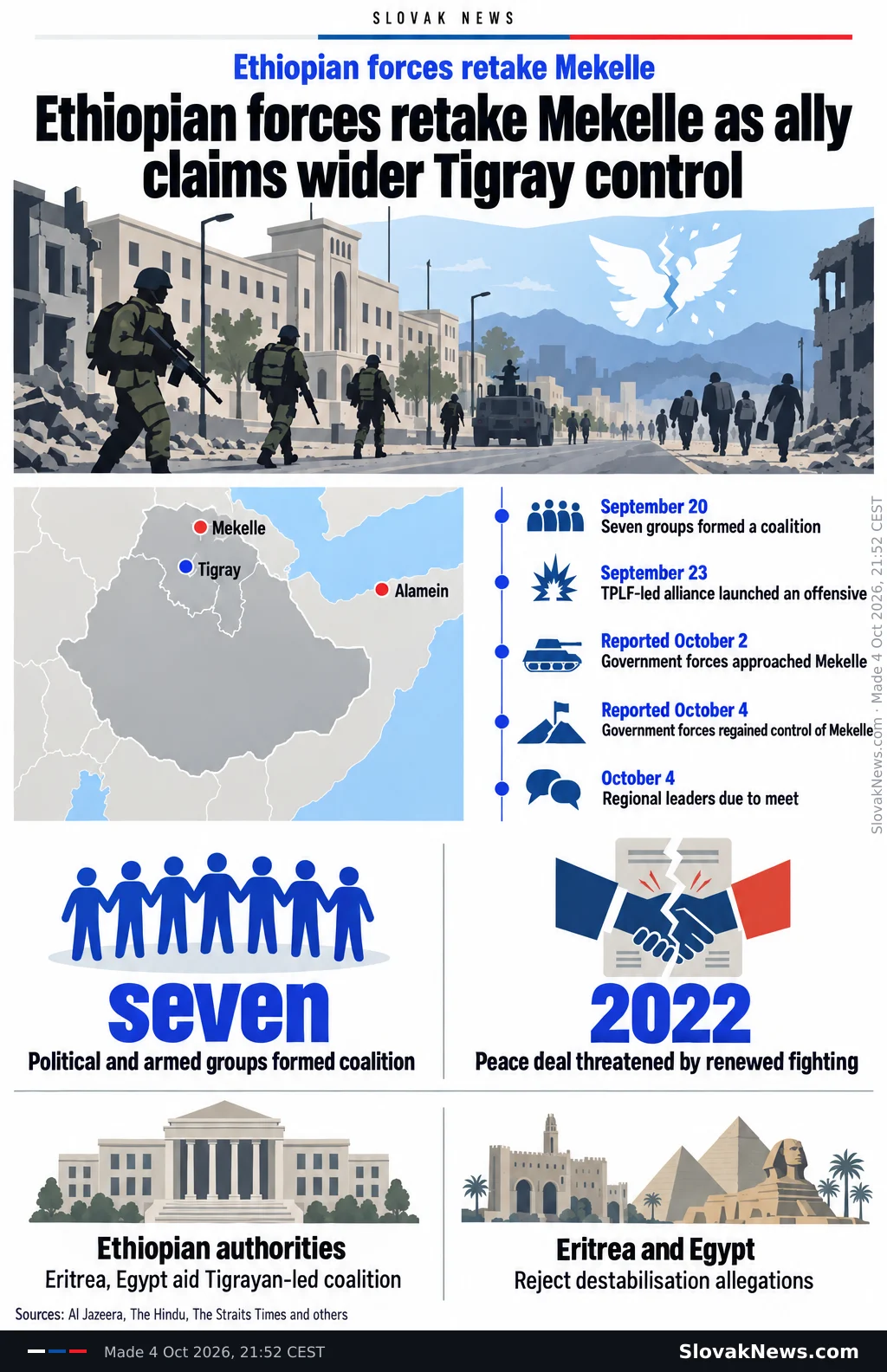
Federal forces and allied militias control Mekelle after the TPLF withdrew. Wider claims of near-total control over Tigray remain unverified as regional leaders discuss escalation risks.
- Federal troops are patrolling Mekelle and guarding important institutions.
- The TPLF moved Tigray’s regional administration outside the capital.
- A government ally’s near-total control claim remains unverified.
- The African Union says renewed fighting threatens the 2022 peace deal.
- Regional leaders were due to meet in Egypt.
Infographic
What's new
- Federal forces and allied militias have regained Mekelle.
- The Tigray regional government says it will operate outside the capital.
- A government-aligned group claims control of almost all Tigray, without independent verification.
- Regional leaders were due to discuss the conflict in Egypt on October 4.
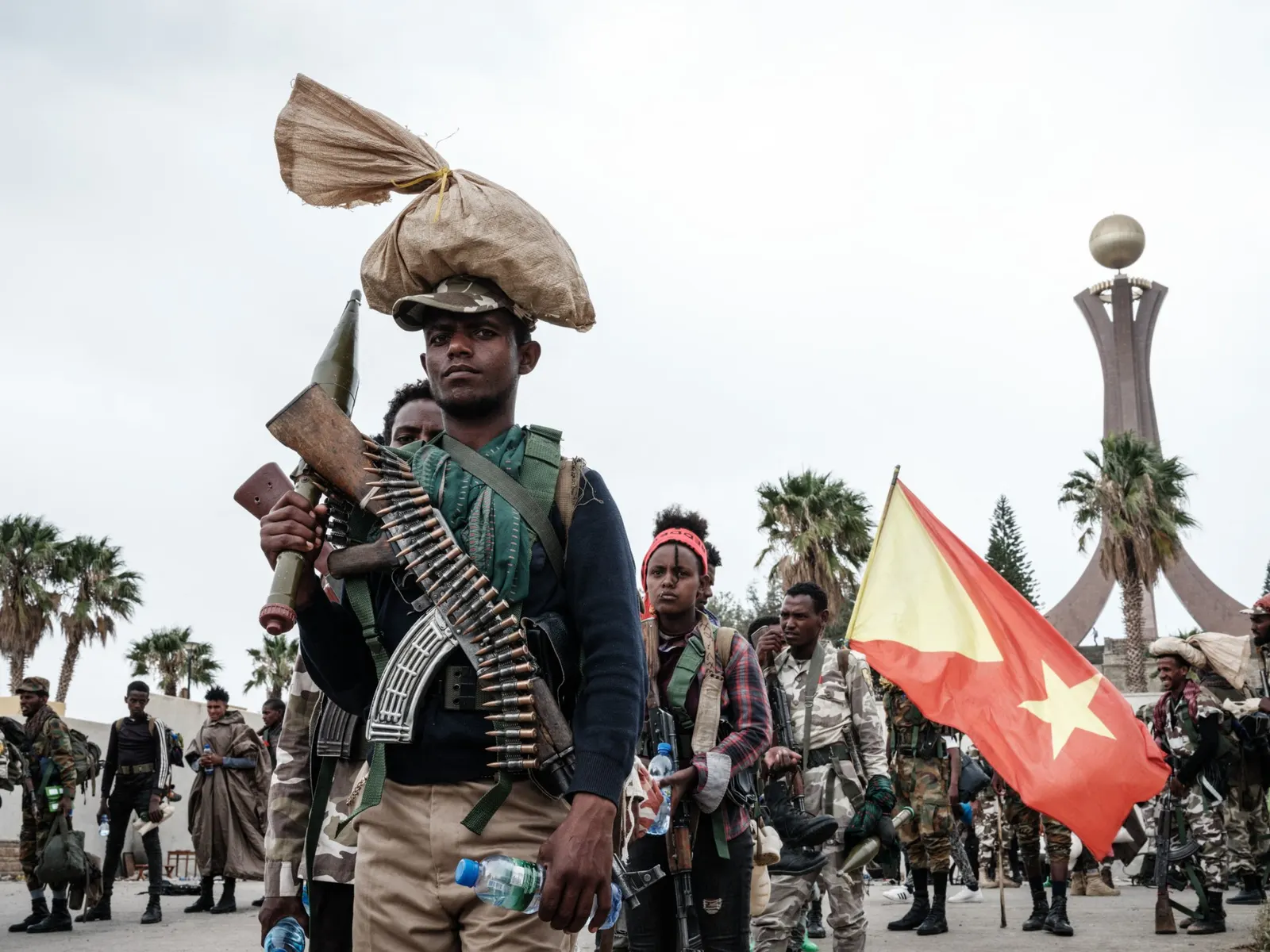
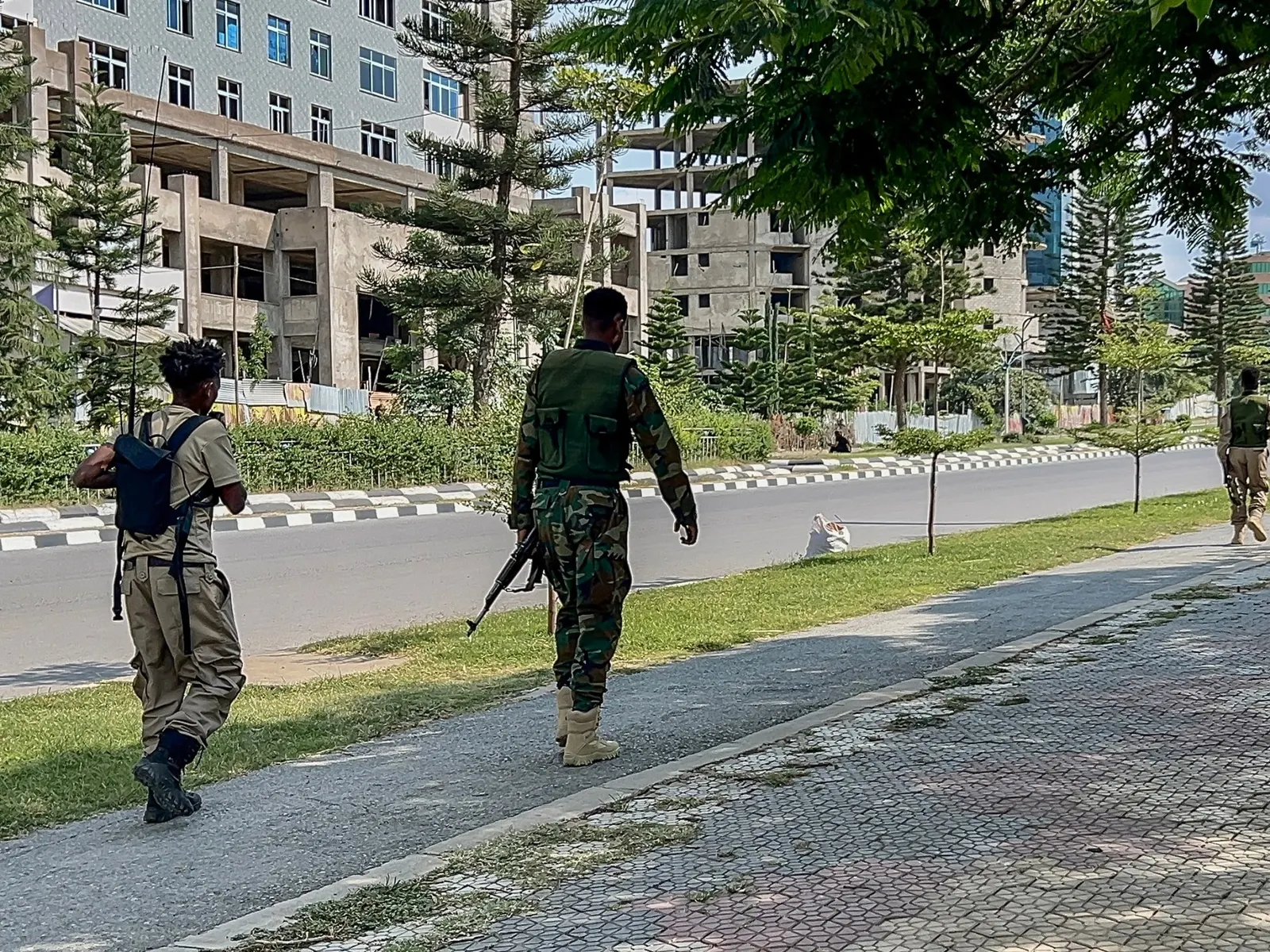
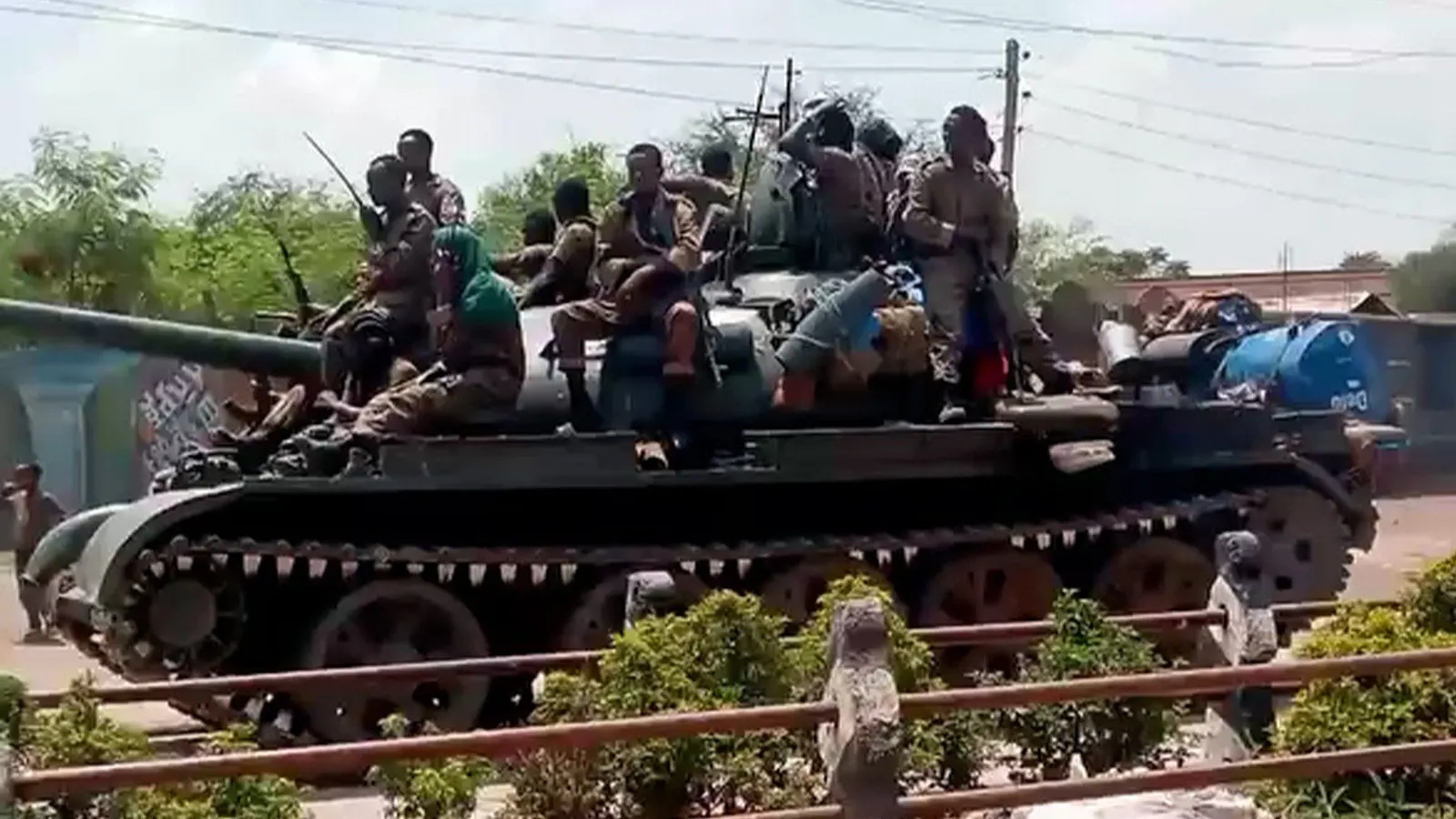
Ethiopian federal forces and allied militias had regained control of Mekelle, the capital of the northern Tigray region, by October 4 after fighters from the government-aligned Tigray Peace Forces entered its centre and the military followed. Federal troops were patrolling the city and guarding important institutions on Sunday, while the Tigray People’s Liberation Front said it had withdrawn and would move the regional administration elsewhere.234
Infographic
Control of the capital
The Hindu reported that Ethiopian forces entered Mekelle without encountering resistance after TPLF leaders and fighters left. A humanitarian source and a city resident separately confirmed government control to The Straits Times. Communications were being restored as federal troops took positions around key institutions, according to reports from the city.234
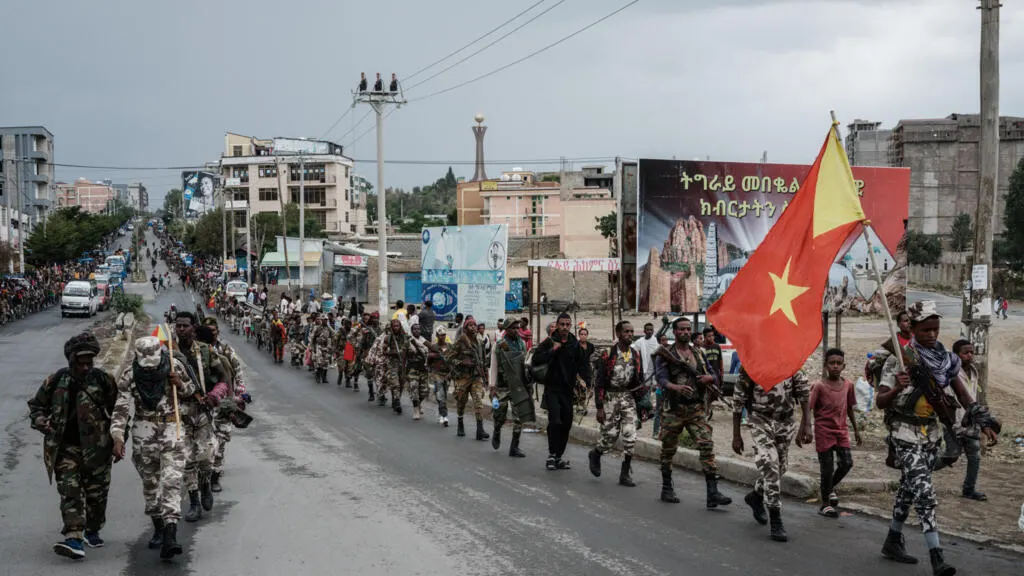
On Saturday afternoon, Tigray Peace Forces fighters moved into the centre of Mekelle, and Ethiopian military forces arrived afterward. The TPLF acknowledged its retreat and said the regional government would operate from another location temporarily. It also said it intended to continue attacks using guerrilla tactics.234
The Tigray Peace Forces, which are aligned with the federal government, separately claimed they were nearing control of the entire region. Its commander also asserted that TPLF forces had been eliminated, but Al Jazeera said it could not immediately verify the claims. Mohammed Taha Tawakel, Al Jazeera Arabic’s Ethiopia bureau chief, said the federal army was fully supporting the group while the TPLF still controlled several towns.1
Renewed fighting
The TPLF and federal forces resumed fighting on September 23, when the TPLF-led opposition alliance launched a major offensive against the Ethiopian military. Federal forces and their allies then mounted a counterattack, pushing into territory held by the opposition before the advance into Mekelle.234
On September 20, seven armed and political organisations formed a coalition, saying they sought to oust Prime Minister Abiy Ahmed’s government and create a transitional administration that included all sides. The Straits Times reported that the TPLF leads the alliance. The TPLF governed Ethiopia from 1991 until 2018, according to The Hindu.123
The renewed hostilities have placed the 2022 peace agreement under pressure. The African Union warned that the escalation threatened that accord and called on the countries involved to exercise restraint. The Hindu reported that the agreement was never fully carried out but maintained a measure of peace until last year.124
Regional tensions
Ethiopian authorities say Eritrea, Egypt and Sudan are providing backing to the alliance led by Tigrayan forces. Ethiopian military officials made the allegation, while Eritrea and Egypt denied supporting attempts to destabilise Ethiopia. The federal government also severed diplomatic ties with Eritrea, according to The Straits Times.1234
Leaders of Egypt, Eritrea, Somalia and Sudan were scheduled to gather in Alamein, Egypt, on October 4 to address the conflict and the risk of it widening into war. Egyptian President Abdel Fattah al-Sisi called for dialogue and opposed foreign interference in African countries. The meeting came amid the continuing dispute between Egypt and Ethiopia over the Grand Ethiopian Renaissance Dam.24
Tigray has between six million and seven million residents, according to Tawakel, and the region has faced severe disruption to communications and infrastructure. Al Jazeera reported that civilians had begun moving towards Amhara and Afar because of fears that combat would spread to major urban areas, while aid agencies shifted some operations to areas secured by advancing forces.1
Why it matters
For European readers, the significance lies in the reported possibility that the fighting could expand beyond Ethiopia, as leaders from Egypt, Eritrea, Somalia and Sudan convene to discuss the crisis. Renewed combat also threatens the 2022 agreement that ended the previous war between the federal government and Tigrayan forces.234
Related stories
follow-up
background
Version history
- version 1 ·