World · France
French Students Protest Crumbling Schools After Teen Loses Hand
Nationwide student protests over dilapidated school buildings and underfunding intensified on October 6 after a 15-year-old lost a hand to a police grenade in Lens, prompting President Emmanuel Macron to convene an emergency meeting.
French students shut nearly 2,000 schools on October 6 in protests over dilapidated buildings and underfunding, intensified after a teenager lost his hand to a police grenade in Lens.
- Nearly 2,000 schools closed in largest student protest wave in decades
- 15-year-old lost hand after police grenade exploded in Lens
- Macron held emergency meeting with top ministers
- Over 5,000 detained, most of them teenagers
- Protests follow months of union action against budget cuts
What's new
- Nearly 2,000 French high schools closed in what CBS News called the biggest day of student protests in decades
- A 15-year-old in Lens lost his hand after picking up a police grenade that exploded
- Macron convened an evening crisis meeting with the prime minister, interior minister and education minister
- Police detained more than 5,000 people, over 4,000 of them teenagers
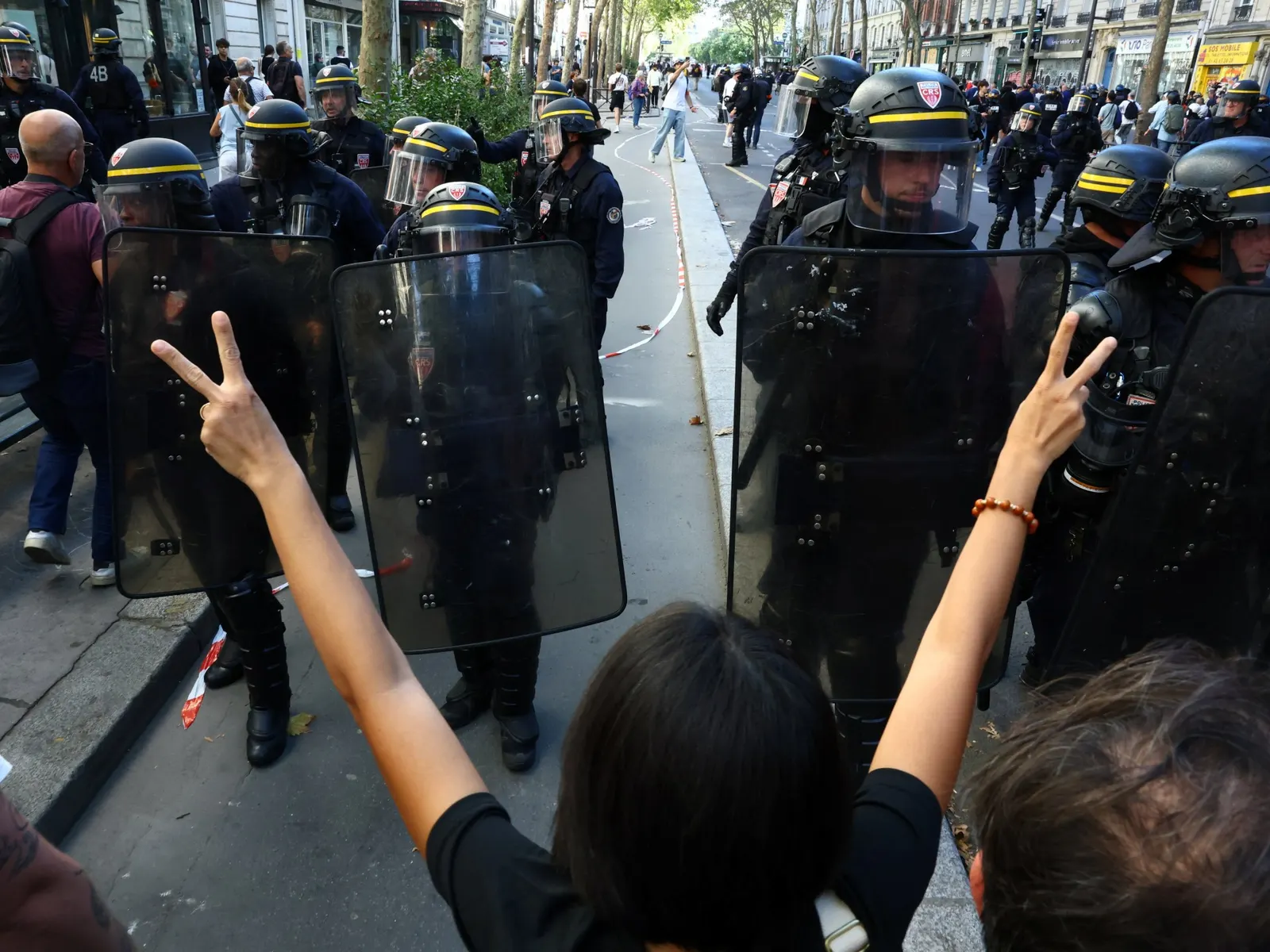
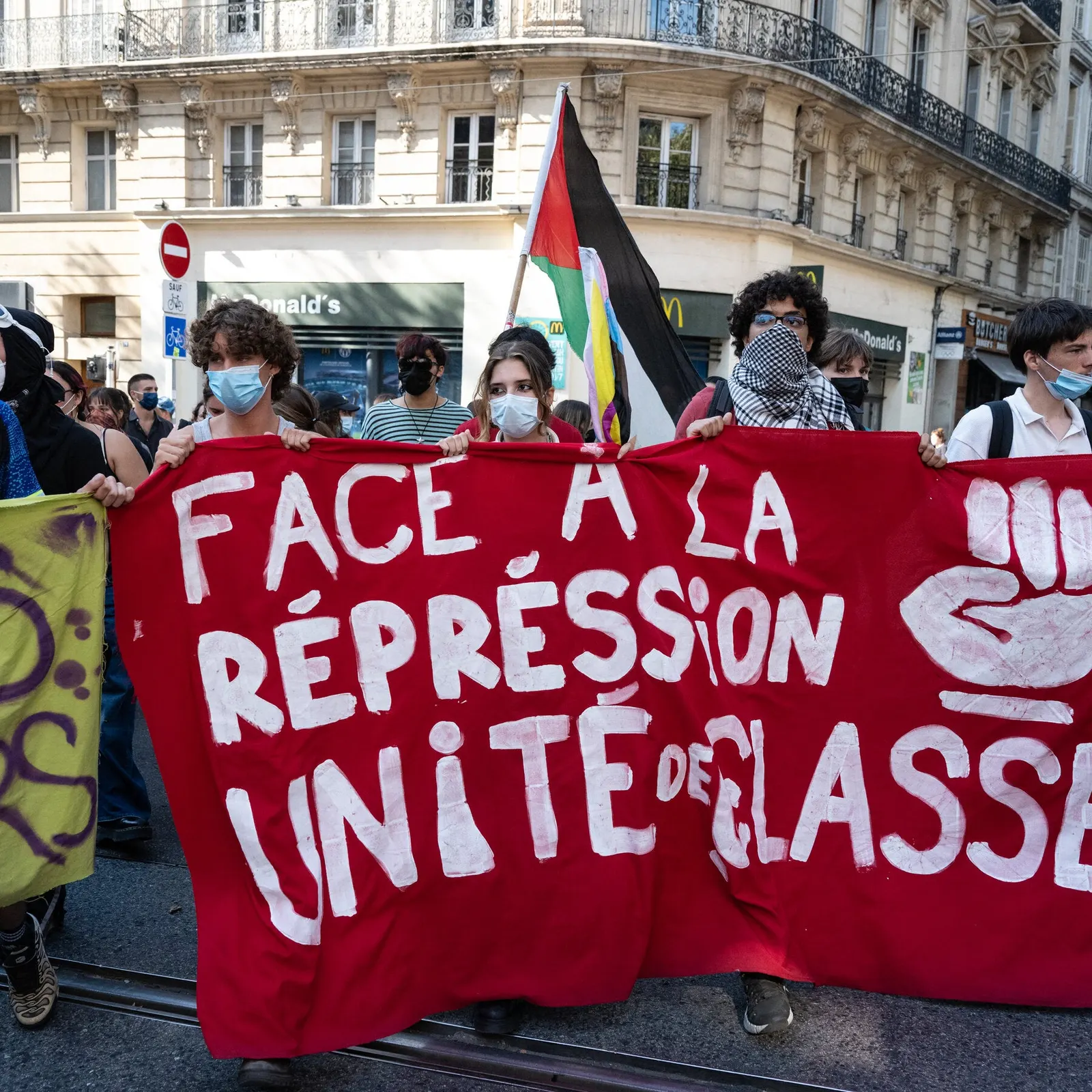
French high school students staged nationwide protests on October 6 over deteriorating school buildings and underfunding, closing nearly 2,000 schools in what was described as the largest wave of student demonstrations in decades, after a 15-year-old boy lost his hand when a police grenade exploded during a protest in Lens, northern France.362
Nationwide blockades
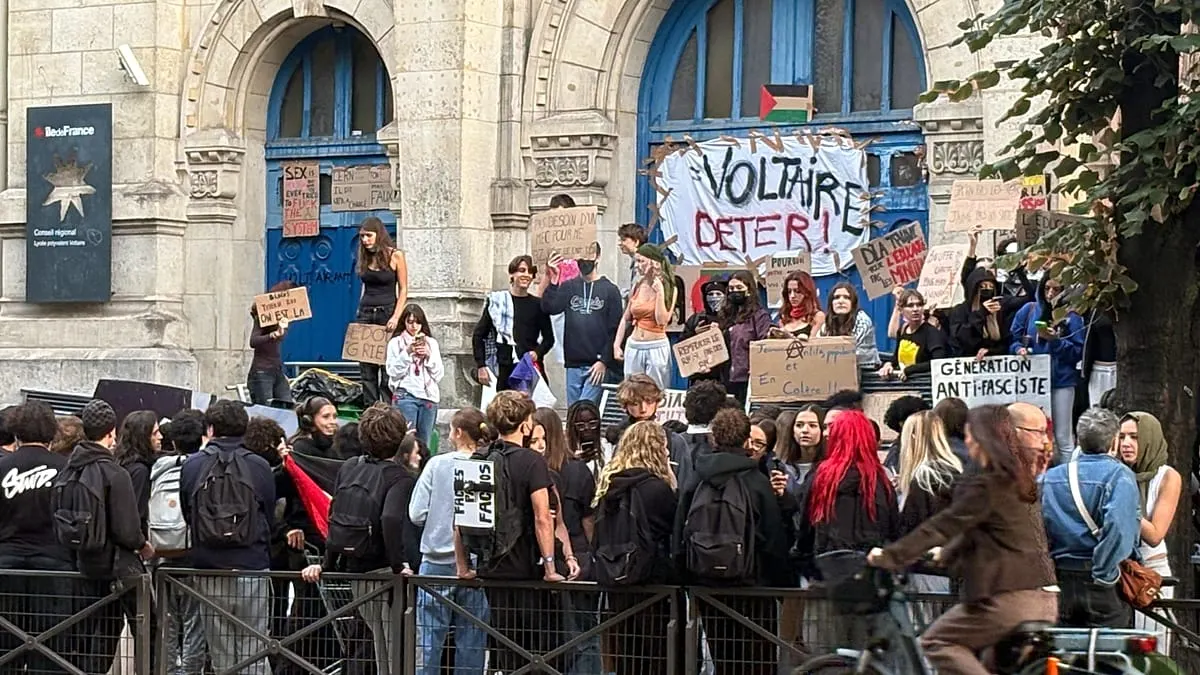
Students and parents blocked high schools across France, with CBS News reporting nearly 2,000 schools closed and all universities mobilised. Demonstrators called on officials to fix schools suffering from inadequate funding and resources, pointing to Saint-Denis facilities said to have deteriorating ceilings, water infiltration and rodent infestations.3
French students, organised in part by the Union Syndicale Lycéenne, barricaded hundreds of schools; unions put the number of participants at more than 450,000 while the interior ministry counted 256,000. Police detained over 5,000 people in connection with the demonstrations, more than 4,000 of them teenagers, according to CBS News. The government, already in political deadlock ahead of presidential elections scheduled for next spring, offered no meaningful concessions, the same source reported.3
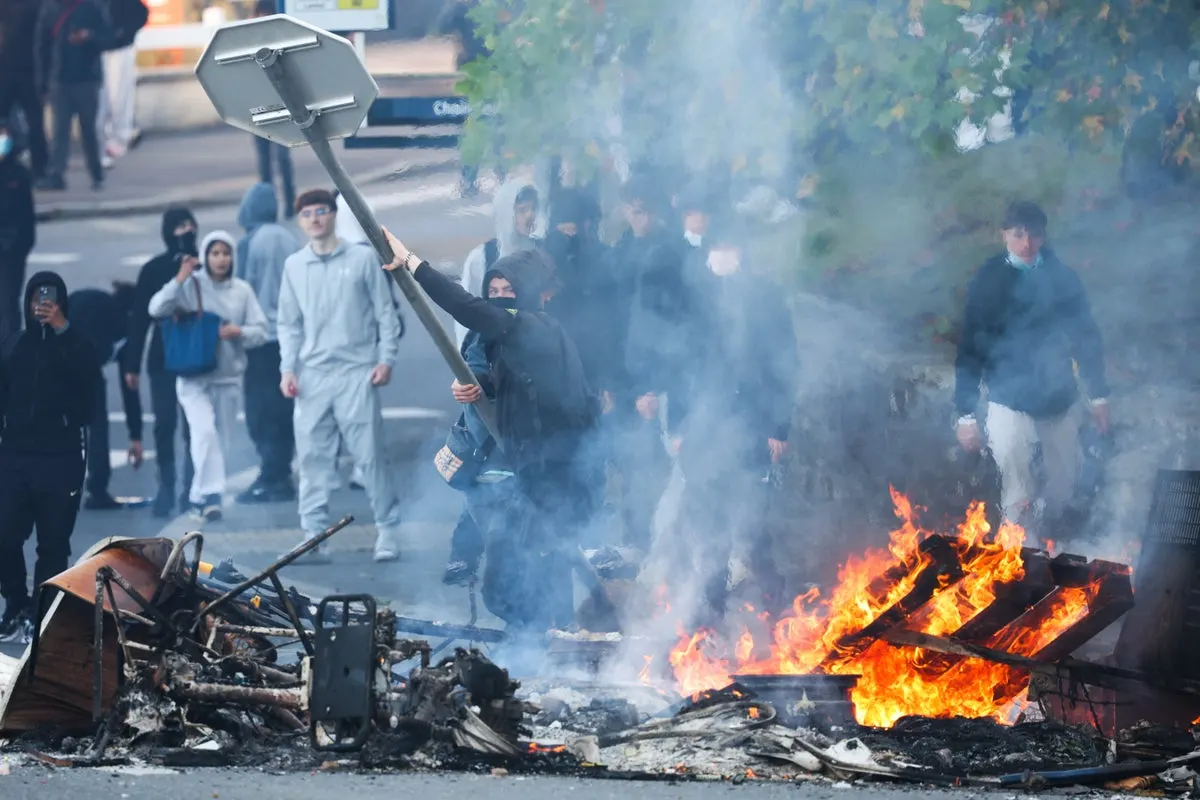
CNews reported that hundreds of high schools were blocked as part of what it termed an 'act III' of the student mobilisation, with clashes, trash fires and projectiles thrown at police during the Paris march. Journalists were reportedly attacked during the demonstration, and tensions also flared at the end of a protest in Rennes before easing at Cours de Vincennes in Paris.4
Injury in Lens
The 15-year-old student, a second-year vocational pupil, appears to have picked up a sting-ball or stun grenade that exploded, according to CBS News and local reporting. Sud Radio reported he lost use of his left hand and two fingers on his right hand, with doctors considering whether amputation at the wrist or elbow would be necessary. Interior Minister Laurent Nuñez said a stun grenade caused the injury.36
Witnesses described the scene near the clash between roughly 50 to 60 riot police and 150 to 200 students, during which at least one Molotov cocktail was thrown. Mélina, a student, described the moment: "J'étais avec mes copines et j'ai entendu +boum+." Je me suis retournée et j'ai vu un garçon courir sans sa main." Mélina went on to say: "On ne veut pas la violence." «Tout ce qu'on veut, c'est notre bac, c'est notre réussite.»6
Other residents and students questioned the proportionality of the police response. A student, Thomas, said: "Je n'y a pas lieu d'utiliser des moyens comme ça sur des élèves, c'est totalement disproportionné," while Roxane Sauvage said: "À partir du moment où il y a des CRS qui sont suréquipés et qui chargent des gamins qui eux n'ont rien sur eux, j'estime que c'est disproportionné." Lycée Auguste-Béhal was closed following the incident and a support and listening cell was set up at the school, while the IGPN opened an investigation. In a separate incident, a 14-year-old in Saint-Ouen-l'Aumône suffered a jaw fracture from a tear gas grenade strike.634
Grievances over buildings and funding
France 24 reported that many school buildings are severely dilapidated and in some cases pose dangerous risks, with many classrooms not designed to cope with extreme temperatures; regional authorities hold responsibility for building maintenance. Absent teachers who are not replaced is also cited as a student grievance.5
According to The Guardian, thousands of schools at every level in France require repairs, language classes average 29 pupils versus an OECD average of 26, and high school classes in Paris and its suburbs often reach 36 students or more, a figure that has climbed in recent years. Roughly one in ten teaching hours annually goes undelivered, and by early September more than half of public middle and high schools were short at least one teacher; in Seine-Saint-Denis, a fifth of instructional time was lost because vacant teaching posts went unfilled.1
The Guardian's reporting also found that French spending exceeds the OECD average by 28% for upper secondary schooling yet lags 11% behind it for early education, and that pay for teachers at mid- and late-career stages trails other countries. The OECD's 2025 PISA assessment found that well-off French students scored 100 points higher in science than disadvantaged peers, surpassing the 85-point OECD average gap, while France's overall scores in 2025 across all three tested subjects ranked among the weakest the country has ever recorded.19
Union mobilisation and budget context
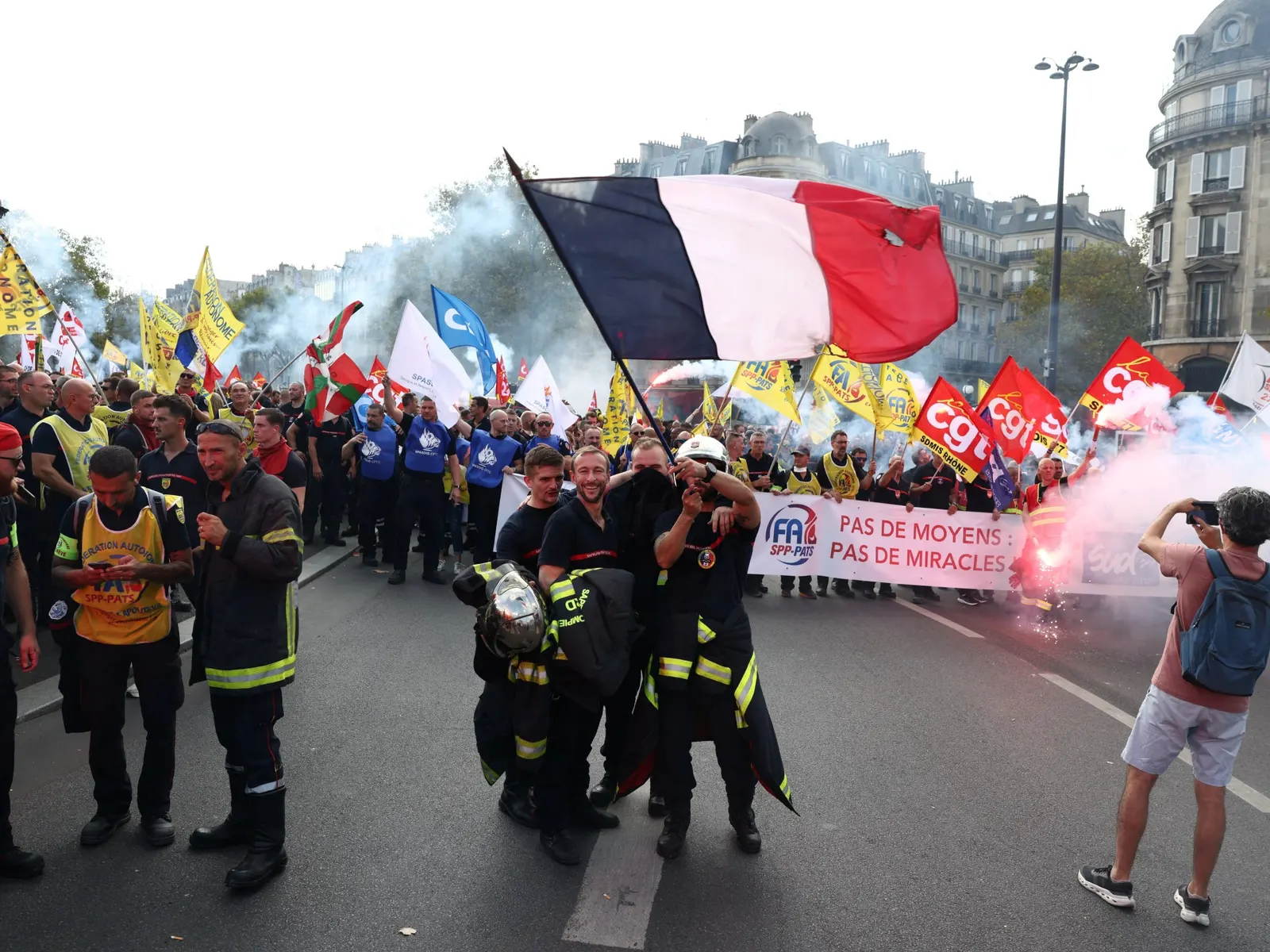
The protests follow months of union action. Per Education International, eight French union confederations joined forces to oppose austerity measures after the 2026 budget proposed €43.8 billion in cuts, even as affluent individuals and multinational corporations have received €308 billion in tax relief since 2017. The alliance estimated that eliminating certain tax breaks could yield €17-19 billion and that a wealth tax could raise €10-15 billion.7
SNES-FSU reported that 45% of secondary school employees joined a strike in September, calling 18 September "clearly the starting point for sustained collective action" and urging continued organizing "by laying the groundwork for a successful strike lasting several days as soon as possible." Marylise Léon, who heads a union confederation, stated: "the decision to take collective action is not taken lightly. «By setting the 18th as the date, we want to give exasperated workers an opportunity to express themselves.»7
Government response
Macron convened ministers at the Élysée on the evening of October 6, including Prime Minister Sébastien Lecornu, the interior minister and the education minister, as franceinfo and CNews reported. Education Minister Édouard Geffray said: "Les voyous seront poursuivis et sanctionnés, les lycéens seront écoutés," while Lecornu warned: "La violence fait partie de votre projet politique de bordélisation du pays," and announced the suspension of classes for the end of the week.84
Interior Minister Nuñez said new measures would establish collective responsibility, stating: "Nous allons mettre en place de nouvelles dispositions qui vont permettre de mettre en cause la responsabilité collective." Al Jazeera reported that Nuñez rejected criticism of the police response, calling it proportionate, while the prime minister said the government would not yield to violence and had launched initiatives to address the demands. Opposition leader Marine Le Pen submitted a shadow budget promising €140 billion in savings by 2032.24
Paris mayor Emmanuel Grégoire said: "On ne peut pas déplorer l'absence d'organisation de cette jeunesse qui lutte et dans le même temps fermer les lycées," and announced the opening of municipal buildings for student meetings. Saint-Denis mayor Bally Bagayoko told the Paris march: "La réponse aux revendications des lycéens doit être politique."4
Why it matters
The protests expose strains in one of Europe's largest education systems, where OECD data show widening gaps between advantaged and disadvantaged students even as spending patterns favour later schooling over early years. With France's government in political deadlock ahead of spring elections, the unrest tests how a caretaker administration manages both street pressure and budget austerity demanded by its own fiscal targets.1937
Videos
Related stories
follow-up
Version history
- version 1 ·