World · India
UAE says Flydubai co-pilot began executing planned terrorist attack
According to the UAE attorney general, the co-pilot used a crash axe against the captain in an effort to take over the plane. Investigators are still examining his motives and possible connections.
Listen to the story
Short version
The UAE says the Flydubai co-pilot began executing a planned terrorist attack with a crash axe. His specific motive and any organizational links remain under investigation.
- Once the captain opened the door, crew members and passengers overpowered the co-pilot.
- The aircraft landed safely in Tabuk, Saudi Arabia.
- Oman reportedly barred the co-pilot over concerns about extremist views.
- Reports conflict over whether 172 or 182 people were aboard.
- Repatriation flights began after UAE-Israel services were suspended.
Infographic
What's new
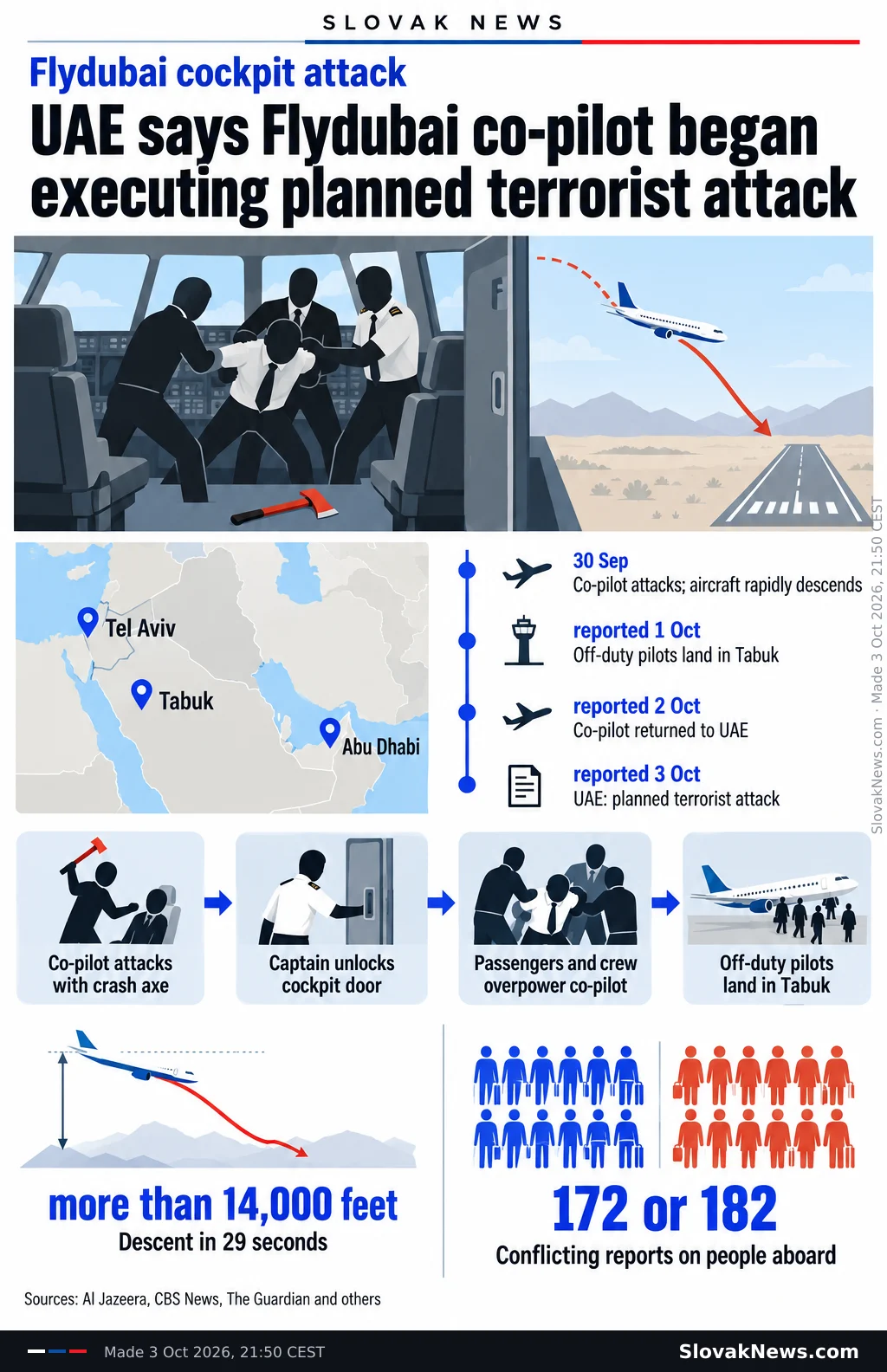
- During the flight, the co-pilot set a planned terrorist attack in motion, UAE Attorney General Hamad Saif al-Shamsi said.
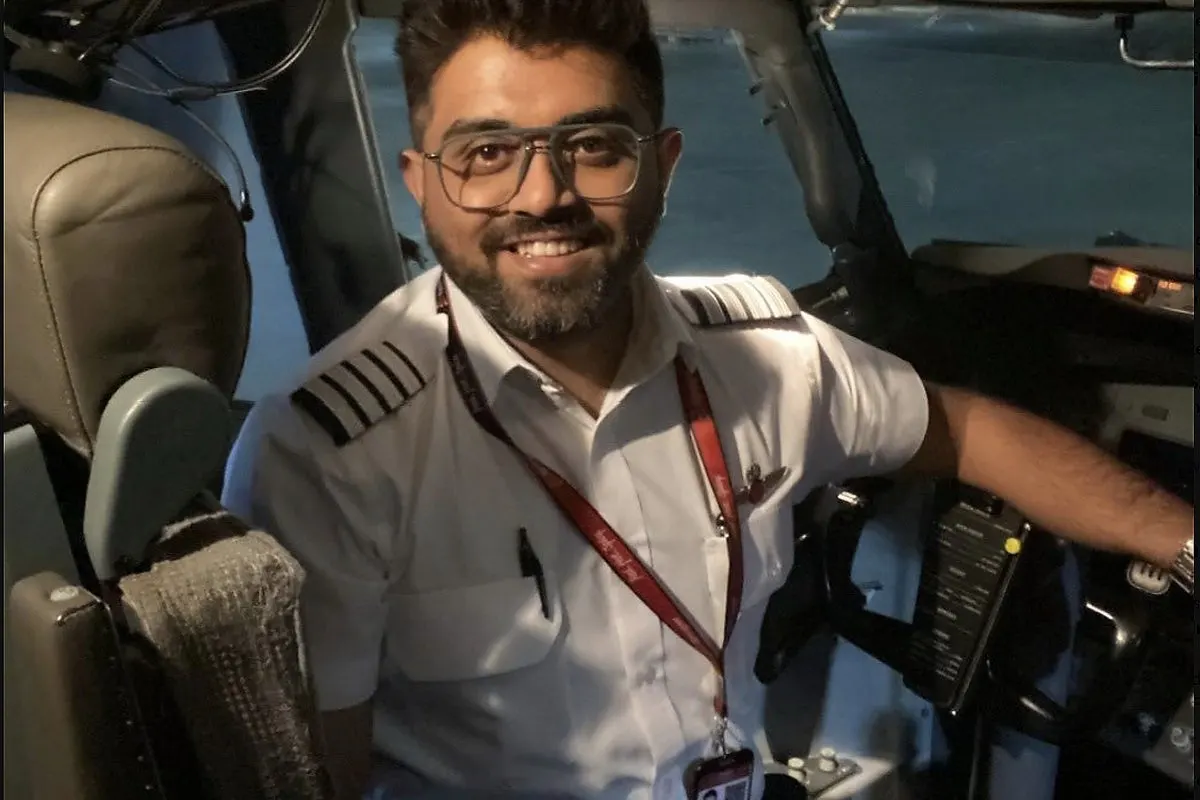
- Al-Shamsi said the co-pilot attacked Capt. Capt. Smit Machchhar with the flight deck's crash axe, UAE authorities said.
- New flight data showed the aircraft descending more than 14,000 feet in 29 seconds and transmitting a general emergency code.
- One report said Oman Air reassigned the co-pilot to an administrative position after barring him from flying over concerns about extremist views.
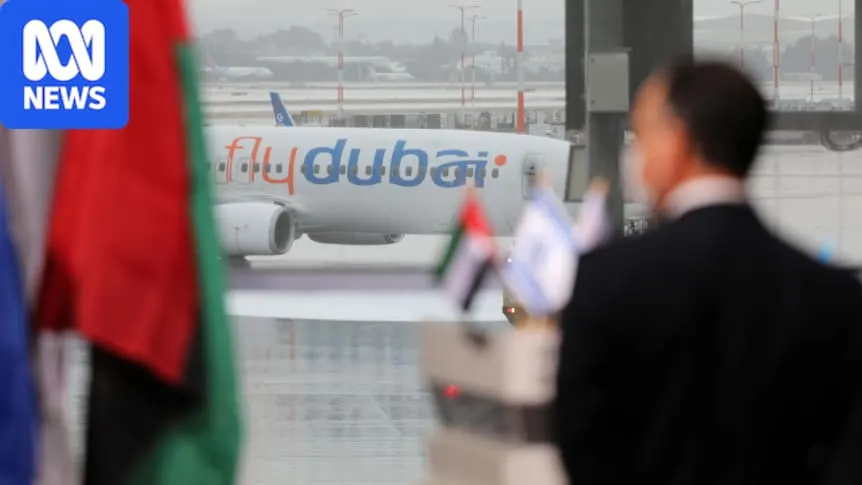
- The first repatriation flight carrying Israelis stranded in the UAE landed in Tel Aviv after regular services were suspended.
Hamad Saif al-Shamsi, the UAE attorney general, said the Flydubai co-pilot launched a premeditated terrorist attack on Flight FZ1073 when he assaulted Capt. Smit Machchhar with a crash axe and trying to seize control of the aircraft. By opening the cockpit door, Machchhar enabled crew members and passengers to overpower the assailant before the plane made a safe landing in Tabuk, Saudi Arabia. Investigators continue to examine the co-pilot’s motives, possible connections and physical and digital evidence.711
Infographic
A struggle in the cockpit
The co-pilot put a planned terrorist attack into action by using the cockpit crash axe against Machchhar and seeking control of the plane, UAE Attorney General Hamad Saif al-Shamsi said. Earlier reports described Machchhar as having been stabbed with a knife, and investigators have not released a final account resolving that discrepancy. They continue to examine the attacker’s motives, possible connections and physical and digital evidence.17910
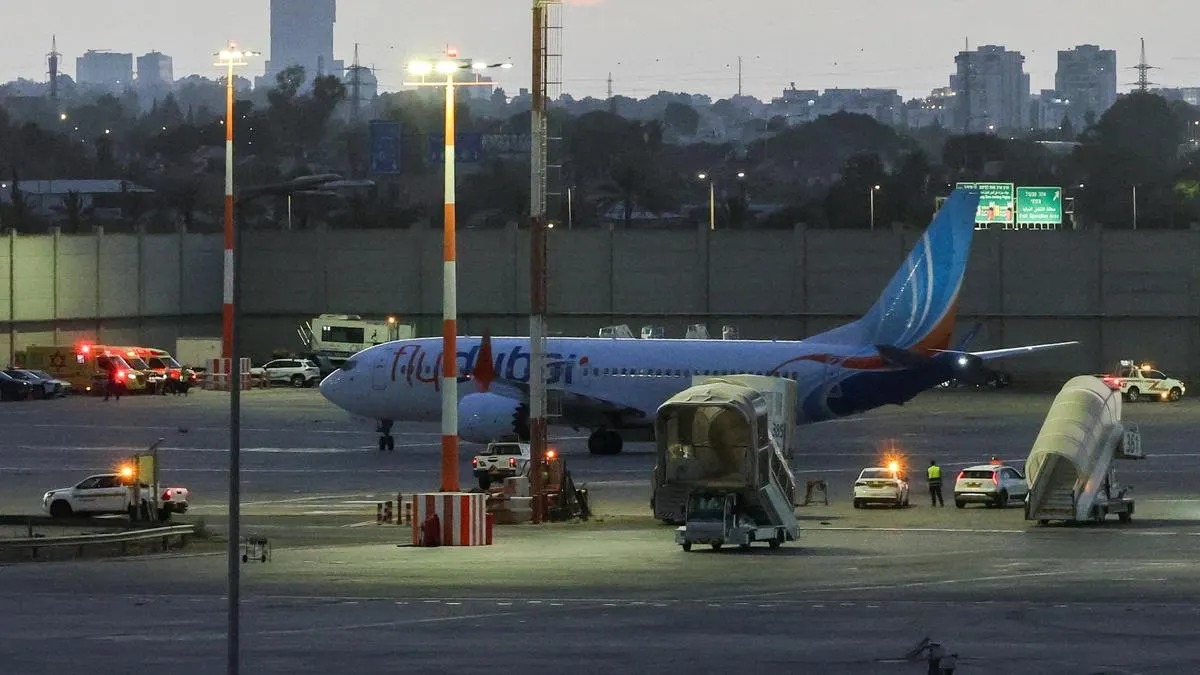
Although wounded, Machchhar kept fighting and unlocked the fortified flight-deck entrance, enabling passengers and crew to get inside and overpower the co-pilot. Two off-duty pilots then helped make an emergency landing in Tabuk in north-western Saudi Arabia.2458
Flight data cited by CNBC showed the aircraft descending more than 14,000 feet in 29 seconds and transmitting a general emergency code. Other reports calculated that it lost about 17,000 feet in one minute. Separate tracking data showed the aircraft dropping to 16,600 feet, climbing to 21,725 feet and then descending to 15,000 feet, which it maintained before landing safely.47810
The captain’s account
In a video call from his Abu Dhabi hospital bed that was shown on television and shared by India’s prime minister, Narendra Modi, Machchhar said he forced himself up despite his wounds and opened the cockpit door. He also said he recited the Hanuman Chalisa during the ordeal and that Hanuman gave him courage.1358
Machchhar was initially taken to a hospital in Tabuk and later airlifted to Abu Dhabi. The Indian embassy in the UAE said he was in good health and recovering well.49
The BBC reported that Machchhar had accumulated more than 9,750 flying hours, including more than 6,400 as pilot-in-command. The Washington Post reported that he had initially planned to enter his family’s textile business before developing an interest in flying.348
Machchhar is credited with helping prevent the apparent attempt to crash the aircraft. The BBC said the flight-data and cockpit recordings would be important in establishing the precise course of the confrontation.349
Investigation and competing accounts
Saudi authorities detained and interrogated the injured co-pilot after the aircraft landed. He was later transferred to the UAE for questioning by Israeli, Emirati and Saudi officials. Reports identified him as Omani national Hamam al-Hammami, although authorities have not publicly confirmed that identification.2368
Investigators were still reviewing the incident's circumstances, motive, potential links, and physical and digital evidence after the co-pilot initiated a planned terrorist act in flight, UAE Attorney General Hamad Saif al-Shamsi said. UAE presidential adviser Anwar Gargash separately called the incident terrorism. Netanyahu said the suspect had undergone Islamist radicalization but that it was too early to determine whether Iran was involved. Trump suggested a possible Iranian or Islamic Revolutionary Guard Corps connection and threatened retaliation if Iran was responsible, while later reporting said there was no current evidence of such a link.1247
Reports say Omani officials barred the co-pilot from flying and removed him from flying duties at the country’s national airline after concerns arose about extremist views. One report said he was moved to an administrative position at Oman Air before Flydubai hired him. The extent of Flydubai’s vetting remains unclear. Reports also alleged that he had spent time in Syria and possessed extremist materials while a trainee; investigators have not announced findings substantiating those details.68910
Israel also said it would strengthen checks on pilots operating flights into the country. Doron Spielman said authorities intended to establish the identities of pilots and conduct some form of security screening before they flew into Israel.1
Flights disrupted
Flydubai suspended its Tel Aviv services after the attack and announced a full investigation. The UAE subsequently canceled flights to Israel.4578
Israel and the UAE agreed on repatriation services for passengers stranded by the disruption. The earliest reported evacuation service departed the UAE just before 11 p.m. and arrived in Tel Aviv shortly after 1 a.m.78
El Al said it canceled planned replacement flights because Emirati authorities had not granted landing permission. Israel’s ambassador to the UAE, Yossi Shelley, said the incident had not weakened bilateral relations and that Israel trusted the UAE investigation; Israeli carriers were expected to resume landing in the UAE.478
A challenge for cockpit security
A co-pilot attempting to overpower a captain in flight is extraordinarily rare, Al Jazeera reported. Following the September 11 attacks, the International Civil Aviation Organization adopted safeguards focused primarily on blocking unapproved cockpit access, such as stronger flight-deck doors, background screening of staff and identity verification at airports. Such doors are intended to withstand forced entry and penetration by small firearms.1
The 2015 Germanwings catastrophe highlighted another danger: co-pilot Andreas Lubitz prevented the captain from returning to the flight deck and intentionally brought Flight 9525 down in the Alps in France, leaving none of the 150 people on board alive. European regulators temporarily recommended keeping at least two authorized people in the cockpit, and from 2018 European airlines were required to conduct psychological assessments and testing for alcohol and psychoactive substances.1
The Flydubai case presents the converse problem: an alleged attacker was already authorized to be inside the cockpit. The BBC reported that there is no conventional checklist for an attempt by another person in the cockpit to overpower a pilot, leaving investigators to reconstruct how the crew and passengers responded.14
Why it matters
The UAE’s account indicates that authorities regard the assault as a planned attempt to seize an airliner rather than a spontaneous cockpit confrontation. Reports that Oman had already barred the co-pilot from flying over concerns about extremist views intensify scrutiny of Flydubai’s vetting and possible information-sharing failures, while investigators have not announced any organizational or Iranian connection.78911
Videos
Related stories
Version history
- version 7 · The UAE attorney general said the co-pilot began executing a planned terrorist act with a crash axe, while new reporting detailed the aircraft’s rapid descent, his reported Oman Air reassignment and the first completed repatriation flight.
- version 6 · New reporting says Oman had barred the co-pilot and removed him from its national airline over extremist views before Flydubai hired him, while reports identified him as Hamam al-Hammami and the UAE canceled flights to Israel.
- version 5 · New reporting says the aircraft lost about 17,000 feet in one minute and adds Trump’s Iran speculation, Netanyahu’s caution and an Omani official’s account of the unidentified co-pilot’s citizenship.
- version 4 · The UAE prosecutor general said the co-pilot used a crash axe and tried to seize the flight controls in an attempted terrorist act, while stressing that the investigation and evidence examinations remained underway.
- version 3 · Machchhar said in a hospital-bed video shared by Modi that he recited the Hanuman Chalisa during the attack, while Flydubai announced a full investigation and suspended Tel Aviv flights.
- version 2 · Machchhar has recounted the cockpit attack in a televised call with Narendra Modi and is now recovering in an Abu Dhabi hospital.
- version 1 ·