World · Russian Federation, Lithuania
Kremlin Warns Russia Would Retaliate Over Lithuania Nuclear Vote
Lithuania's parliament approved in first reading a constitutional change that would let it host nuclear weapons, prompting the Kremlin to warn of retaliation and earlier threats from Moscow officials.
Listen to the story
Short version
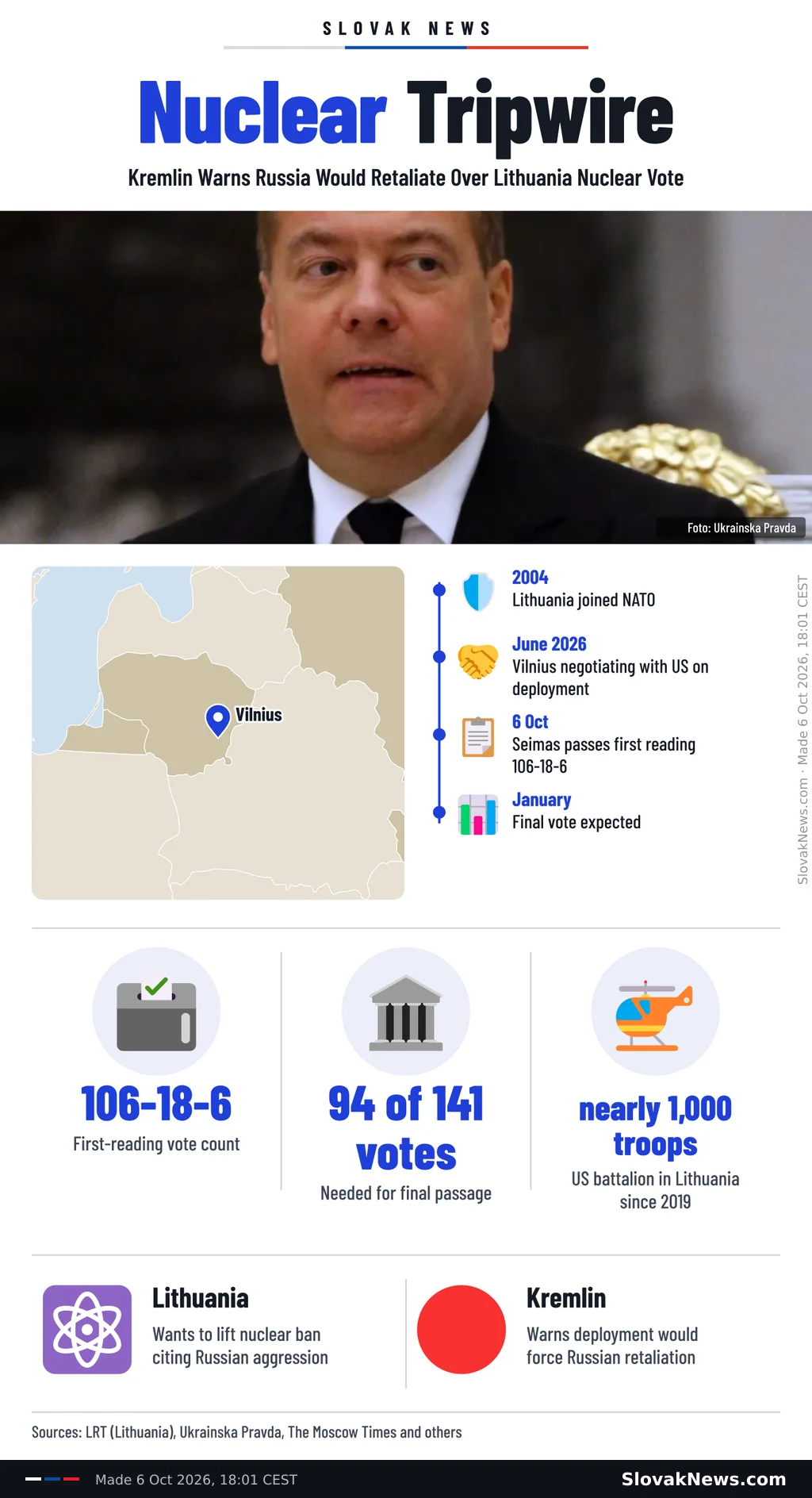
Lithuania's parliament advanced a constitutional change allowing nuclear weapons on its soil, prompting Kremlin warnings of retaliation.
- Seimas approved first reading 106-18-6 on Oct 6, 2026
- Final vote needing 94/141 votes set for January 12
- Peskov warned deployment would escalate tensions, force Russian measures
- Medvedev earlier threatened to destroy Lithuania (single source)
- Lithuania cites Russian aggression as reason for change
Infographic
What's new
- Seimas approved first reading of amendment to lift nuclear weapons ban, 106-18-6
- Final vote set for January 12, requiring 94 of 141 votes
- Kremlin spokesman Peskov said Russia would be forced to take security measures
- Follows earlier Medvedev threat to 'wipe Lithuania off the map'
Lithuania's parliament voted on October 6, 2026, in a first reading to remove a constitutional ban on stationing nuclear weapons and foreign military bases on Lithuanian territory, prompting the Kremlin to warn that Russia would be forced to take retaliatory measures to protect its security.1347
Infographic
The vote in Vilnius
The Seimas backed the amendment with 106 lawmakers in favour, 18 against and six abstaining, according to LRT. The amendment would eliminate Article 137, the provision that has prohibited nuclear, chemical and biological arms along with foreign troop bases on Lithuanian territory for more than 30 years, dating back to the country's split from the USSR.134
Under Lithuanian law, altering the constitution requires parliament to approve the measure twice, with the two votes spaced no less than three months apart and each needing two-thirds support. According to Parliament Speaker Juozas Olekas, lawmakers will cast the decisive vote on January 12, needing backing from no fewer than 94 of the 141-seat chamber.134
Olekas said the move would put Lithuania on equal footing with its allies. "We will secure the stronger backing we can get from our allies. By removing the legal carve-outs that set Lithuania apart from other EU and NATO states, those gaps will disappear and we will stand on equal footing," he said. Opposition conservative leader Laurynas Kasčiūnas argued the existing ban prevented full participation in NATO's nuclear deterrence planning, calling it "the queen of deterrence as a whole."1
Defence Minister Robertas Kaunas linked the push directly to Russia's actions, saying: "We are responding to Russia's aggression. Had Russia not launched its war in Ukraine, we likely wouldn't be holding this debate today." He confirmed that Vilnius was engaged in discussions with Washington about potentially stationing nuclear arms. Not all lawmakers agreed with the approach: Nemunas Dawn's Aidas Gedvilas said a referendum would be preferable to a constitutional amendment.12
Kremlin's response
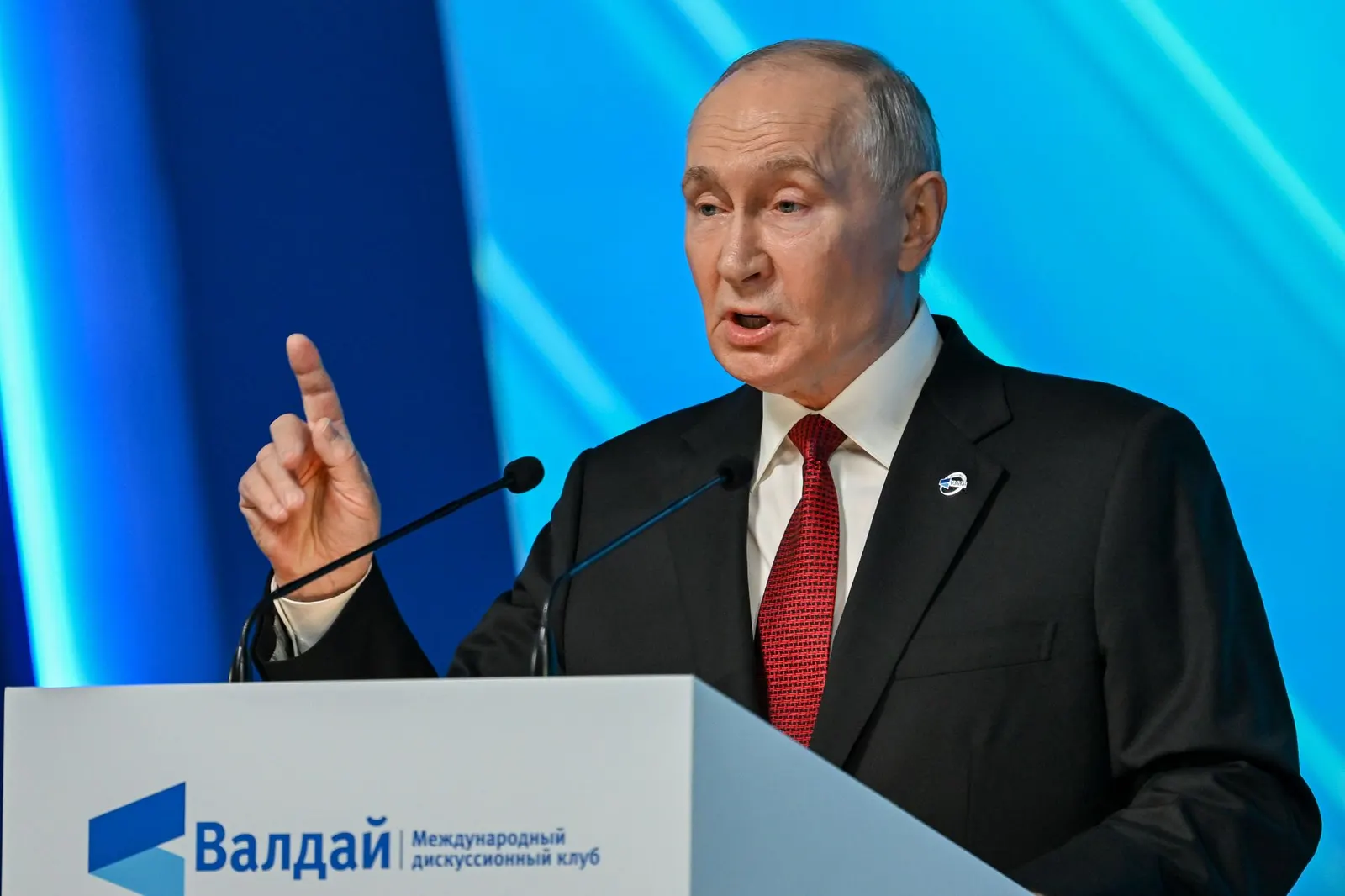
Kremlin spokesman Dmitry Peskov said placing nuclear arms in a bordering country would undermine, rather than support, stability. "The same holds true for stationing nuclear arms within a neighboring nation's borders. Both developments would undermine stability and predictability across Europe," he said.34
Peskov also addressed the possibility, floated by President Donald Trump, of a permanent US military base in Lithuania, saying any movement of NATO's leading power's infrastructure closer to Russia's borders amounted to escalation. "A military base counts as military infrastructure. He said that when a major NATO member's military infrastructure edges closer to Russia's borders, it can only be read as a move toward escalation, adding that "Russia will have to take all necessary measures to guarantee its security."126
TASS reported Peskov saying Russia would be forced to retaliate against any deployment of nuclear weapons in Lithuania, framing both NATO's military buildup near Russian borders and the stationing of nuclear arms in a neighbouring country as escalatory steps.7
Separately, Peskov said earlier that if nuclear weapons were deployed, they would be aimed eastward. "Hosting nuclear weapons means they're pointed at someone. They won't be pointed westward. Instead, they will point to the east, meaning at Russia," he said, adding that "our own nuclear weapons will target whichever country hosts them."5
Earlier threats and wider context
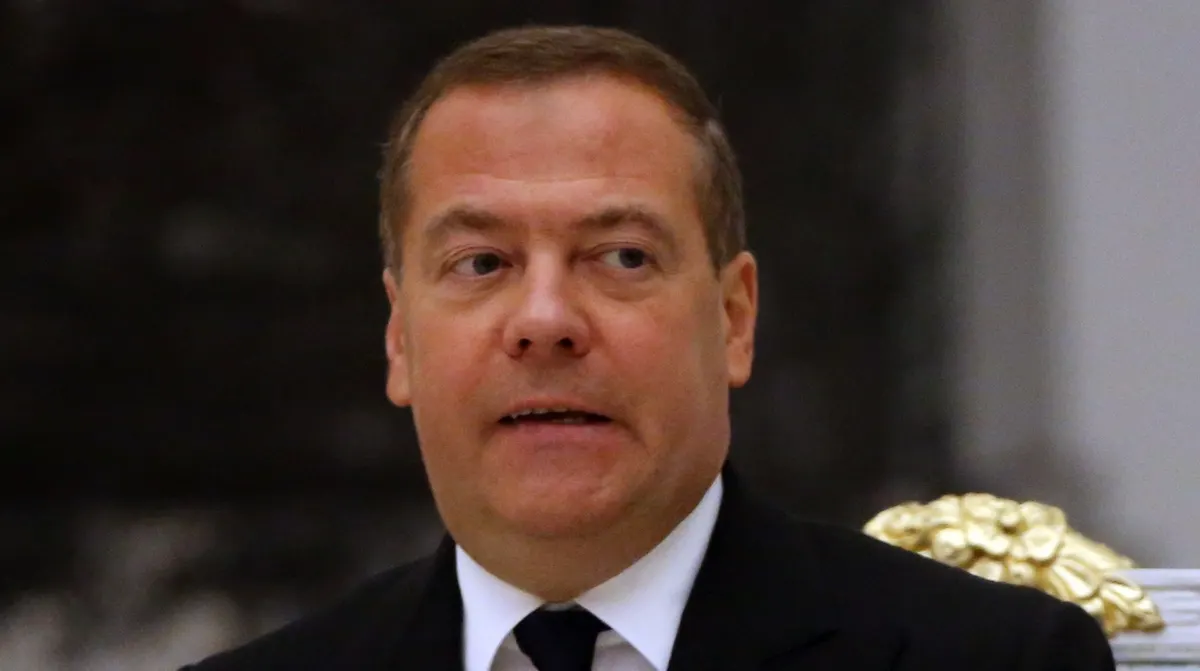
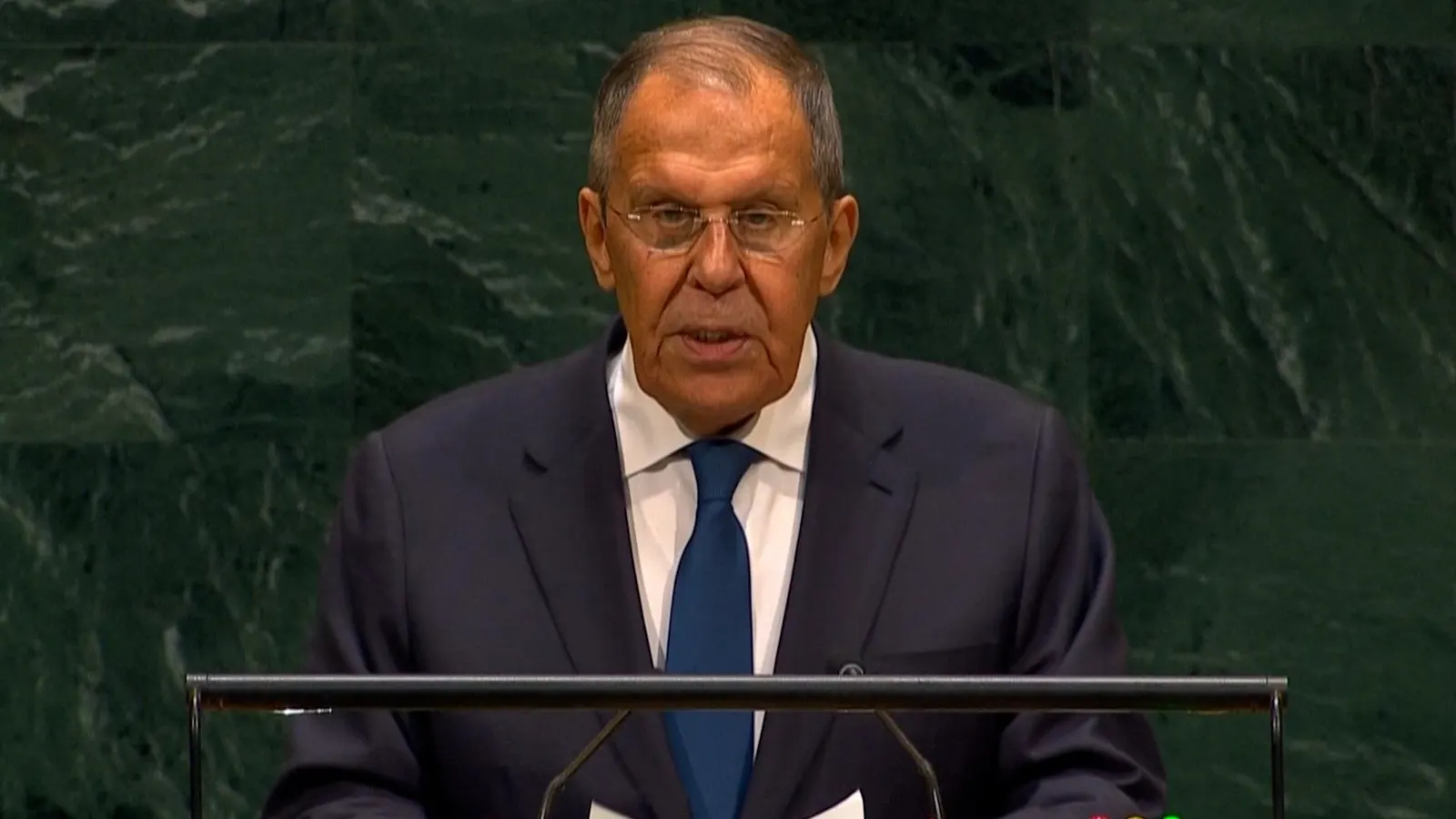
The Kremlin's warnings followed a sharper threat in September from Dmitry Medvedev, deputy chairman of Russia's Security Council, who, according to Ukrainska Pravda, said Russia would "wipe Lithuania off the map" if nuclear weapons were deployed there. Medvedev also claimed NATO's Article 5 would not be invoked if Lithuania were attacked and that no country would go to war for its defence, saying of Lithuania's plans, "They are doing this in vain." President Vladimir Putin, for his part, claimed Russia had never threatened Europeans.2
Lithuania's defence minister disclosed in June that talks were underway with the US regarding possible nuclear weapons stationing, and lawmakers launched the process to scrap the ban the following month. President Gitanas Nauseda had already described the ban as outdated. The United States has maintained an armored battalion of close to 1,000 troops in Lithuania since 2019 in rotating deployments, while Germany is separately working to deploy a heavy tank brigade there.1234
This debate ties into wider European nuclear conversations: in March, French President Emmanuel Macron floated a concept for a continent-wide nuclear deterrence structure, and the Financial Times reported in June that Washington was weighing stationing nuclear weapons in further NATO member states. RT reported that France was considering moving some of its nuclear weapons to other EU states, and that NATO already runs a nuclear-sharing arrangement placing US bombs in non-nuclear member countries.15
Why it matters
A Baltic NATO member moving to lift a self-imposed nuclear weapons ban, paired with explicit Kremlin threats of retaliation, marks a potential shift in the military balance along Russia's border. The outcome of the January vote will shape whether NATO's nuclear-sharing arrangements extend further east, with direct implications for regional security.123
Related stories
same actors
Version history
- version 1 ·