World · Brazil
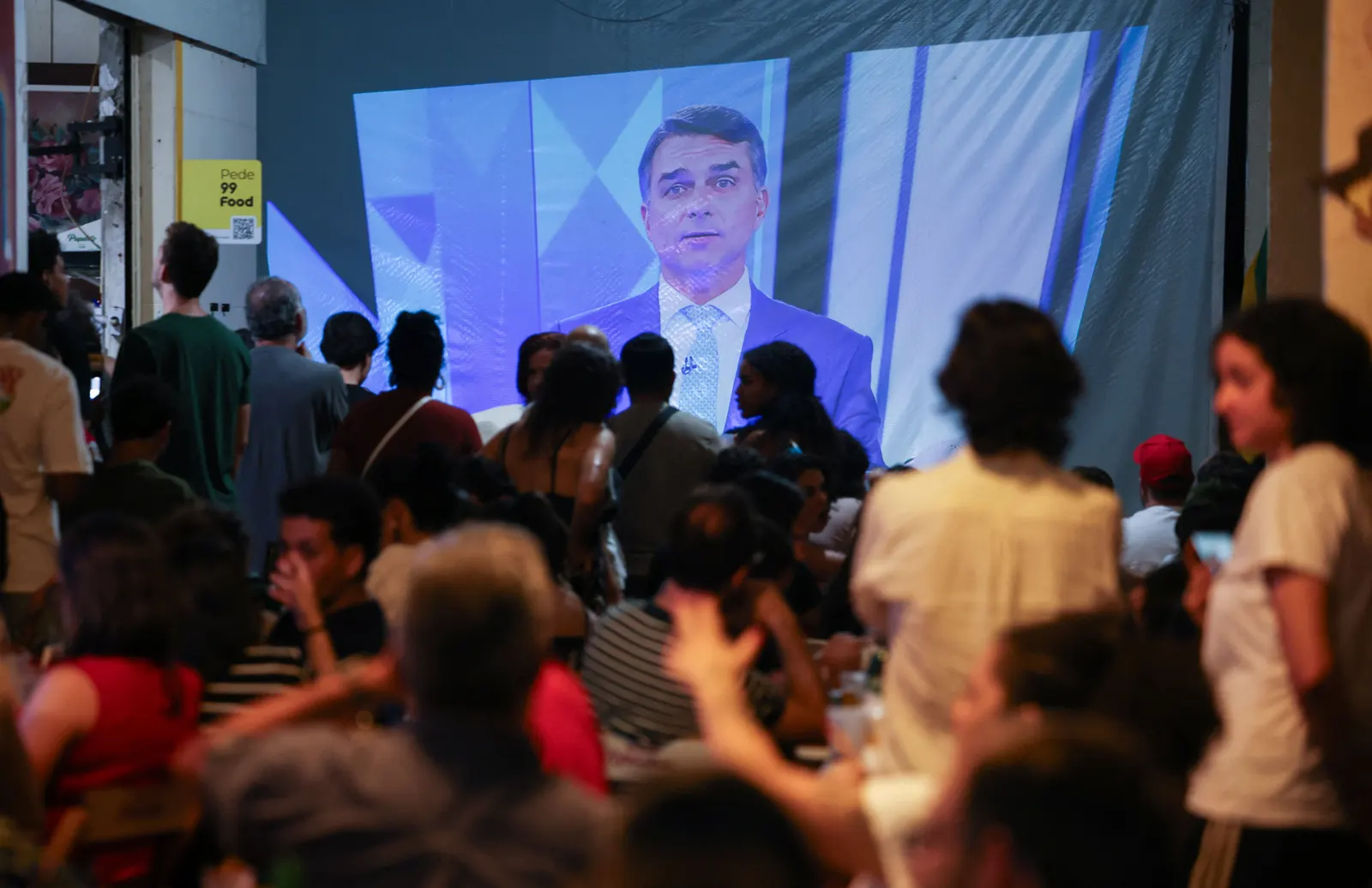
Lula and Flavio Bolsonaro dispute living costs in final Brazil election debate
The candidates challenged each other over household finances and corruption allegations before Sunday's runoff. Polls showed the contest roughly level after Bolsonaro led the first round.
Listen to the story
Short version
Lula and Flavio Bolsonaro challenged each other over living costs and allegations of wrongdoing in their final debate before Sunday's runoff. Polls showed an approximately level contest.
- Bolsonaro led the first round.
- Lula defended his government's hunger and wage policies.
- Bolsonaro criticised food prices and consumer taxes.
- Both candidates raised allegations against the other.
What's new
- The final debate brought exchanges over wages, food prices and corruption allegations.
- Bolsonaro apologised for a remark about Lula's missing finger.
- Polling showed the candidates approximately level ahead of Sunday's runoff.
Luiz Inacio Lula da Silva and Flavio Bolsonaro challenged each other over living costs and corruption allegations in Brazil's final presidential debate before Sunday's runoff, according to reports published on Oct 24. The encounter came with polls showing the candidates approximately level after Bolsonaro finished ahead in the first round.13
Household finances at the centre
Lula, seeking a fourth term after returning to the presidency in 2022, defended his administration's record on hunger. He said millions of Brazilians had escaped hunger under his government. Bolsonaro countered that Brazilians had faced rising food prices during Lula's administration and argued that the government's tax reform would increase the burden on consumers.13
Reuters reported that Lula defended minimum wage increases exceeding inflation. According to The Straits Times, Bolsonaro accused him of raising the minimum wage while maintaining high taxes, and also challenged him over household debt and organised crime. Their exchanges offered competing accounts of whether government policy had improved Brazilians' finances.13
The Associated Press described a calmer debate format directed towards persuading voters who had not yet chosen a candidate. It reported exchanges on public security, health care and agribusiness as well as the minimum wage. The Straits Times said Globo hosted the encounter, which continued for more than two hours.12
Apology and allegations
Bolsonaro apologised for referring to Lula as “nine fingers”, but continued to press him to apologise to Brazilians facing insecurity and debt. Lula demanded a retraction. The Straits Times reported that a workplace accident during Lula's time as a factory lathe operator cost him the little finger on his left hand.123
The candidates also raised allegations involving each other's connections and families. Bolsonaro questioned Lula about accusations concerning his son and pension fraud. Lula pressed Bolsonaro over alleged links to Banco Master banker Daniel Vorcaro. Those exchanges were accusations made during the debate, rather than findings established by the reports.13
According to The Straits Times, Bolsonaro compared his intended role in Brazil with that of Javier Milei in Argentina and accused Lula of leaving the country bankrupt. Lula challenged Bolsonaro's proposed public spending cuts through a chainsaw comparison and questioned his experience and knowledge of Brazil.1
A level contest before the runoff
The Straits Times reported first-round vote shares of 47% for Bolsonaro and 45% for Lula. It also cited a Datafolha survey published on Oct 22 that put both candidates at 50% of voting intentions, compared with a four-point Bolsonaro advantage in polls published two weeks earlier.1
The debate came before restrictions on the final stretch of campaigning. Brazilian electoral law bars radio and television campaign advertising from Saturday. The Straits Times reported that candidates could nevertheless continue holding rallies until Saturday's closing hours, before voters returned for Sunday's runoff.13
Why it matters
For European readers following Brazil's election, the debate sets out the candidates' competing positions on consumer taxes, wages and public spending. It also shows a race in which Bolsonaro's first-round advantage had given way to polling that placed the candidates approximately level.13
Videos
Related stories
Version history
- version 1 ·