World · Pakistan, Saudi Arabia, Islamic Republic of Iran
Mecca pact committee to discuss political engagement with Houthis in Riyadh
Saudi Arabia, Turkey and Pakistan are due to consider an Iranian suggestion for political engagement with Yemen’s Houthis. The talks will also review regional developments and work to formalise the three-country alliance.
The three Mecca pact members will meet in Riyadh to consider Iran’s suggested political approach to the Houthis. The meeting comes amid reports of possible Pakistani defensive support for Saudi Arabia and planned operations in Yemen.
- Saudi Arabia, Turkey and Pakistan meet in Riyadh on Monday.
- Iran proposed political engagement with Yemen’s Houthis.
- No formal written Iranian offer has been reported.
- Pakistan may assume defensive functions for Saudi Arabia.
- The alliance is still developing its institutions.
What's new
- The pact’s committee is due to meet in Riyadh on Monday.
- Iran has suggested political engagement with Yemen’s Houthis.
- Officials will review efforts to make the alliance fully operational.
- Reports indicate Pakistan could assume defensive duties for Saudi Arabia.
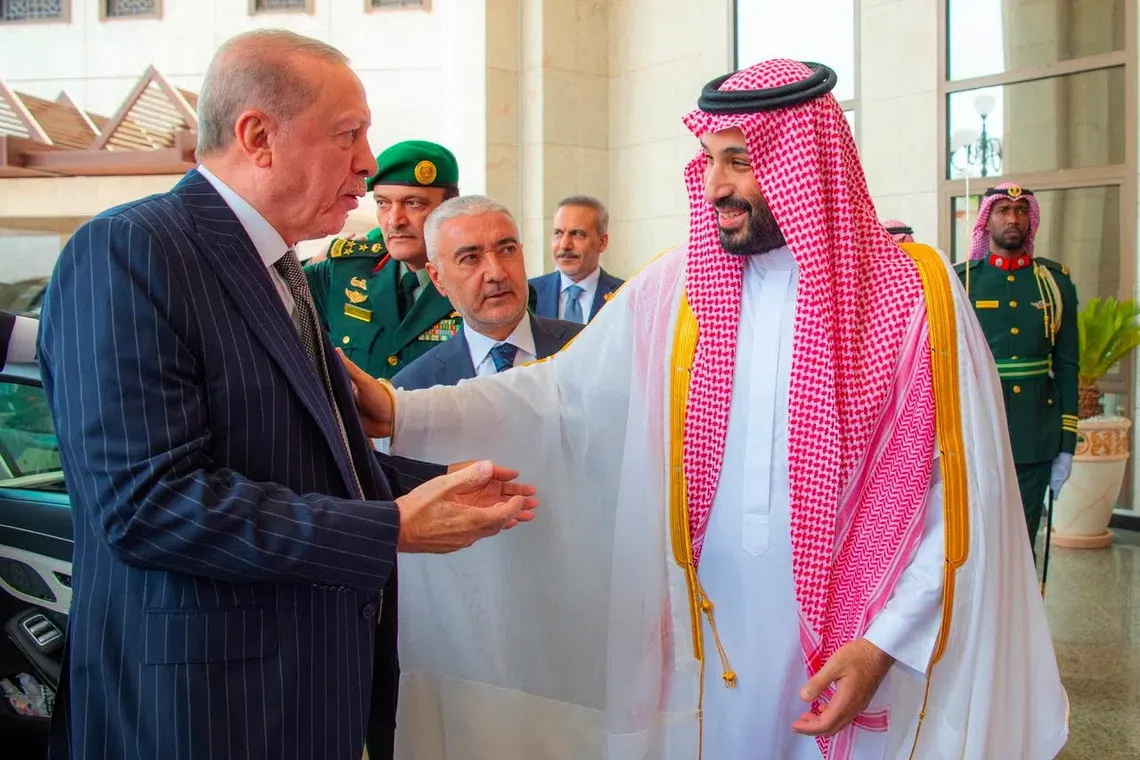
Representatives of Saudi Arabia, Turkey and Pakistan will meet in Riyadh on Monday to discuss Iran’s suggestion of political engagement with Yemen’s Houthis, as well as regional developments and efforts to establish the institutions of their three-member Mecca defence pact.13
A preliminary diplomatic proposal
Pakistan’s foreign minister, Ishaq Dar, said Iran had raised political engagement after attacks by the Yemeni group. Dar characterised the idea as a good-faith alternative to military action, but said it had not developed into a formal proposal. “There is no written, solid offer,” he said, adding: “It is brainstorming between two foreign ministers.”1
Dar said Iran’s president, Masoud Pezeshkian, and its foreign minister, Abbas Araqchi, sought to resolve the issue. Dar also briefed Tehran on the defence agreement and on how Pakistan intended to meet its commitments under it.1
The Turkish foreign ministry said the meeting would consider the wider regional situation and progress towards creating the alliance’s institutional structures. Turkiye is expected to send its foreign minister, Hakan Fidan, defence minister, Yasar Guler, and armed-forces chief General Selcuk Bayraktaroglu, with Saudi and Pakistani representatives also attending.13
A new collective-defence framework
On August 7, Riyadh, Ankara and Islamabad entered into the Mecca Joint Defence Agreement. According to The Straits Times, the agreement regards an armed attack against one of the three countries as an attack against them all. The pact’s military chiefs met on September 25 and condemned Houthi attacks, while Pakistan’s military separately expressed support for Saudi Arabia and a commitment to protecting Islam’s holy sites.1
Dar said more than six countries were interested in joining the agreement. He said membership applications could not be considered until the pact was fully functioning, a process that could require as long as a year. The committee’s Riyadh meeting is therefore expected to address both the immediate Houthi issue and the longer-term construction of the alliance.13
Pakistan’s possible support role
The South China Morning Post reported that Pakistani troops were expected to assume several defensive responsibilities for Saudi Arabia. The report said they were not expected to join Saudi- and Yemeni-planned ground operations against the Houthis directly, but could release Saudi personnel for other duties in a potentially prolonged conflict.2
Andreas Krieg, who teaches defence studies at King’s College London, said Pakistani help protecting Saudi Arabia would give Saudi forces more scope to act against the Houthis. The newspaper reported that such a conflict could involve hundreds of thousands of Yemeni fighters across the opposing sides.2
Separately, The Straits Times reported that the head of Yemen’s Saudi-backed government had announced a major military operation intended to capture Houthi-held territory. Saudi Arabia has accused the group of attacks against Islam’s two holiest cities, according to the same newspaper; that allegation was not independently supported by the other dossier sources.1
Why it matters
For European readers, the talks concern whether the three-country pact combines diplomacy with a broader division of military responsibilities. The South China Morning Post reported that Pakistani defensive support could give Saudi forces greater freedom to operate during what may become a sustained conflict involving large numbers of Yemeni fighters.2
Videos
Related stories
background
background
same actors
Version history
- version 1 ·