World · United States of America
Pentagon Names Musk, Luckey, Gingrich to Warfare Panel
Defense Secretary Pete Hegseth unveiled Project Meridian, a 120-day review of future warfare to be co-led by Elon Musk, Palmer Luckey and Newt Gingrich, alongside a new Autonomous Warfare Command.
The Pentagon has named Musk, Luckey and Gingrich to lead a 120-day review of future warfare, alongside a new Autonomous Warfare Command and cuts to senior officers.
- Musk, Luckey, Gingrich to co-lead Project Meridian
- Project has 120 days to report findings
- New four-star Autonomous Warfare Command created
- 20% of generals/admirals to be cut by 2027
- Critics question contractors' role in military planning
What's new
- Musk, Luckey and Gingrich named co-leads of Project Meridian
- Pentagon creates Autonomous Warfare Command, a new four-star command
- Hegseth orders 20% cut to generals and admirals by Jan 1, 2027
- Project Meridian given 120 days to report findings
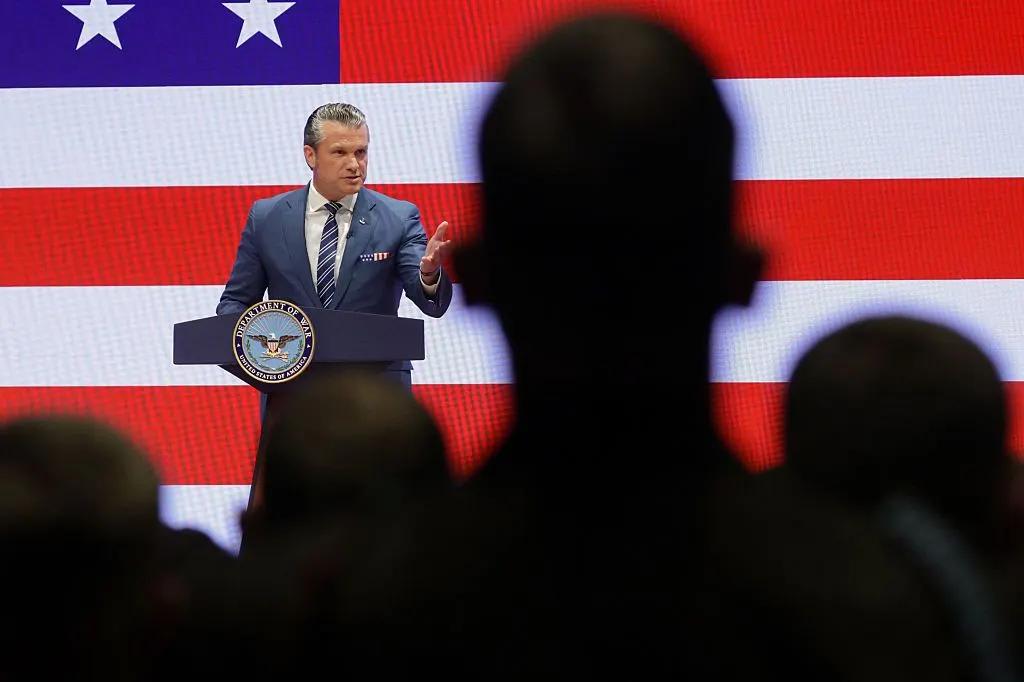
U.S. On September 30, Defense Secretary Pete Hegseth revealed a fresh Pentagon effort, Project Meridian, which will be jointly headed by Elon Musk, Palmer Luckey and Newt Gingrich to examine how warfare will evolve, making the disclosure as part of his 'State of the Force' speech delivered at Marine Corps Base Quantico, Virginia.453
Project Meridian
According to Hegseth, Project Meridian's purpose is to identify the domains the United States must conquer and the capabilities it must master, rather than simply forecasting threats.46
According to the Pentagon, the panel—made up of Musk from Tesla and SpaceX, Luckey from Anduril Industries, and former House Speaker Gingrich—must deliver its conclusions within 120 days, with Emil Michael, the department's chief technology officer, working alongside private industry on the initiative.2573
Hegseth said the review would examine how warfare could change over years and decades and would be focused, in his words, "on discovering, developing and fielding the weapons and systems that our children and our grandchildren will need in their lifetimes."41
He argued that outside expertise was needed because, as he put it, "The best forecasters of future conflict do not solely reside inside the Pentagon," and that the department should have begun this work earlier, saying "We should have been thinking about Autonomous Warfare Command ten years ago."5
Pentagon officials said the project's mandate stretches from underground to beyond the moon and is expected to produce a public report and a classified annex.57
According to Digital Today, none of the three project leaders has served in the U.S. military, and SpaceX and Anduril have together signed Pentagon contracts totaling $4.16 billion; the outlet also noted Gingrich received an honorary doctorate from Air University last year.7
A wider set of initiatives
Project Meridian was one of six new initiatives Hegseth announced in the address, which Soldier Systems Daily reported came exactly one year after he laid out previous directives at Quantico.3
The Pentagon also announced the creation of Autonomous Warfare Command, a new four-star combatant command focused on autonomous and robotic systems, which Hegseth described by saying, "Today, with Autowarcom, we institutionalize — and we supercharge — the era of robotics and autonomous systems." The department said the shift would mark the fastest peacetime transformation in modern military history and would come with new occupational specialties for autonomous warfighters.35
Additional measures announced included Fortress America, which would make every U.S. military installation energy self-sufficient; the Next Great American Base, a plan inviting states to compete for hosting 15,000 to 25,000 troops (The Hindu put the figure at 15,000 to 20,000); America's Corps of Cadets, involving partnerships with six universities; and a newly formed Office of Religious Affairs answering directly to the Secretary of War.31
Hegseth told the audience that warrior ethos had been revived, deterrence restored, recruitment and retention were strong, and that 1990-level standards were back, adding that 95 percent of the force recognizes "an Almighty God" and that the department has "a sacred duty" to support religious practice.3
Cuts and criticism
Hegseth also confirmed the Pentagon will cut 20 percent of generals and admirals by January 1, 2027, telling reporters, "I call it accountability and long overdue." Democratic Senator Mark Kelly of Arizona criticized the move, saying, "He's purging a generation of great leaders of the military, and it's going to take a generation to recover from it," while Republican Senator Mike Rounds of South Dakota said he wanted to examine the details before judging it: "If it's simply a matter of eliminating a very heavy top, there may be some validity to it, but I want to see it first."1
Common Dreams reported that upward of two dozen high-ranking military and civilian defense officials have lost their positions since Hegseth took charge, quoting an unnamed critic who said the future of the U.S. military would be determined by "a board loaded with defense contractors and one draft-dodging war hawk." Rawstory reported that the announcement drew online ridicule, with Gingrich's age cited as one point of criticism.89
According to TechCrunch, Musk has recently re-established close connections with the administration, with Project Meridian representing his first formal involvement since departing the Department of Government Efficiency; the outlet pointed out that SpaceX manages satellite systems used for national defense and that Anduril has lately secured government deals for long-range missiles and fighter jets, reflecting how prioritizing cutting-edge military technology has become a focus under Trump.2
Backdrop
The Hindu reported that the announcements came as the U.S. the military has been engaged in a conflict with Iran for seven months without a resolution in sight, having reportedly wiped out Iran's naval, air and defense capabilities, even as both nations remain locked in a standoff over command of the Strait of Hormuz. The outlet also reported that U.S. military operations have resulted in over 200 deaths from attacks on vessels suspected of drug trafficking in Latin America, and that it would take defense contractors a minimum of three years to rebuild essential weapons inventories.1
Digital Today additionally pointed out that a federal court determined in August the Pentagon had unlawfully and baselessly labeled the AI firm Anthropic a national security supply chain threat, and the outlet described a leak of classified war plans through a Signal chat along with an incident where an AI-produced report nearly triggered a military strike on Chinese vessels.7
Why it matters
The appointment of technology executives with major defense contracts to shape U.S. military strategy signals a deeper fusion of private industry and government decision-making in Washington. The parallel reduction of senior military leadership and expansion of a dedicated autonomous-systems command also points to a broader restructuring of U.S. force posture that allies will need to track closely.21
Videos
Related stories
Version history
- version 1 ·