Science & Tech · France, Holy See (Vatican City State)
Pope Leo Warns AI Risks Undermining Humanity in Paris
Opening his first visit to France, Pope Leo XIV told President Emmanuel Macron and diplomats that a 'paradise of machines' could threaten humanity, and urged technology firms and political leaders to slow down.
Listen to the story
Short version
Pope Leo XIV warned that AI could create a 'paradise of machines' undermining humanity, during the first state visit to France by a pope in 18 years.
- Warning delivered at the Élysée Palace to Macron and diplomats
- Linked to his first encyclical, Magnifica Humanitas, on AI
- Macron proposed an international AI governance body in response
- Visit follows France's abortion and assisted-dying law changes
- Macron faces low approval ratings and cannot seek a third term
Infographic
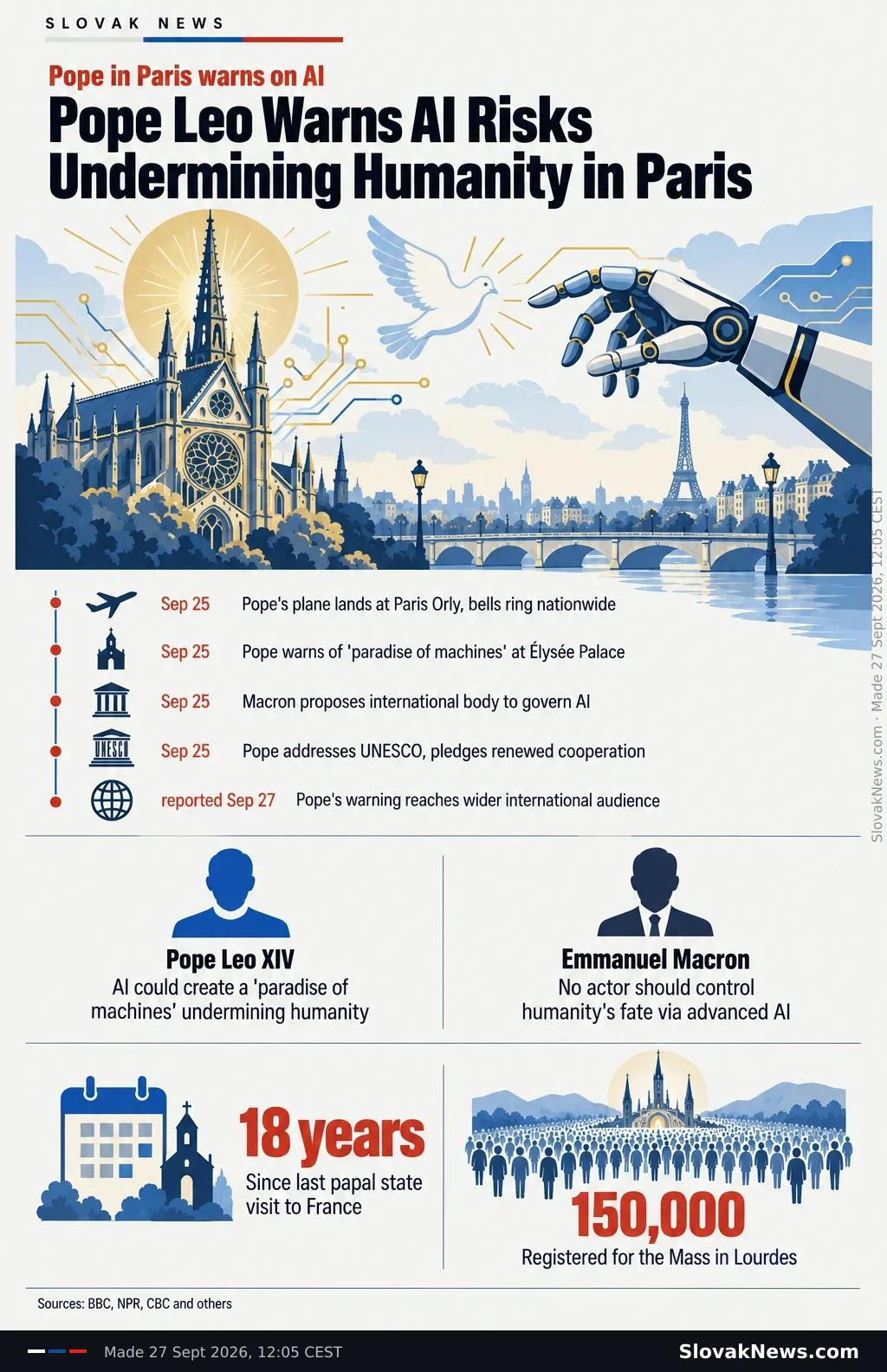
What's new
- Pope Leo XIV warned of AI's threat to humanity at the Élysée Palace on Sept 25
- He linked the warning to his first encyclical, Magnifica Humanitas, on artificial intelligence
- Macron proposed an international body to govern AI; Leo did not explicitly demand regulation
- The trip marks the first time in 18 years that a pope has made an official state visit to France
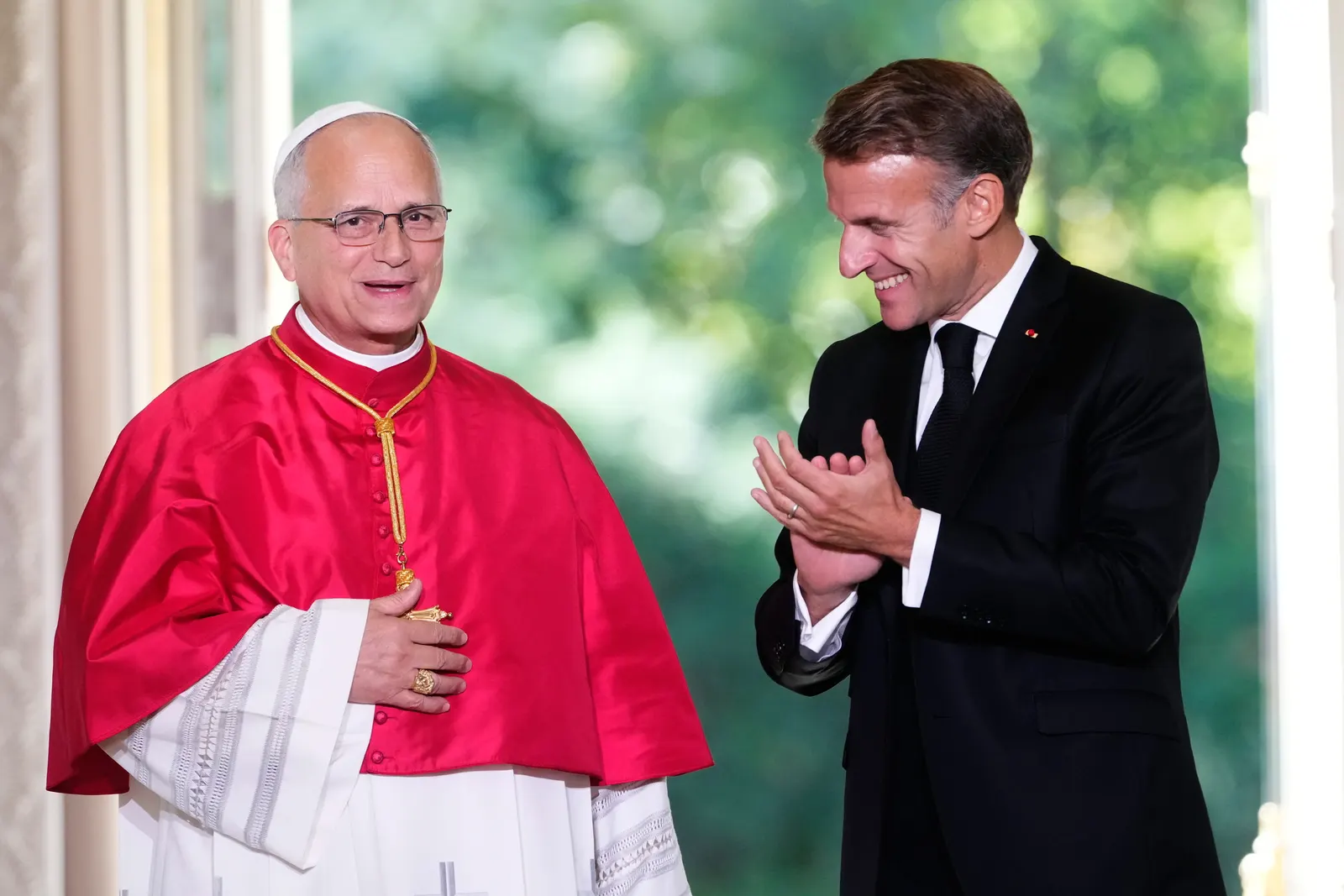
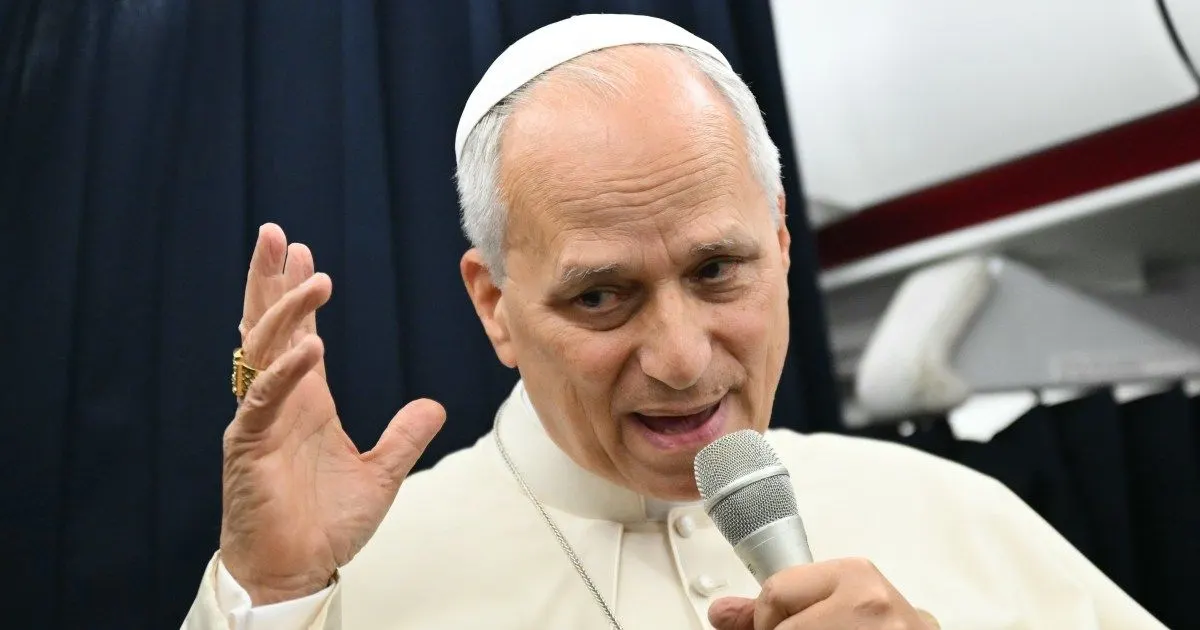
Pope Leo XIV warned on September 25 that a "paradise of machines" could undermine humanity, speaking at the Élysée Palace in Paris at the start of his first visit to France as pontiff.413
Infographic
AI warning at the Élysée
Speaking to President Emmanuel Macron, civil society figures and diplomats upon arriving in Paris, Pope Leo XIV insisted that emerging technologies ought to serve humanity rather than diminish it, cautioning that dehumanisation could hollow out both ideas and relationships.45
The pope described artificial intelligence as among humanity's most pressing challenges and devoted his first encyclical, Magnifica Humanitas, to the topic, urging developers to prioritize collective wellbeing over financial gain.32
He called on AI developers and political leaders to ease their pace, expressed satisfaction that his concerns were resonating, and voiced hope that the Vatican's ongoing conversations with tech firms would persist.32
According to the National Catholic Reporter, Macron argued that no single actor should be able to dictate humanity's fate through dominance over powerful AI systems, and floated the idea of an international body that would balance technology with justice and humanist values; the outlet also observed that Leo stopped short of explicitly calling for regulation in his Paris address, a notable contrast with the competing positions expressed at the United Nations in New York.10
Bioethics and a call for peace
Pope Leo XIV described the right to life as the essential bedrock upon which all other human rights depend, posing fundamental questions about scientific advancement, life and human rights to the audience assembled at the Élysée.325
He argued that peace comes from dialogue and justice, not a balance of power, and encouraged France to keep pressing tirelessly for peace and multilateral cooperation, while reiterating the Vatican's rejection of nuclear weapons and calling the doctrine of deterrence flawed.324
The pope further argued that true secularism ought not to push religion out of public life or schooling, a stance that stands in tension with France's constitutional commitment to strict secularism.15
A closely watched visit
Bells rang out across France when Pope Leo XIV's chartered plane touched down at Paris's Orly Airport, ahead of a visit anticipated to draw more than a million onlookers and marked as the first official papal state visit in 18 years.326
The visit comes after France enshrined abortion rights in its constitution in 2024 and after French legislators gave final approval to legislation permitting terminally ill adults to access lethal medication–both measures the French Catholic hierarchy has fiercely opposed–at a moment when the Church's sway over the nation's ethical debates has waned.32
Macron–ineligible to run again in the May elections and facing approval ratings near historic lows amid public frustration over living costs and criticism of debt, deficit and public services–thanked the pope for coming and said the visit offers hope to many in France; historian Charles Mercier suggested that welcoming the pope might let Macron borrow some of his popularity.2
Family ties and a predecessor's absence
Pope Leo's paternal grandmother was born in France. His predecessor, Pope Francis, repeatedly declined to make a proper state visit to the country during his 12-year pontificate and did not join the 2024 inauguration of the rebuilt Notre-Dame cathedral.412
Why it matters
The pope's remarks add a prominent religious voice to Europe's debate over how to govern artificial intelligence, at a time when governments and companies are weighing regulation, transparency and ethical oversight. The visit also intersects with France's domestic politics, coming as Macron faces low approval ratings and constitutional shifts on bioethical issues that the Church opposes.23
Related stories
same actors
Version history
- version 1 ·