World · Russian Federation, Ukraine, Poland
Russia Escalates Energy Strikes as Ukraine Tests Fibre-Drone Barrier
An overnight assault caused emergency electricity cuts as a Ukrainian adviser reported the first use of a drone warhead designed to sever steel structures. Ukraine is also deploying a cable-cutting barrier against longer-range fibre-guided drones.
A large Russian attack caused emergency power cuts as Ukraine reported a new warhead designed to sever steel infrastructure. Ukraine is meanwhile testing a motorised barrier against increasingly common fibre-guided drones.
- Zelensky reported nearly 190 Russian drones and ballistic missiles.
- Emergency power cuts affected Kyiv and three oblasts.
- A specialised pylon-cutting drone warhead was reported for the first time.
- Fibre-guided drones can bypass radio-frequency jamming.
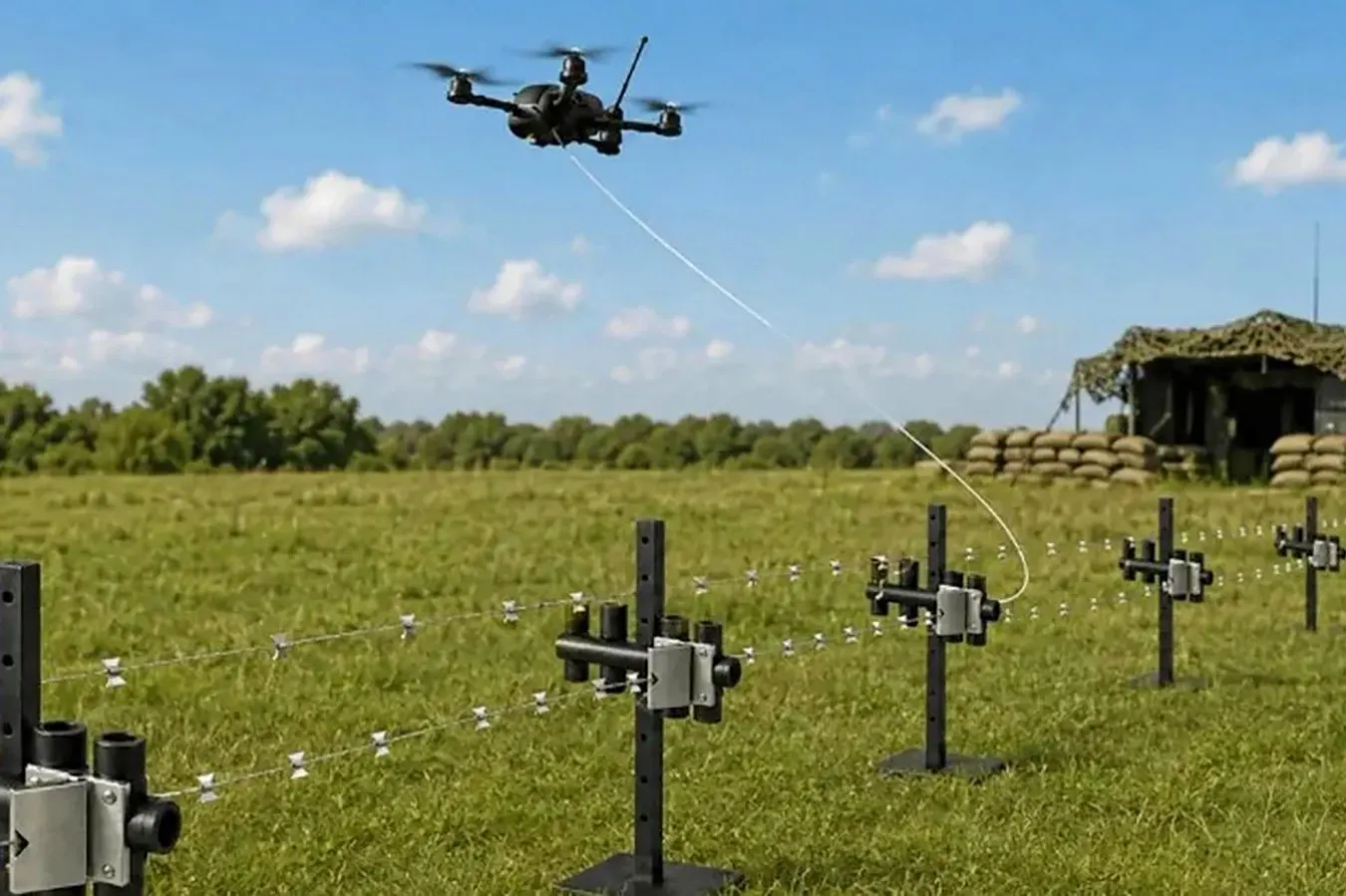
- Chaharnyk catches and cuts drones' trailing fibre cables.
What's new
- Ukraine reported nearly 190 Russian drones and ballistic missiles overnight.
- Emergency electricity cuts were imposed in Kyiv and three surrounding regions.
- A Ukrainian company has developed a barrier to sever fibre-drone control cables.
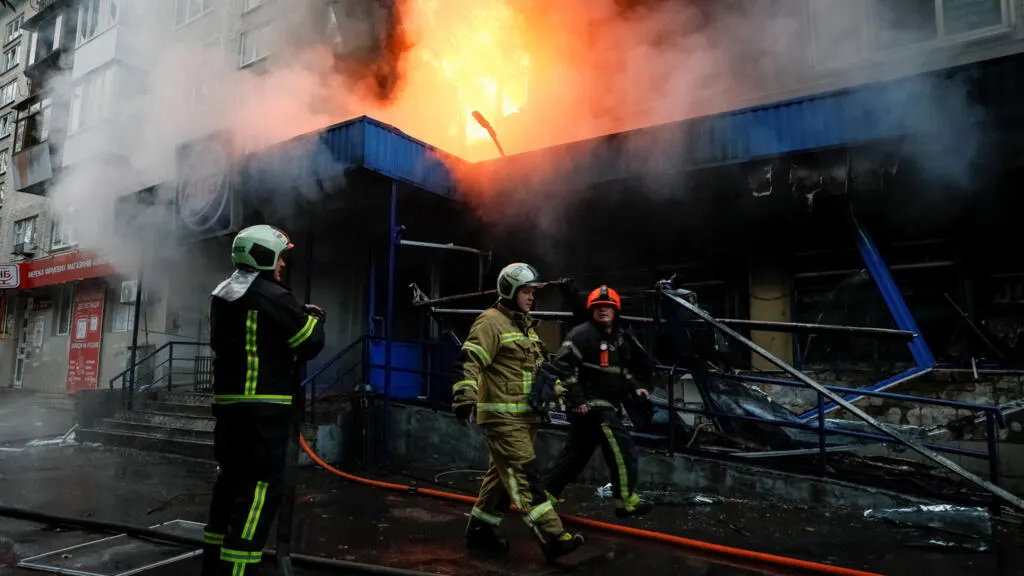
Russia launched an overnight attack on Ukraine on Sept. 30 involving nearly 190 attack drones and ballistic missiles, President Volodymyr Zelensky said, primarily targeting energy facilities in Kyiv and Kyiv Oblast and prompting emergency power cuts there and in Chernihiv and Zhytomyr oblasts. A Ukrainian presidential adviser also reported Russia's first use of a jet-powered drone carrying a warhead designed to cut high-voltage pylons and steel bridge structures.1
Renewed pressure on the power system
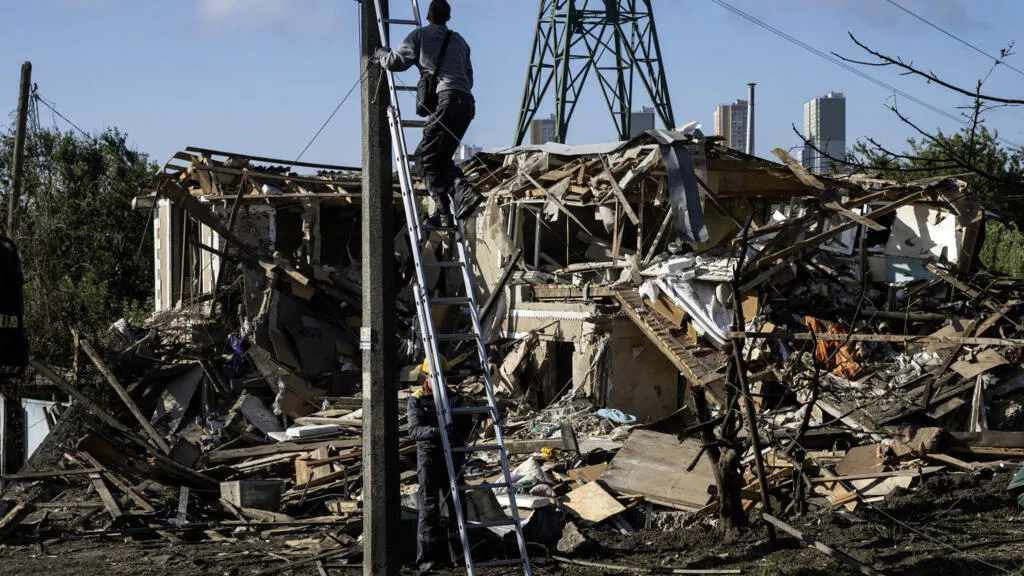
Serhii Beskrestnov, Zelensky's adviser on defence technology, said the specialised warhead comprised a 40-kilogram primary explosive charge plus four further damaging components. He said it had been developed to destroy high-voltage transmission pylons and steel bridge structures, and suggested that important power lines could become targets.1
Ukraine's air force said Russia used drones as well as Zircon, Onyx and Iskander missiles during the attack. It reported shooting down or suppressing five missiles and 155 drones. Some consumers in Kyiv and five oblasts lost electricity after the strikes, according to The Kyiv Independent, while energy facilities in Kyiv and Kyiv Oblast were described as the principal targets and critical infrastructure was hit elsewhere.1
Prime Minister Serhii Koretskyi described the assault as the first large combined attack since the end of the previous heating season. Ukraine's electricity system had already faced increased demand during hot summer weather, while Russian attacks during the previous winter had severely damaged power and heating facilities. The Kyiv Independent reported that Ukraine had not secured financing for its energy-resilience plan.1
The pressure was expected to coincide with colder conditions: overnight temperatures across Ukraine were forecast to fall to between zero and 3 degrees Celsius from Oct. 1 to Oct. 3. The Sept. 30 attack coincided with Economy and Environment Minister Oleksandr Kravchenko's estimate that Russian strikes had inflicted $10 billion in losses on Ukraine's fixed assets in 2026.1
Fibre-guided drones alter the defence problem
New Scientist reported that radio-frequency jamming stops most small drones, but designers have increasingly replaced radio links with fibre-optic cable. Such a cable connects the operator to the aircraft and is generally disabled when severed. Russia produced few fibre-guided drones in 2024, with ranges of only several kilometres, but 20-kilometre models have since become common and versions reaching 50 kilometres have started to appear, according to the publication.2
About 60 per cent of Russian first-person-view attack drones are now fibre guided, New Scientist reported. Ukraine has responded with physical measures, including net tunnels covering hundreds of kilometres of roads, experiments intended to cut the trailing cables and a government-led platform's video showing civilians how to break fibre by hand.2
A system called Chaharnyk, developed by Kyiv's Logika Design Bureau, uses an acoustic sensor to detect a drone overhead and activate a motorised wire barrier. Hooks on the barrier catch the trailing fibre and draw it towards a cutting block. The battery-powered and weatherproof equipment can be switched remotely and is supplied in two 50-metre sections that two people can install in less than an hour, according to New Scientist.2
The manufacturer claims Chaharnyk severs the cable of 95 per cent of drones passing above it. Roy Gardiner, intelligence director at Defense Tech for Ukraine, said the system could help protect extensive rear-area sites such as electrical substations that cannot readily be covered by netting. He cautioned, however, that its acoustic sensor still had to demonstrate that it could identify threats amid battlefield noise.2
Effects beyond the immediate targets
The Sept. 30 attack also produced alerts outside Ukraine. The Kyiv Independent reported that a drone entered Moldovan airspace, fell near Hirbovat in the Anenii Noi district and exploded, with no injuries initially reported. Romania scrambled two Spanish air-force F-18 fighters after radar detected an aerial target east of Izmail, although no object entered Romanian airspace, according to the report.1
Ukraine now uses a two-level air-raid alert framework to limit the economic harm resulting from prolonged warnings. Kravchenko estimated that every hour in which missile warnings stop businesses from operating costs the country $45 million, although more than half of businesses continue working during yellow alerts. The government is also discussing whether more private companies should be allowed to buy Ukrainian air-defence systems.1
Why it matters
The reported drone explosion in Moldova and Romania's decision to scramble fighters show how attacks near Ukraine can trigger security responses elsewhere in Europe. The growth of longer-range fibre-guided drones also presents a protection challenge for roads and large installations such as electrical substations, which cannot always be enclosed by netting.12
Videos
Related stories
same actors

Version history
- version 1 ·