Slovakia · Slovakia, Russian Federation
Slovak Opposition Demands Security Council Meeting Over GRU Claims
Slovak parties call on Prime Minister Robert Fico to convene the Security Council after German media linked a Russian military intelligence group to a thwarted arson attack near Prešov.
Slovak opposition parties on September 26 demanded that Prime Minister Robert Fico convene the Security Council after German media reported that a group linked to Russian military intelligence, the GRU, allegedly operated from Slovakia and planned a thwarted arson attack on the Skyeton drone plant near Prešov. SIS chief Pavol Gašpar said attribution of the plot, which he called one of the service's most successful counterintelligence operations, has not been confirmed by Slovak or German authorities, and he urged restraint in sharing unverified claims. Police said four people were charged in a separate operation over the Haniska plant plot and that the investigation continues, while declining to comment on alleged intelligence links.
The reports followed a September 3 arson attack in Munich, after which German police detained two Bulgarian nationals reportedly tied to the same GRU-linked network, according to Frankfurter Allgemeine Zeitung. Opposition figures, including Tomáš Valášek, František and Milan Majerský, and Veronika Remišová, criticised the government's handling of the matter and called for greater transparency and, if confirmed, diplomatic consequences against Russia.
Slovak opposition demands a Security Council meeting after German media linked a GRU-tied group to a thwarted Prešov arson plot, which SIS says remains unconfirmed.
- Opposition parties demand Security Council meeting and Fico's explanation
- SIS chief says attack attribution to GRU not yet confirmed
- Four people charged in Slovakia over separate Haniska arson plot
- German reports link Munich-detained Bulgarians to GRU network
- Germany officially attributes Leipzig/Halle airport plot to Russia
Listen to the story
Short version · read by a synthetic voice
What's new
- Opposition parties demand a Security Council meeting and explanations from Fico
- SIS chief Pavol Gašpar says attribution of the thwarted Prešov arson attack is unconfirmed
- Police say they are checking all claims but will not comment on specific intelligence links
- German reports tie two detained Bulgarians and the Prešov plot to a GRU-linked network
Slovak opposition parties on September 26 demanded that Prime Minister Robert Fico convene the Security Council of the Slovak Republic after German media reported that a group linked to Russian military intelligence, the GRU, may have operated from Slovakia and planned a thwarted arson attack on the Skyeton drone plant near Prešov.24
Opposition pressure
Opposition parties and movements told TASR they were seeking an explanation from the government over reports by the German newspaper Frankfurter Allgemeine Zeitung, which cited security-service sources describing a group connected to the GRU that allegedly operated from Slovakia and planned the attack on the Skyeton drone factory near Prešov.2
Tomáš Valášek of Progressive Slovakia (PS) said it was unacceptable that information about a possible Russian trace in an attack in Slovakia had emerged this way rather than from the prime minister, and that the Security Council had still not been convened over the case. PS also called on Fico to address the public on the findings and, should the Russian link be confirmed, demanded accountability measures toward Russia, including the expulsion of Russian intelligence officers operating under diplomatic cover, according to the party.2
The KDH party demanded both a Security Council meeting and an extraordinary session of parliament's SIS oversight committee. Its chairman, František Majerský, said he would request the extraordinary sitting and expected concrete information from SIS leadership. "Vedenie SIS musí vysvetliť, čo o tejto sieti vedelo a aké kroky podniklo," he said.2
KDH's Milan Majerský said state security policy could not be shaped by the government's political sympathies toward particular countries, adding that if allies uncover a foreign power's operations reaching Slovak territory, the government must act professionally and in close cooperation with them.2
Veronika Remišová called on Fico to convene the Security Council immediately, describing the information as extremely serious. According to Remišová, her own government had previously dismantled networks of Russian agents, detained people working for Russian services and expelled unwanted Russian diplomatic staff. She said, "Je znepokojujúce, že vinou zjavnej kolaborantskej politiky Ficovej vlády sa zo Slovenska stáva brloh ruských teroristických a sabotážnych skupín."2
SIS and police response
SIS chief Pavol Gašpar said the attribution of the arson attack thwarted by Slovak security forces had not yet been confirmed, calling the operation one of the most successful counterintelligence actions in the service's history. "Atribúcia podpaľačského útoku, ktorý bol úspešne zmarený činnosťou našich bezpečnostných zložiek a je jednou z najúspešnejších kontrašpionážnych operácií SIS v jej histórii, nie je doposiaľ potvrdená," he said, adding that German security and investigative authorities had also not confirmed the information.2
Gašpar said the public would be informed to the extent possible once attribution was confirmed or a false-flag version could be ruled out, and he urged opposition politicians and the media to exercise restraint in sharing unverified information about the scale of Russian intelligence activity in Slovakia, which he said had been published by Frankfurter Allgemeine Zeitung.2
Police spokesman Roman Hájek said the Police Force continuously monitors Slovakia's security situation and cooperates with other security bodies and foreign partners to assess possible threats. He said police treat risks tied to sabotage or arson preparation extremely seriously and have mechanisms in place for an adequate response, adding that further measures would be adopted if necessary.23
Hájek said all relevant findings and public claims linked to the investigation would be checked under lawful procedures, but that police would not disclose details about their sources or ongoing inquiries, nor comment at this stage on alleged links between specific individuals and foreign intelligence services. "Vzhľadom na aktuálne štádium vyšetrovania nie je možné poskytnúť ďalšie podrobnosti," he said.23
Within a police operation codenamed Dron, four people were charged with preparing an arson attack on a production plant in Haniska near Prešov, and the investigation continues as police obtain further evidence.2
German connection
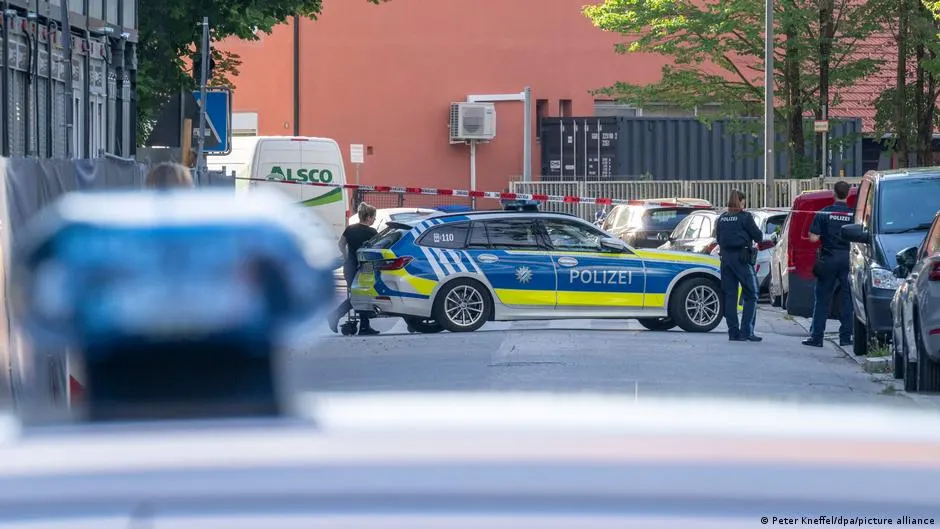
According to Frankfurter Allgemeine Zeitung, two Bulgarian nationals detained after a September 3 arson attack in Munich were part of a group connected to the GRU. German investigators linked the two arrested Bulgarians, a 28-year-old woman and a 38-year-old man, to a network tied to Russian military intelligence, according to reporting cited by Formiche. Incendiary devices were reportedly thrown from a car at a construction site in Munich's Berg am Laim district, near the Rohde & Schwarz company.12
The Slovak prosecutor's office said three people had planned an arson attack against the Skyeton plant; two suspects, a Latvian and a Ukrainian national, were detained in Slovakia, while a second Latvian was arrested in Hamburg with extradition proceedings under way, according to Formiche.1
The German federal government has officially attributed an attempted attack at Leipzig/Halle airport to Russia, after an explosive-equipped drone configuration was identified near Ukrainian cargo aircraft there, according to Formiche.1
Why it matters
The dispute touches on how Slovakia's government responds to allegations of Russian intelligence activity on its territory, and on whether findings from allied security services are shared transparently with the public and parliament. The case also intersects with wider reporting on alleged Russian-linked sabotage plots against defence-related targets in Germany and Slovakia.12
How the story unfolded
The story's events over time. Click a person, place or related story.
What we know
- Four people were charged in Slovakia under operation Dron over a planned arson attack near Prešov.
- SIS chief Gašpar called the thwarted attack one of the service's most successful counterintelligence operations.
- Neither Slovak nor German authorities have confirmed attribution of the plot to the GRU.
- Opposition parties have formally demanded a Security Council meeting and public explanations from the government.
What we don't know yet
- Whether the GRU-linked group described by Frankfurter Allgemeine Zeitung was in fact connected to the Prešov and Munich incidents.
- Whether the Skyeton attack plot and the Munich arson attack were coordinated by the same network.
- Whether Robert Fico will convene the Security Council in response to opposition demands.
Timeline
- Sep 3An arson attack occurs in Munich's Berg am Laim district near Rohde & Schwarz; Bavarian police later detain a 28-year-old woman and 38-year-old man, both Bulgarian nationals.1
- Sep 26Frankfurter Allgemeine Zeitung reports, citing security-service sources, that the detained Bulgarians belonged to a GRU-linked group that operated from Slovakia and planned an attack on the Skyeton drone plant near Prešov.12
- Sep 26Slovak police confirm four people were charged under operation Dron over the planned Haniska arson attack and say the investigation continues.2
- Sep 26SIS chief Pavol Gašpar says attribution of the thwarted attack has not been confirmed by Slovak or German authorities.2
- Sep 26Opposition parties, including PS and KDH, demand a Security Council meeting and explanations from Robert Fico.24
- Sep 26Police spokesman Roman Hájek says police are continuously monitoring the security situation and checking all relevant claims.3
- Sep 26Formiche reports that Germany has officially attributed an attempted drone attack at Leipzig/Halle airport to Russia.1
Quotes
Atribúcia podpaľačského útoku, ktorý bol úspešne zmarený činnosťou našich bezpečnostných zložiek a je jednou z najúspešnejších kontrašpionážnych operácií SIS v jej histórii, nie je doposiaľ potvrdená,
V prípade, že sa atribúcia potvrdí alebo bude možné vylúčiť verziu ‚false flag‘ operácie, bude verejnosť v možnom rozsahu informovaná,
Je absolútne neprijateľné, že informáciu o ruskej stope v atentáte na Slovensku sa dozvedáme takto, a nie od predsedu vlády.
Vedenie SIS musí vysvetliť, čo o tejto sieti vedelo a aké kroky podniklo,
Related stories
Version history
- version 1 · 27 September at 12:34