SNS Threatens Coalition Majority Over Taraba Dismissal Dispute
SNS leader Andrej Danko said his party will not back the government's Slovakia 2040 Vision and is ready to vote with the opposition to remove Environment Minister Tomáš Taraba, deepening tension within Robert Fico's coalition.
SNS leader Andrej Danko said his party will reject the government's Slovakia 2040 Vision and is ready to help the opposition remove minister Tomáš Taraba, straining Slovakia's ruling coalition.
- SNS will not back the Slovakia 2040 Vision in parliament
- SNS demands Taraba's removal, cites seven certain votes
- Fico withdrew his own dismissal proposal for Taraba
- Losing three coalition votes could cost the majority
- Parliamentary vote on Taraba's dismissal expected
What's new
- Danko announced SNS will not vote for the Slovakia 2040 Vision document in parliament
- SNS said it is prepared to vote with the opposition to dismiss Taraba, citing seven certain votes
- Fico withdrew his dismissal proposal for Taraba, a move Danko says breaches the coalition agreement
- A parliamentary vote on Taraba's dismissal is expected
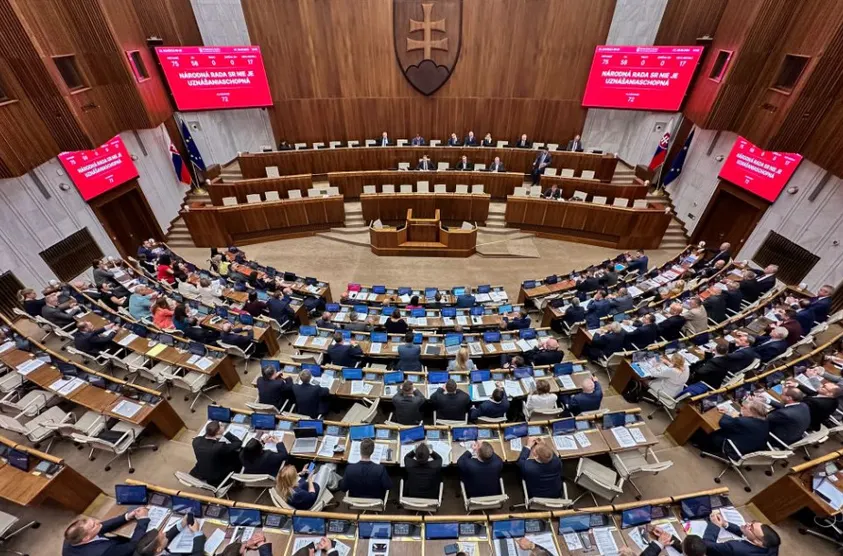
Slovak National Party (SNS) leader Andrej Danko told parliament on September 29 that his party's caucus will not support the government's Slovakia 2040 Vision document, as SNS simultaneously pressed for the dismissal of Environment Minister Tomáš Taraba and said it was ready to vote with the opposition to achieve it.231
Vision document rejected
The Slovak government approved and submitted the Slovakia 2040 Vision to parliament for a vote, but Danko told deputies that SNS could not support its approval, according to TASR and Aktuality.sk.23
Danko argued it was wrong for the prime minister to lack information about the contents of the vision, and questioned whether Fico's interest in the document was genuine, according to Aktuality.sk and Topky.sk/TASR. He also said the document resembles the program of the opposition party PS, a claim reported by Aktuality.sk and Topky.sk/TASR.234
Push to remove Taraba
Alongside the dispute over the vision, SNS demanded the removal of Taraba and said it was prepared to vote with the opposition to secure his dismissal, according to Hospodárske noviny. Danko said Taraba lacked the confidence of his own party, SNS, and predicted he would be recalled that day.1
According to Danko, the coalition agreement gives leaders of coalition parties the right to propose replacement of their own nominees, and he accused Fico of not respecting that agreement by refusing to accept the change, Hospodárske noviny reported. He also said the agreement bars coalition parties from pursuing interests against one another with opposition support, but argued that voting with the opposition on Taraba's dismissal would not itself breach the pact, according to Topky.sk/TASR.14
Danko questioned whether Taraba had secured the parliamentary vote of Radomír Šalitroš, a state secretary reportedly considering leaving his post to return to parliament, but later said he was uncertain whether Šalitroš would return in time. Danko said Taraba instead had the support of Hlas MP Peter Slyško.1
Topky.sk/TASR reported that Danko accused Taraba of blackmailing the prime minister and threatening Slovakia, and demanded that coalition partners Smer-SD and Hlas-SD back the dismissal.4
Coalition arithmetic
According to Hospodárske noviny, if Taraba, Šalitroš and Slyško were to break with the government, the coalition would lose its parliamentary majority. Danko said SNS had seven certain votes to support Taraba's dismissal and that the party would present its position to fellow SNS caucus member Peter Kotlár, according to Topky.sk/TASR.14
Topky.sk/TASR reported that Fico withdrew his own proposal to dismiss Taraba, a step Danko said violated the coalition agreement. Opposition party PS was reported to be planning a procedural motion to accelerate debate on the recall vote, according to Hospodárske noviny, and a parliamentary vote on Taraba's dismissal was expected.41
Why it matters
The dispute exposes strain within Slovakia's ruling coalition over both policy direction and control of ministerial appointments.1
Related stories
consequence
Version history
- version 1 ·