Slovakia · Slovakia, Russian Federation, Germany
Slovak Intelligence Chief Urges Caution Over Reports of GRU Network
Pavol Gašpar, head of Slovakia's SIS, called for restraint after German media linked a Munich arson attack and a foiled plot in Slovakia to Russia's GRU military intelligence.
German media reported that a Munich arson attack on 3 September, targeting a construction site near defense firms Rohde & Schwarz and Helsing, was linked by investigators to Russia's GRU military intelligence. Two detained Bulgarian suspects were said to belong to a group that allegedly operated from Slovakia and had also planned an attack on the Skyeton drone plant near Prešov, a plot that was foiled.
Slovak intelligence chief Pavol Gašpar confirmed security services had thwarted an arson plot but said the Russian attribution remains unconfirmed by German authorities. Slovak opposition politicians criticized the government for learning of the reports through foreign media and demanded explanations from Prime Minister Robert Fico along with an emergency Security Council session. Germany separately blamed Russia for a related Leipzig/Halle incident and expelled diplomatic staff across Europe amid a broader pattern of alleged sabotage.
German media linked a Munich arson attack and a foiled Slovak plot to Russia's GRU, prompting Slovakia's intelligence chief to urge caution while the opposition demands answers.
- Munich arson on Sept 3 tied to GRU by German investigators, per FAZ
- Two Bulgarians detained; reportedly part of Slovakia-based GRU network
- Foiled plot targeted Skyeton drone plant near Prešov
- SIS chief Gašpar says attribution not yet confirmed
- Slovak opposition demands PM Fico explain and convene Security Council
Listen to the story
Short version · read by a synthetic voice
What's new
- SIS chief Pavol Gašpar responded on 26 September to German press reports of a GRU-linked network operating from Slovakia
- Gašpar confirmed a foiled arson attack was thwarted by Slovak security services but said its attribution to Russia is not yet confirmed
- Slovak opposition figures demanded an explanation from Prime Minister Robert Fico and the convening of the Security Council
- German investigators reportedly tied the Munich arson, a Leipzig/Halle drone plot and the foiled Prešov attack to the same GRU-linked group
Pavol Gašpar, head of Slovakia's Information Service (SIS), called on 26 September for restraint from opposition politicians and media in handling unverified reports that a network linked to Russia's GRU military intelligence had operated from Slovakia, after German outlet Frankfurter Allgemeine Zeitung reported the group's alleged role in an arson attack in Munich and a foiled plot near Prešov.31
Munich arson and German investigation
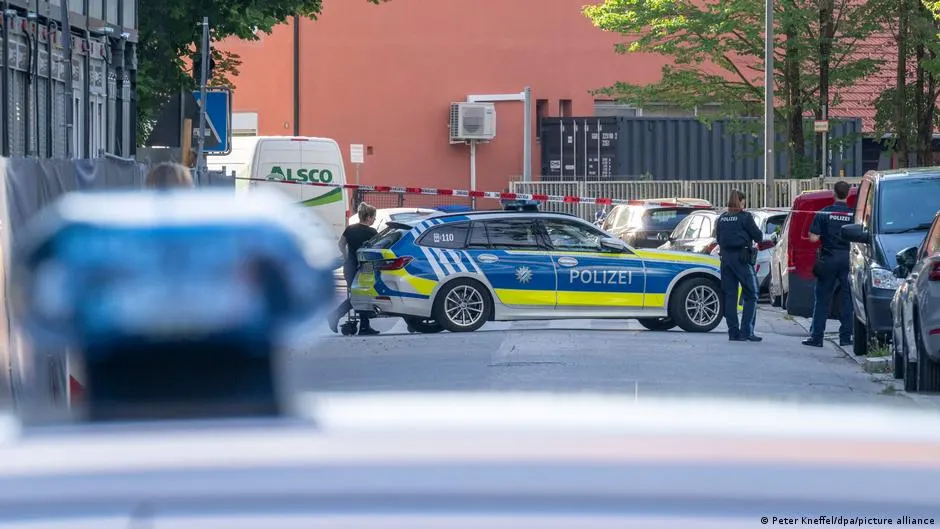
According to Deutsche Welle, which cited FAZ, someone in a moving vehicle hurled incendiary devices onto a construction site adjacent to the Munich headquarters of Rohde & Schwarz and Helsing on 3 September. The fire was quickly extinguished, caused only minor damage and injured no one; a second flammable object at the scene did not ignite and was defused.25
German investigative bodies linked the arson to Russian special services, according to FAZ, which cited sources in German security agencies. German authorities are reported to hold the GRU responsible for the Munich incident, as they did for an earlier attempted drone-explosives attack at Leipzig/Halle airport, which Germany officially blamed on Russia at the start of September, according to the same report.2
Police detained two Bulgarian suspects, a 28-year-old woman and a 38-year-old man, at a nearby petrol station, according to Deutsche Welle. German authorities regard them as recruited, inexperienced low-level operatives, the report said. Rohde & Schwarz works in security and communication technology for government and military clients and, according to Postoj, supplies drones to Ukraine's armed forces; Helsing produces drones, including for Ukraine, according to Deutsche Welle.21
As countermeasures, Germany closed the Russian Consulate General in Bonn and the Russian House in Berlin, after which Moscow announced the closure of Goethe-Institut branches and Germany's Consulate General in Saint Petersburg, according to Deutsche Welle. German authorities are also investigating other related incidents, including a drone sighted near a Bundeswehr base close to Hanover, the outlet reported.2
Reported Slovak connection
According to FAZ, cited by Hospodárske noviny and Postoj, the two Bulgarians detained after the Munich attack were part of a group linked to the GRU that is reported to have operated from Slovakia. According to these reports, the same group allegedly plotted to set fire to the Skyeton facility near Prešov—a plant that manufactures surveillance drones for Ukraine—though the scheme was ultimately stopped.31
A Latvian and a Ukrainian were reportedly detained in Slovakia and another Latvian was arrested in Hamburg in connection with the foiled Prešov plot, according to The Insider and Česká televize. German investigators are reported to have linked the Munich arson, the Prešov plot and the Leipzig/Halle drone attempt to the GRU, the outlets said. Czech commentator Petr Mlejnek said, "Slovensko mohlo sloužit jako jeden z uzlů širší sítě napojené na ruskou vojenskou rozvědku GRU."54
SIS chief's response
Gašpar, writing on social media according to Hospodárske noviny, confirmed that Slovak security services had thwarted an arson attack, describing it as one of the most successful counterintelligence operations in the SIS's history. He said, "Atribúcia podpaľačského útoku, ktorý bol úspešne zmarený činnosťou našich bezpečnostných zložiek a je jednou z najúspešnejších kontrašpionážnych operácií SIS v jej histórii, nie je doposiaľ potvrdená."3
Gašpar said the information had not been confirmed by German security and investigative authorities and stated, "V prípade, že sa atribúcia potvrdí alebo bude možné vylúčiť verziu 'false flag' operácie, bude verejnosť v možnom rozsahu informovaná." He added that police continuously monitor the security situation in Slovakia, cooperate with other security bodies and foreign partners to assess threats, and take the risk of sabotage or arson attacks extremely seriously, with mechanisms in place to respond to potential threats.31
Political reaction
Opposition politicians demanded that Prime Minister Robert Fico's government explain the German media reports and called for an extraordinary meeting of the Security Council, according to Postoj and Česká televize. Viliam Karas asked, "ako je možné, že ľudia napojení na ruské spravodajské štruktúry mohli využívať Slovensko ako svoje zázemie," and said, "o takýchto závažných skutočnostiach sa dozvedáme zo zahraničných médií, a nie od slovenskej vlády."1
Milan Majerský stated, "Úlohou vlády nie je rozhodovať, odkiaľ sa jej bezpečnostná hrozba politicky hodí a odkiaľ nie. Jej úlohou je chrániť Slovensko a jeho občanov." Veronika Remišová described the reports as "mimoriadne vážne informácie," while Tomáš Valášek remarked, "Je absolútne neprijateľné, že informáciu o ruskej stope v atentáte na Slovensku sa dozvedáme z nemeckých novín a nie od predsedu vlády."1
Wider pattern
Deutsche Welle described the GRU as one of the most effective tools in a hybrid war Moscow conducts against the West, with security services linking the structure to sabotage in Germany, Poland, the Baltic states and other EU countries using explosives, incendiary devices or weapons. Such actions are aimed at logistics routes for military cargo to Ukraine and at pressuring Germany and other European countries to reduce or halt support for Kyiv, according to the outlet.2
According to The Insider, the GRU has been enlisting agents via Telegram and compensating them with cryptocurrency, while several European nations have expelled Russian intelligence officers who were working under diplomatic cover. French President Emmanuel Macron warned that France could experience an attack comparable to the Leipzig episode, and El Mundo reported that U.S. intelligence agencies had recently alerted European governments to a potential Russian drone strike targeting Spain, France, or Italy.5
Why it matters
The reports describe an alleged pattern of sabotage across Germany, Slovakia and other European states tied to a hybrid campaign aimed at disrupting military support for Ukraine. The Slovak government's handling of the reports has become a domestic political flashpoint, with opposition figures questioning whether authorities are transparent about security threats.21
How the story unfolded
The story's events over time. Click a person, place or related story.
What we know
- An arson attack occurred at a Munich construction site on 3 September, causing minor damage
- Two Bulgarian suspects were detained near the scene
- Slovak security services say they thwarted a separate arson plot in Slovakia
- Germany blamed Russia for a separate Leipzig/Halle incident and imposed diplomatic countermeasures
- Slovak opposition has demanded government explanations and a Security Council meeting
What we don't know yet
- Whether German security and investigative authorities have confirmed the GRU link to the foiled Slovak plot
- Whether the reported Munich-Slovakia network attribution to Russia is accurate or could be a false-flag operation
- The full extent of Russian intelligence activity on Slovak territory, as reported by FAZ but not yet independently confirmed
Timeline
- Sep 3Incendiary devices thrown from a car set a fire at a Munich construction site near Rohde & Schwarz and Helsing headquarters; a second device was defused.24
- Sep 25FAZ reported, citing German security sources, that investigators linked the Munich arson to the GRU and that two detained Bulgarians were part of a group operating from Slovakia.25
- Sep 25Germany's blaming of Russia for the Leipzig/Halle incident and closure of Russian diplomatic facilities were reported, alongside Moscow's reciprocal closures.2
- Sep 25A Latvian and a Ukrainian were reported detained in Slovakia, and another Latvian arrested in Hamburg, over the foiled Prešov plot.5
- Sep 26SIS chief Pavol Gašpar urged restraint over unverified reports and confirmed a thwarted arson plot in Slovakia without confirming Russian attribution.31
- Sep 26Slovak opposition politicians demanded explanations from PM Robert Fico and the convening of the Security Council.1
- Sep 27Czech outlet ČT24 reported FAZ's account that the Munich attackers operated from Slovakia and linked the Prešov and Leipzig/Halle incidents to the same GRU network.4
Quotes
Atribúcia podpaľačského útoku, ktorý bol úspešne zmarený činnosťou našich bezpečnostných zložiek a je jednou z najúspešnejších kontrašpionážnych operácií SIS v jej histórii, nie je doposiaľ potvrdená.
V prípade, že sa atribúcia potvrdí alebo bude možné vylúčiť verziu 'false flag' operácie, bude verejnosť v možnom rozsahu informovaná.
ako je možné, že ľudia napojení na ruské spravodajské štruktúry mohli využívať Slovensko ako svoje zázemie
o takýchto závažných skutočnostiach sa dozvedáme zo zahraničných médií, a nie od slovenskej vlády
Related stories
Version history
- version 1 · 27 September at 11:54