World · South Africa
ANC narrowly leads early South African local election count
Partial results put the ANC just ahead of the Democratic Alliance after the November 4 vote. Service failures and the prospect of coalition negotiations frame the contest.
Listen to the story
Short version
The ANC narrowly led an incomplete municipal count, The Straits Times reported. Final results and coalition arrangements remained unresolved.
- Early count: ANC about 32%, DA 31%, according to The Straits Times.
- Only about 12% of votes had been counted.
- Service failures featured in BBC and Guardian coverage.
- Johannesburg was expected to need coalition negotiations.
What's new
- The Straits Times reported an early ANC lead of about 32%, against the DA’s 31%.
- About 12% of votes had been counted by 0424 GMT on November 5.
- Major municipalities, including Johannesburg, were expected to require coalition negotiations.
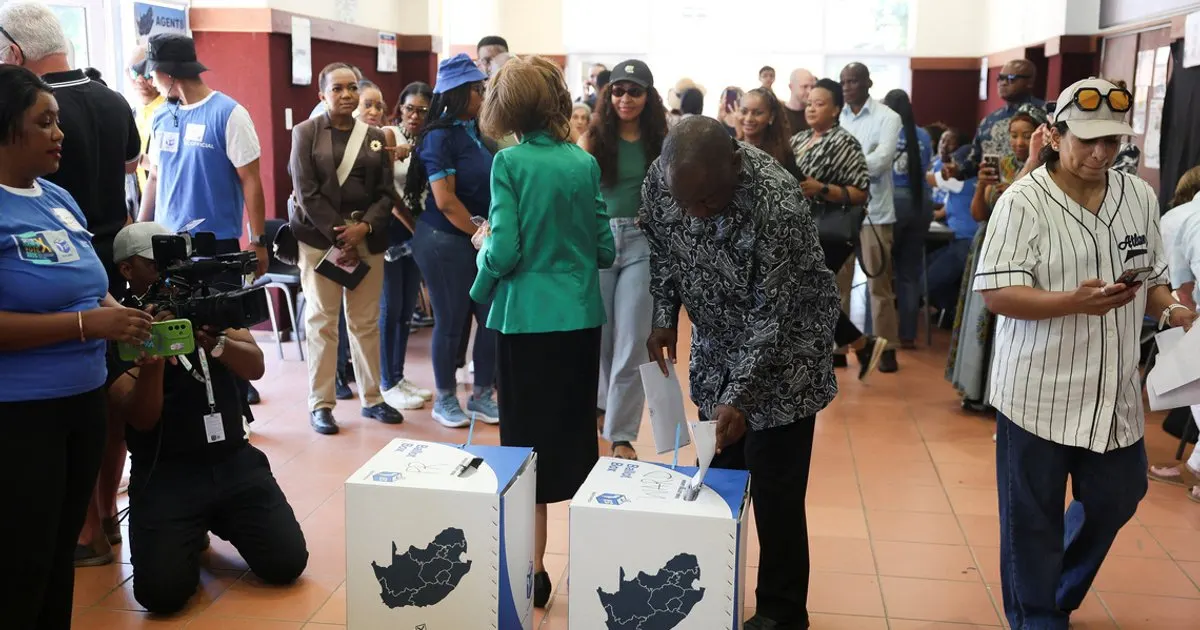
South Africa’s African National Congress narrowly led the Democratic Alliance in early results reported on November 5, following municipal elections across the country on November 4. The Straits Times reported the ANC at about 32% and the DA at 31%, with only about 12% of votes counted by 0424 GMT.3
A partial picture
The count remained incomplete in provinces central to the contest. According to The Straits Times, only a small share of districts in Gauteng and KwaZulu-Natal had reported. The newspaper cited a CSIR projection putting the eventual ANC share at about 32% and the DA at 26%, rather than the near-equal shares in the early returns.3
The election follows a longer decline in ANC support. The BBC reported that the party lost its parliamentary majority in the previous national election, its first such loss since 1994. The Guardian put its share at 45.6% in the 2021 municipal vote and 40.2% in the 2024 national election. President Cyril Ramaphosa rejected the suggestion that the party was on a downward trajectory, the BBC reported.12
Services and participation
The authorities being elected oversee water, electricity and refuse collection. The BBC reported that auditor-general assessments showed widespread municipal problems, with only 39 municipalities receiving clean audits between 2024 and 2025. It also reported auditor-general Tsakani Maluleke’s warning to lawmakers that Johannesburg’s financial position and delivery of services were worsening.2
Residents’ accounts illustrated both dissatisfaction and different responses to voting. In Alexandra, 18-year-old Sanele Ntombela told the BBC he intended to vote for the first time because he believed change was possible. Registered voter Zandile Mncube, 33, said she would abstain because conditions had deteriorated. The BBC reported that participation had been falling, particularly among younger voters.2
The Guardian reported that Johannesburg had experienced water shortages for more than a week. It identified repeated changes of leadership within unstable coalitions as a major contributor to failures in services. Those problems formed part of the backdrop to an election in which, according to The Straits Times, voters were expected to penalise the ANC over services, crime and corruption scandals.13
Coalition choices
The Straits Times reported that Johannesburg and other major municipalities were not expected to produce an outright winner. Parties would have two weeks after results were declared to agree on coalition governments. Voters do not directly choose mayors in these elections, according to The Guardian.13
Analysts cited by The Straits Times described an ANC-DA arrangement as the most stable option for cities such as Johannesburg, while noting that the ANC could instead partner with the Economic Freedom Fighters and uMkhonto weSizwe. The Guardian, citing South African media, reported openness to a DA agreement among national ANC leaders but resistance locally. These remained possible arrangements, not announced governing agreements.13
Why it matters
For European readers following South African politics, the municipal contest offers a measure of party support ahead of the 2029 national election. The Straits Times also reported that the outcome could affect the ANC succession contest as Ramaphosa approaches the end of his party leadership term in 2027.3
Videos
Related stories
Version history
- version 1 ·