World · Spain
Spain calls November election after defeat of housing measures
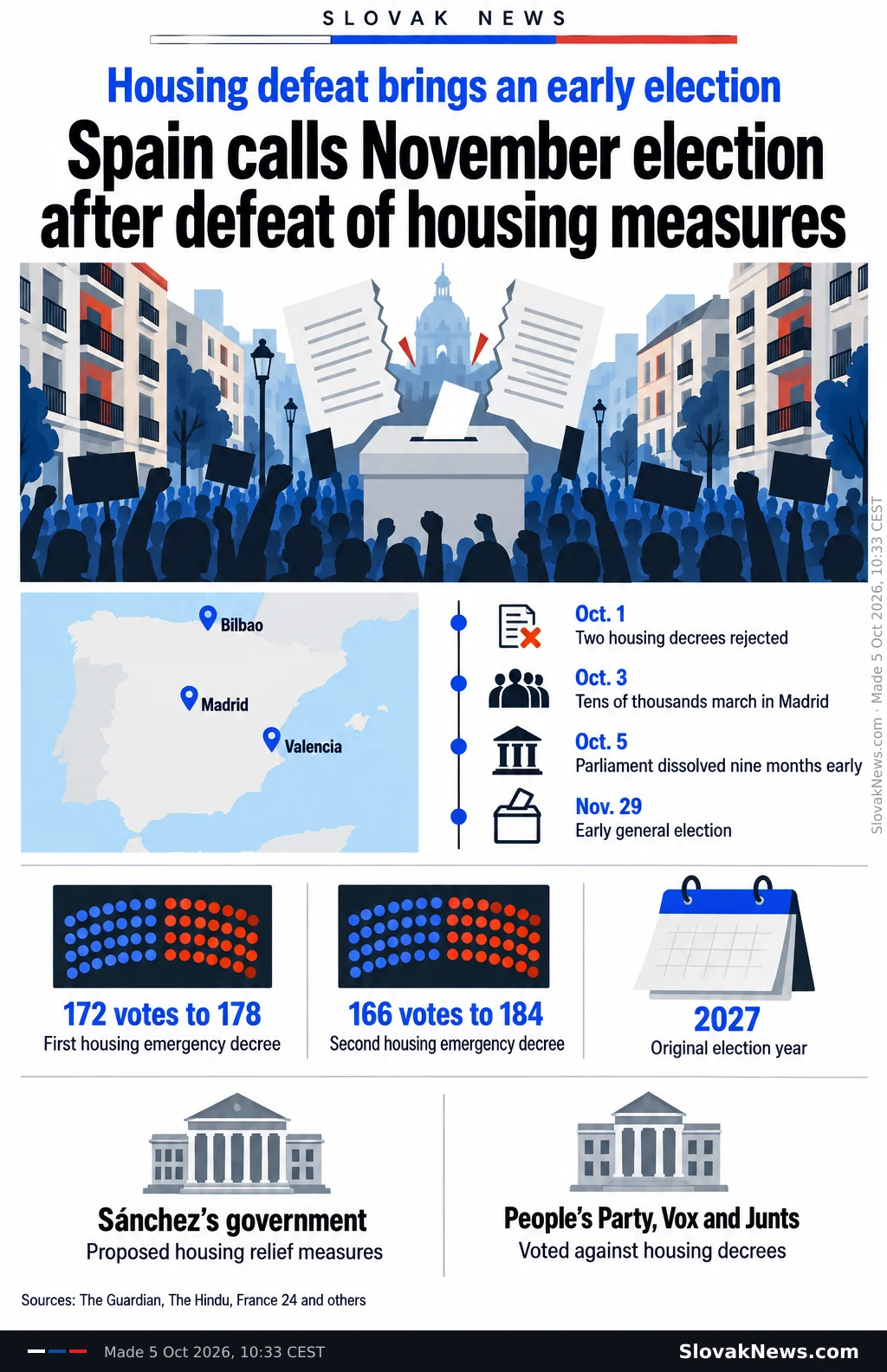
Prime Minister Pedro Sánchez brought forward a general election previously expected in 2027 after parliament rejected two housing decrees. The decision comes amid demonstrations over housing affordability and evictions.
Listen to the story
Short version
Sánchez called a November 29 election after parliament defeated two housing decrees. The vote follows nationwide housing protests and comes with his Socialist Party trailing in opinion polls.
- The election replaces a vote previously scheduled for 2027.
- Parliament rejected two government housing decrees.
- Protests have spread across Madrid and other Spanish cities.
- Polls cited by France 24 favour a PP-led coalition.
- Tenants’ representatives are discussing a possible general strike.
Infographic

What's new
- Sánchez has called an early general election for November 29.
- Parliament rejected two government decrees addressing housing and tenant protections.
- Housing demonstrations have taken place in Madrid and cities across Spain.
- The official election campaign will begin 15 days before the vote.
On October 5, Spain’s Prime Minister Pedro Sánchez announced a snap nationwide election for November 29 after lawmakers voted down his minority administration’s housing proposals. Deutsche Welle reported that he made the announcement at Madrid’s Moncloa Palace after consulting close advisers.35
Infographic
Housing defeat brings election forward
The election advances a general vote that had been scheduled for 2027. Sánchez said Spaniards would now determine the country’s direction, presenting the choice as one between a far-right advance and continued policies centred on openness, social justice and environmental responsibility. He told voters: “It’s up to you now.”15
The government’s two decrees were defeated after the People’s Party, Vox and Junts voted against them, according to The Guardian. The People’s Party has argued that increasing construction is a better response to the housing crisis than further regulation.1
Congress said one decree proposed temporarily restricting certain housing purchases through December 31, 2028, suspending evictions of vulnerable people without alternative accommodation and strengthening protections for tenants. It also included guarantees of up to €2 billion for financing social or affordable rental housing and up to €280 million for specified financing linked to industrialised construction.8
The second decree would have changed rental rules to allow successive extensions after contracts reached minimum terms of five years, or seven when the landlord was a legal entity. It also proposed increasing the landlord’s notice period from four months to six and, in most cases, requiring compensation of at least 12 months of equivalent rent when renewal was refused.8
Protests and an eviction
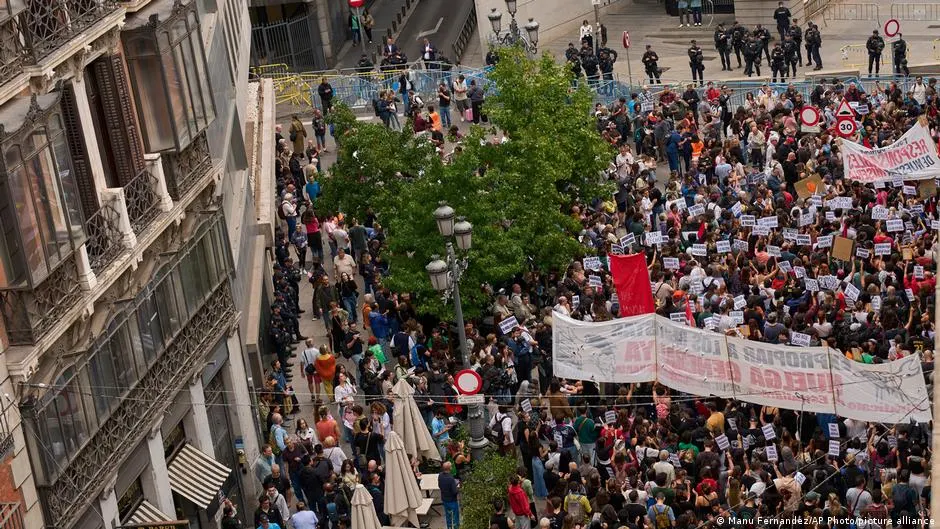
Housing protests have been held in Madrid, Bilbao, Valencia, the Canary Islands and about 50 other cities, according to EL PAÍS. Tens of thousands marched through central Madrid on October 3, converging on Plaza de Cibeles from four starting points. Estimates of attendance at the Madrid demonstration were disputed between authorities and organisers.17
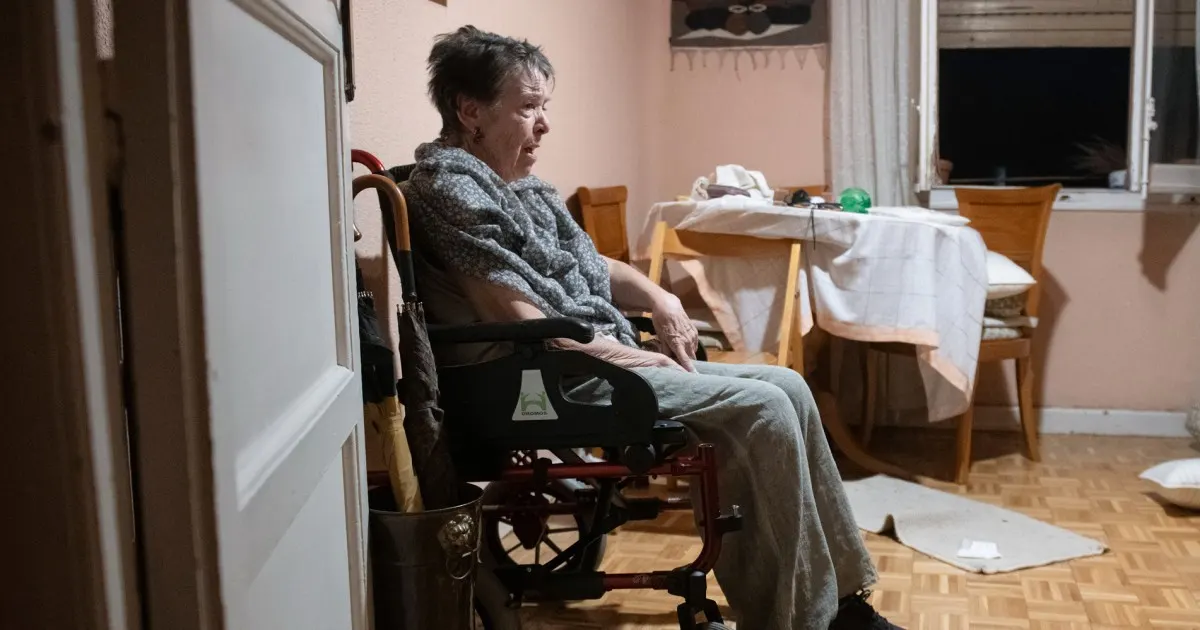
The protests came after Maricarmen Abascal, an 87-year-old who lives in Madrid, was evicted. The Guardian reported that an investment fund sought a rent increase she could not afford and that she was removed from the home where she had lived for 70 years. EL PAÍS said she was taken to hospital by ambulance and remained there after the eviction.17
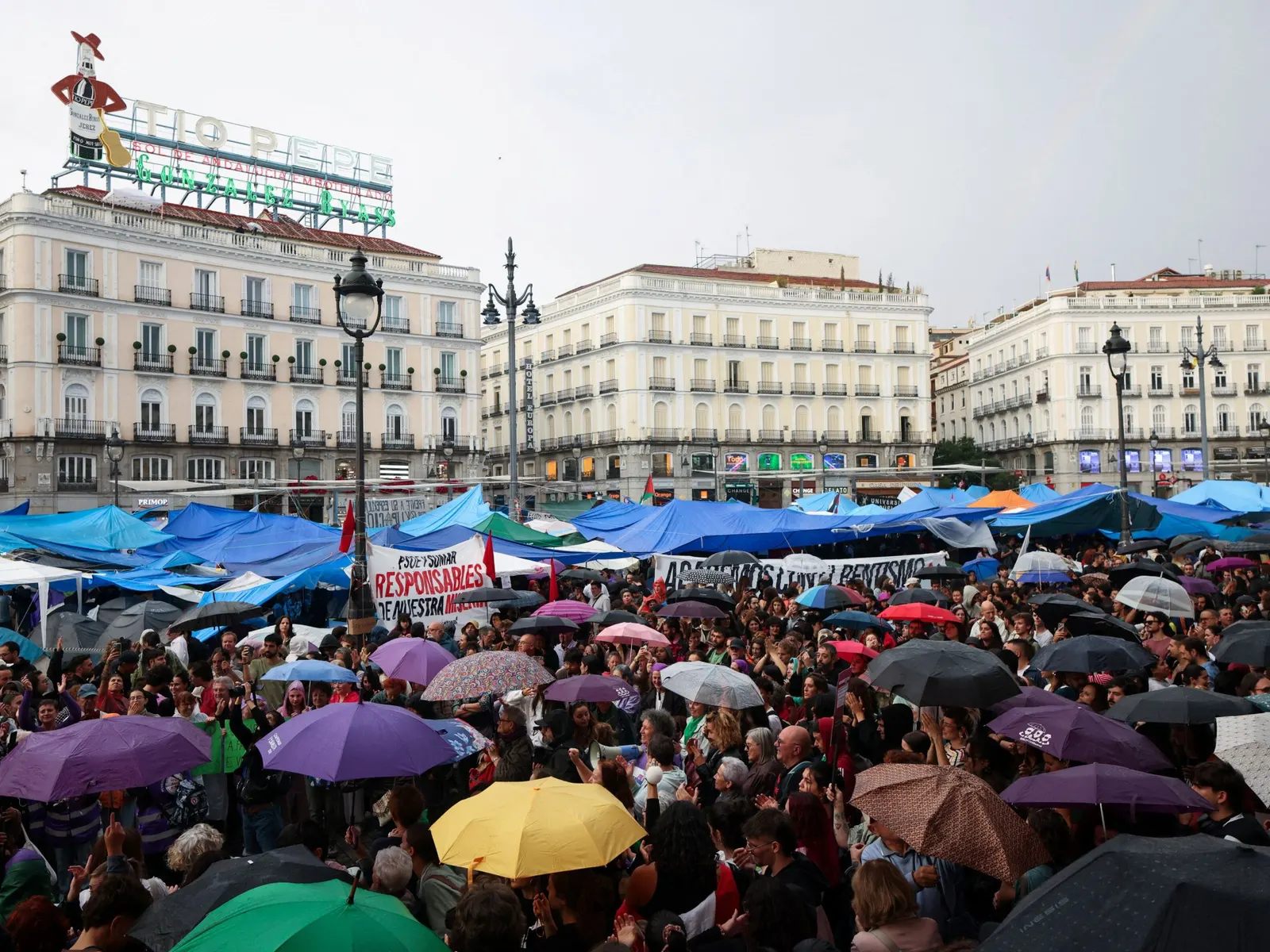
The Sindicato de Inquilinas, a tenants’ union, said it was discussing the date of a possible general strike with the CC OO and UGT labour unions. It also said housing protests would continue irrespective of the party in government and that street mobilisation would carry on after the closure of an encampment at Puerta del Sol.7
A difficult electoral landscape
Sánchez has served as prime minister since 2018. France 24 reported that his Socialist Party trails in opinion polls and that a coalition led by the People’s Party with support from Vox is considered the most likely result. According to the outlet, this result would mark the first participation by a far-right party in Spain’s national government since democracy was restored.13
France 24 also reported that Sánchez has governed for three successive terms through fragile coalitions, without ever securing enough votes to form a majority government. It said his government has passed little legislation during its third term and has not approved a budget since 2023, while Spain’s economy has remained among the strongest-performing in the developed world.3
The New York Times reported that Sánchez was also confronting a migration crisis and corruption scandals involving people in his inner circle. Separately, The Guardian reported that around 70,000 people entered Ceuta from Morocco within 48 hours.16
Why it matters
The election could alter Spain’s political direction at a time when opinion polls cited by France 24 indicate that a People’s Party-led coalition supported by Vox is the likeliest outcome. The parliamentary defeat also shows the difficulty facing a minority government seeking to enact tenant protections and affordable-housing financing as protests spread across Spanish cities.378
Videos
Related stories
consequence

Version history
- version 1 ·