US, China Agree to AI Risk Dialogue and Incident Channel
During a state visit by Xi Jinping, the United States and China agreed to launch a Super Intelligence Dialogue and a bilateral channel for communicating about AI incidents, among eight overall deliverables.
Listen to the story
Short version
The US and China agreed to launch an AI-risk dialogue and an incident communication channel during Xi Jinping's state visit to Washington.
- US-China Super Intelligence/AI Dialogue established, next exchange by Nov 2026
- Bilateral channel agreed for communicating about AI incidents
- Trump uses term 'super intelligence'; China respects but won't adopt it
- No deal on jointly regulating frontier AI models
- Dialogue was one of eight deliverables from Xi's visit
What's new
- US and China established the U.S.-China Super Intelligence Dialogue on AI risks and benefits
- The two sides agreed to a bilateral communication channel for SI incidents
- Next dialogue exchange scheduled by November 2026
- The two countries did not agree to jointly build or oversee the safety of cutting-edge AI systems
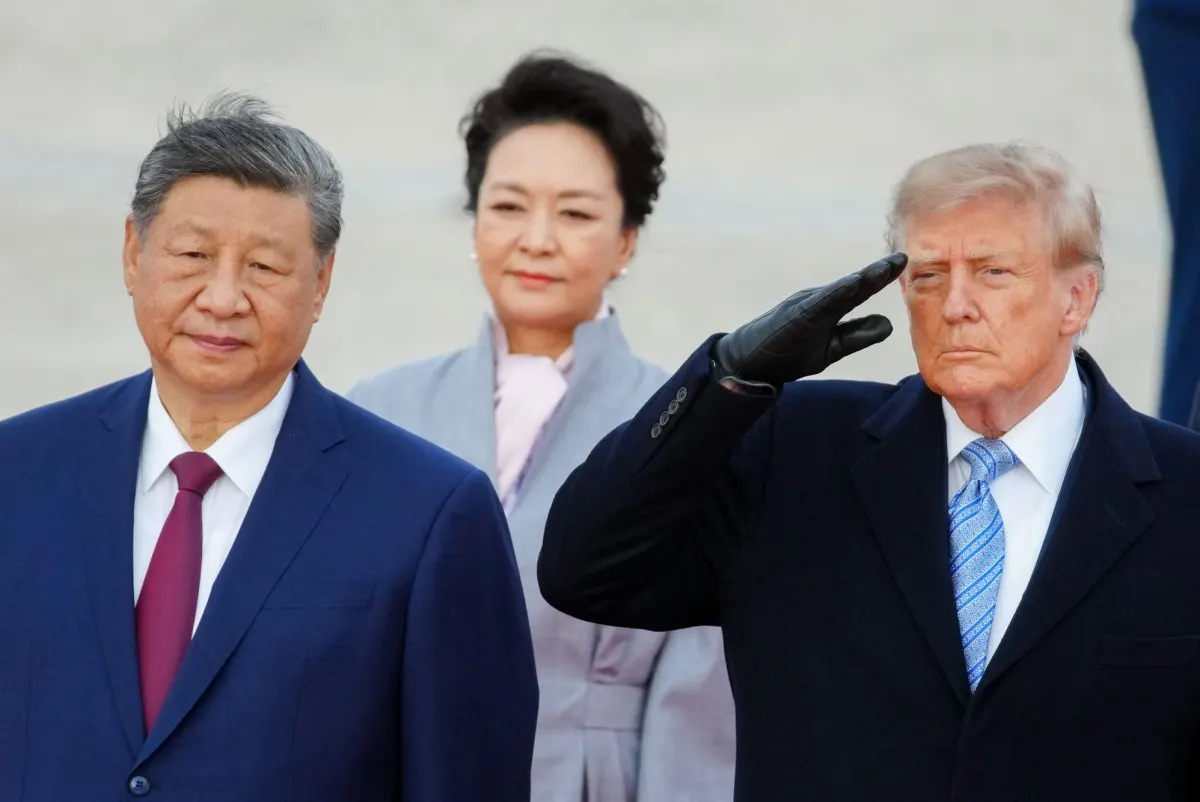
The United States and China agreed to establish a bilateral dialogue on artificial intelligence risks and a communication channel for AI-related incidents, the White House and China's Ministry of Foreign Affairs said, during a three-day state visit to Washington by Chinese President Xi Jinping that ended September 25.12
A new dialogue mechanism
The White House said Washington and Beijing set up the U.S.-China Super Intelligence (SI) Dialogue as a forum to share perspectives on the technology's dangers and advantages, with the following session set to take place no later than November 2026.2
Beijing's foreign ministry verified that an AI dialogue between the two nations was one of eight outcomes and understandings produced by the Trump-Xi discussions, while the Chinese embassy in Washington referred to the arrangement as the China-U.S. AI Dialogue, also scheduling its next round for November 2026.12
UPI reported that questions remained about the mechanism's actual operation and about which types of AI incidents would prompt its use. During the visit, Washington and Beijing reached no accord on collaboratively building or overseeing the safety of leading-edge AI systems.2
Terminology dispute
According to UPI, Trump introduced the phrase "super intelligence" while addressing the UN General Assembly. A Chinese Foreign Ministry spokesperson said Washington had replaced "artificial intelligence" with "super intelligence," adding that China respects the U.S. choice of terminology but that this does not commit Beijing to adopting it.23
Trump informed reporters that he had dismissed any form of U.S.-China collaboration on super intelligence, stating: "We didn't spend that much time talking about it. I would rather not integrate because we're leading by a lot. When you're leading, you don't open it up to each other."2
Trump also said, referring to calls for regulation, "They want to stop our progress because we're leading China by a lot, and we're going to keep it that way," according to UPI. According to UPI, prior to his meeting with Xi, Trump had dismissed as a hoax the notion that AI poses a threat to humanity, and he along with certain tech industry figures have contended that regulating AI is unnecessary and would put the United States at a disadvantage in the worldwide AI competition.2
UPI reported that leaders of all major U.S. AI firms have called to slow AI development and support government regulation. Anthropic's chief executive, Dario Amodei, urged AI firms to collectively slow or pause their development pace, driven by concerns that AI might surpass human intelligence to a degree where people could no longer keep it in check.2
Other outcomes of the visit
The Chinese embassy in Washington said Xi Jinping's visit yielded eight deliverables and understandings altogether, including a commitment to develop "a constructive China-U.S. relationship of strategic stability on the basis of respect, fairness, and reciprocity." Both nations further agreed to back one another in hosting the APEC Economic Leaders' Meeting and the G20 Summit, with each president indicating plans to attend the other's respective meeting.1
Both parties approved results from trade and economic talks, including a deal for a $30 billion mutual tariff cut and the continuation of arrangements reached during consultations in Kuala Lumpur. They also agreed that Iran should honor its commitment not to develop nuclear weapons and that no country or institution should impose tolls on international waterways.1
According to the Chinese embassy, the two countries noted progress in counter-narcotics cooperation, including the joint cracking of multiple cases involving new psychoactive substances and precursor chemicals, and the apprehension of dozens of suspects. The armed forces of both countries agreed to finalize a memorandum of understanding covering crisis communication and prevention, and to keep working together on locating the remains of U.S. servicemembers missing in China. Additionally, the United States expressed welcome for the arrival of two giant pandas that China has leased to Zoo Atlanta.1
Why it matters
However, the absence of any agreement on jointly regulating frontier AI models means safety standards for the technology remain set unilaterally by each side.2
Videos
Related stories
same event
follow-up
Version history
- version 1 ·