World · United States of America, People's Republic of China
Trump and Xi End Washington Summit With Few Concrete Results
A two-day state visit by Chinese President Xi Jinping to Washington produced a short trade-truce extension and talk of an artificial-intelligence dialogue, but analysts said little of substance was settled.
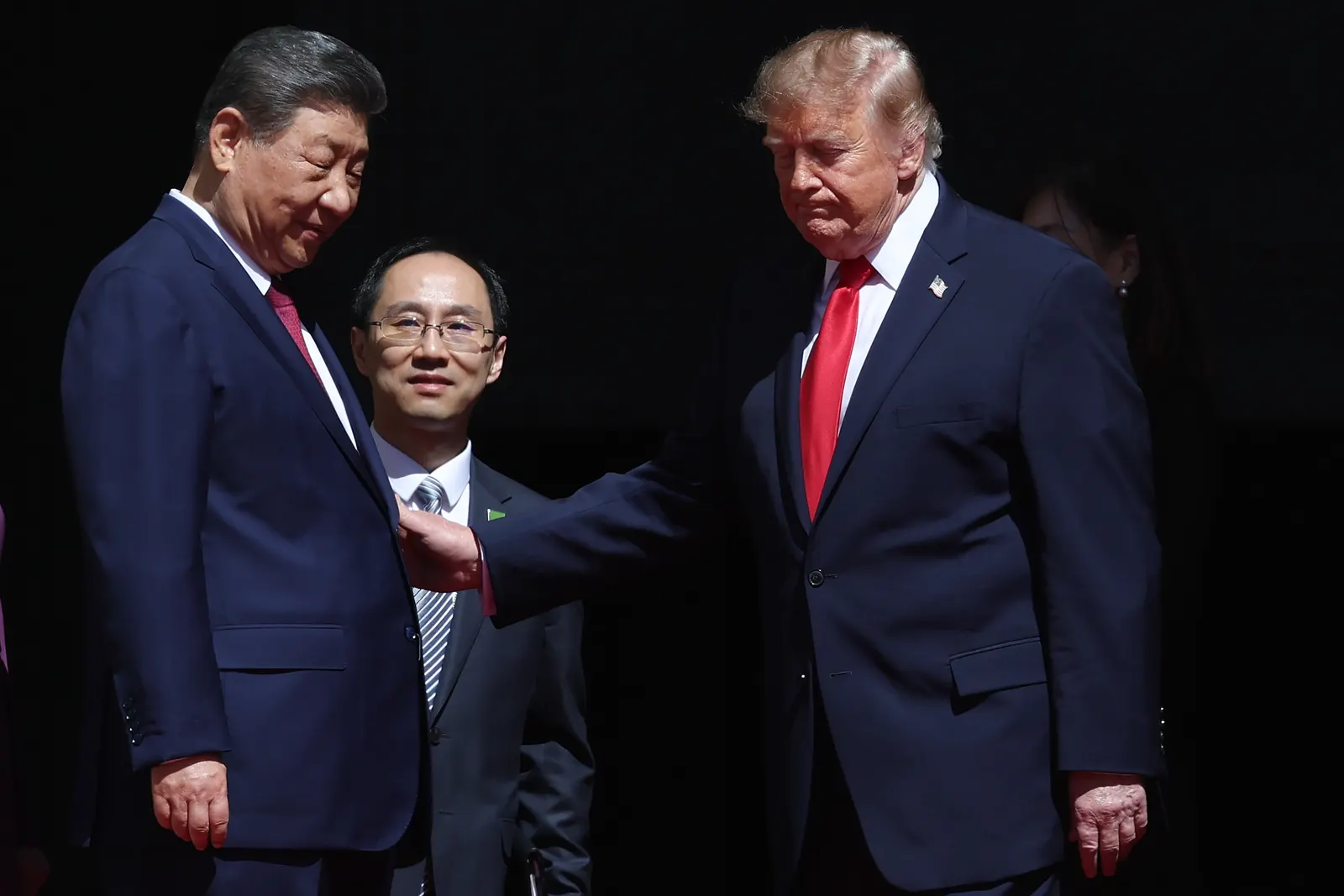
President Trump and Chinese President Xi Jinping ended a two-day state visit in Washington marked by warm gestures — from a National Archives tour to a state dinner for about 145 guests — but few firm agreements. The two sides extended their trade truce to Jan. 10, giving the US access to rare earths and China access to some advanced chips, though details on trade boards and Boeing purchases were left unannounced. Xi raised the need for AI guardrails, while Trump has opposed regulating frontier AI.
China called on the US to oppose Taiwan independence, and Taiwan's government said Washington understands its military threat, though Trump stayed silent on a pending arms package. Beijing said the countries would pursue a military crisis-communication pact. Trump plans to attend APEC in China in November, and Xi is expected at the G20 in Miami in December. Former US ambassador Nicholas Burns said the relationship remains difficult despite the visit's warmth.
Trump and Xi's Washington summit produced warm imagery but limited concrete agreements, including a short trade-truce extension.
- Xi's first US state visit in 11 years ended with few new deals.
- Trade truce extended to Jan. 10, covering rare earths and chips.
- Xi raised AI guardrails; Trump opposes AI regulation.
- China urged US to oppose Taiwan independence; Taiwan cited US understanding of threats.
- Trump to visit China in November; Xi to attend Miami G20 in December.
What's new
- US and China agreed to extend their trade truce to Jan. 10, giving the US access to rare earths and China access to some advanced chips.
- Xi raised AI guardrails with Trump, but no concrete steps on AI were publicly announced.
- Trump said he will attend the APEC summit in southern China in November; Xi is expected at the G20 in Miami in December.
- Beijing said the two countries will pursue a military crisis-communication pact.
President Donald Trump and Chinese President Xi Jinping concluded a two-day state visit in Washington on Sept. 25, marked by a tour of the National Archives, a state dinner and a short extension of the US-China trade truce, but with few new commitments on trade, technology or Taiwan, according to NPR.1
Pageantry over substance
This marked Xi Jinping's first US state visit in more than a decade. Trump and Xi appeared relaxed together throughout the visit, touring the National Archives Museum and later attending a state dinner for roughly 145 guests, where Xi raised a toast to Trump's health and described the moment as opening a fresh phase in relations between the two nations, as Trump reflected on the countries' long-standing trade ties.13
According to NPR, the two leaders and their delegations were together for roughly three hours of White House meetings on Thursday, though a large portion of that period was spent on Trump personally showing Xi around the South Lawn, including the newly constructed helipad, where both men boarded the new Marine One helicopter.1
NPR reported that few commitments emerged from the Washington meetings, with more emphasis placed on pageantry than on deliverables. The outlet noted that neither side appears domestically positioned to resolve the complicated issues at the heart of the relationship.1
Trade and AI
The United States said the two countries would extend their trade truce, with Treasury Secretary Scott Bessent announcing the extension runs to Jan. 10. The truce gives the US access to rare earth elements from China and gives China access to some advanced American semiconductor chips. The delegations offered no specifics on two proposed but not yet established trade-and-investment boards, nor on any Boeing purchase agreements.1
China's state news agency reported that Xi called for safeguards on artificial intelligence and encouraged joint efforts by both nations to guard against its abuse. Trump has argued against regulating frontier AI and wrote before the meeting that he wanted to leave AI "exactly where it is," saying that was China's position too.12
Taiwan and unresolved tensions
A statement from China's state news agency urged Washington to reject any move toward formal Taiwanese independence. Washington lacks official diplomatic ties with Taipei and has for years kept its position deliberately unclear on whether it would intervene militarily should China attack the island. NPR said significant differences remain between the two countries, from Taiwan to technology.1
Per Reuters, Trump made no comment on a pending $14 billion arms deal following his meeting with Xi, while Taiwan's deputy foreign minister noted that the US recognizes the grave military danger facing Taipei — a response Reuters called Taiwan's first substantive official reaction to the summit.7
Beijing said the US and China would pursue a military crisis-communication pact, according to the South China Morning Post.6
Reactions
Nicholas Burns, US ambassador to China from 2021 to 2025, told NPR that despite the warmth on display, "we actually have a very difficult relationship." He said Trump's approach toward Xi contrasted with his treatment of allies, saying "you want to treat your friends better than your adversaries" and calling this "a major problem in the Trump presidency." Burns added that Trump did not appear to be pressing Xi on Chinese cyberattacks against American cities, infrastructure and towns.1
Japanese Prime Minister Sanae Takaichi, in the United States for the UN General Assembly, said Trump called her shortly after the summit and gave her a detailed debrief. Takaichi said Japan and the US had "now become the most mutually trusting of allies" and that holding summit-level talks twice within a week "truly demonstrates the strength of the Japan-US alliance." Trump described Takaichi as a "friend of mine" who is "strong, vibrant and fit" and predicted she would go down as "one of the great prime ministers."5
The New York Times observed that Trump was unusually warm toward Xi throughout the visit, with any public friction — including his earlier claims that China had interfered in US elections — notably absent from the summit.8
Why it matters
The summit's limited deliverables leave core disputes over trade, technology and Taiwan unresolved even as the two powers extend a short-term truce.12
How the story unfolded
The story's events over time. Click a person, place or related story.
What we know
- Xi Jinping made a two-day state visit to Washington, his first in 11 years.
- The US and China extended their trade truce to Jan. 10.
- Xi raised AI guardrails with Trump; Trump opposes regulating frontier AI.
- China issued a statement calling on the US to oppose Taiwan independence.
- Trump plans to attend APEC in China in November; Xi plans to attend the G20 in Miami in December.
- Beijing said the two sides will pursue a military crisis-communication pact.
- Nicholas Burns criticized Trump's warmth toward Xi and his handling of allies.
What we don't know yet
- Details of the proposed boards of trade and investment or Boeing purchase commitments.
- Specific steps, if any, that will follow from the discussed AI guardrails.
Timeline
- Sep 25Xi raised guardrails around artificial intelligence development with Trump.1
- Sep 25Trump and Xi met during a state visit and warmly praised bilateral relations at a state dinner.1
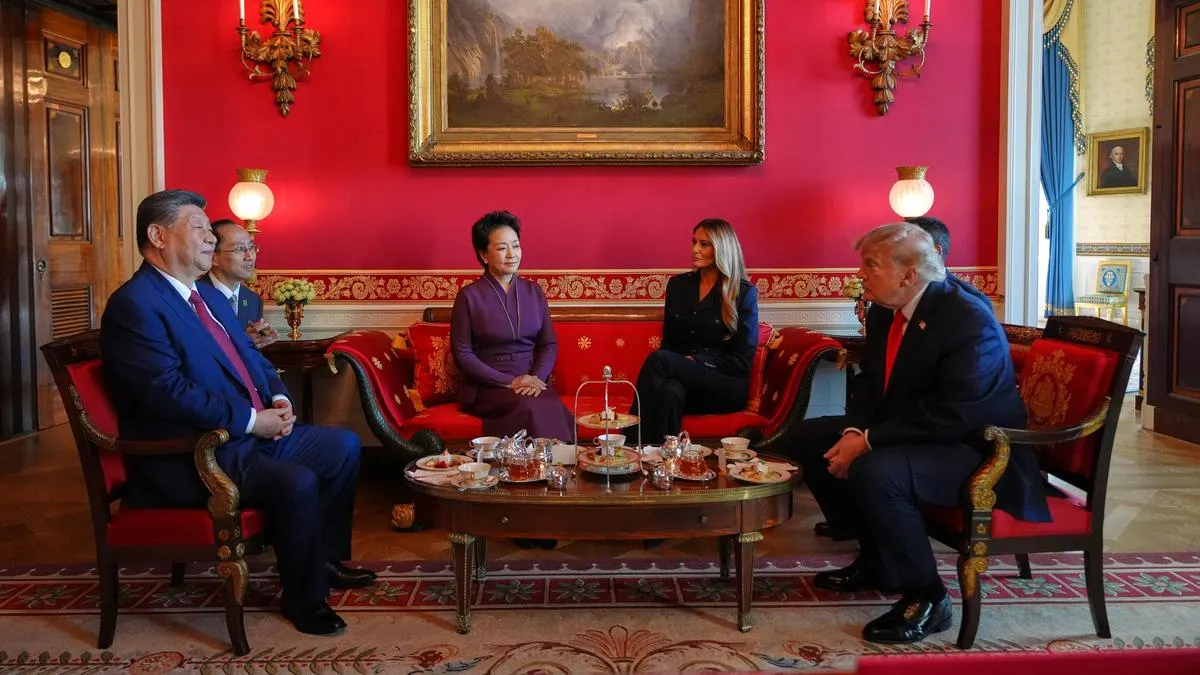
- Sep 25Peng Liyuan and Xi visited the US National Archives with Trump and Melania Trump.3
- Sep 25NPR's Leila Fadel interviewed Nicholas Burns about the visit and its outcomes.1
- Sep 26Beijing said the US and China would pursue a military crisis-communication pact.6
- Sep 26La Región reported the trade truce, which had been due to expire in November, was extended to January.4
- Sep 27Takaichi said Trump called her after the summit and gave a detailed debrief.5
- Sep 27Taiwan's deputy foreign minister said the US recognizes the serious military danger confronting Taipei.7
- Sep 27The New York Times reported that Trump treated Xi with unusual effusiveness and that public confrontation disappeared from the summit.8
Quotes
we actually have a very difficult relationship.
you want to treat your friends better than your adversaries.
I think it's a major problem in the Trump presidency.
President Trump does not appear to be pushing Xi Jinping on China's massive cyberattacks against American cities and towns, against our infrastructure.
Videos
Related stories
Version history
- version 1 · 27 September at 07:32