Business · Ireland, United States of America
European officials expect Trump to drop diesel export ban
European officials believe the US president will abandon the proposed restriction, Politico Europe reported. That view came after the G7 approved a 100 million-barrel drawdown of crude and diesel intended to relieve supply strains.
After Trump threatened US export limits, the G7 said it would put 100 million barrels of crude and diesel from reserves into the market. European officials reportedly expect him to abandon the ban, but no final decision has been confirmed.
- The release will be coordinated through the International Energy Agency.
- A large diesel contribution is planned early in the programme.
- G7 members pledged to avoid mutual energy-export restrictions.
- European officials expect the US ban to be dropped.
- Trump’s final decision remains unknown.
What's new
- G7 countries approved a 100 million-barrel reserve release. [s1, s2]
- European officials expect Trump to abandon the export ban. [s4]
- G7 members pledged not to restrict energy exports to one another. [s1]
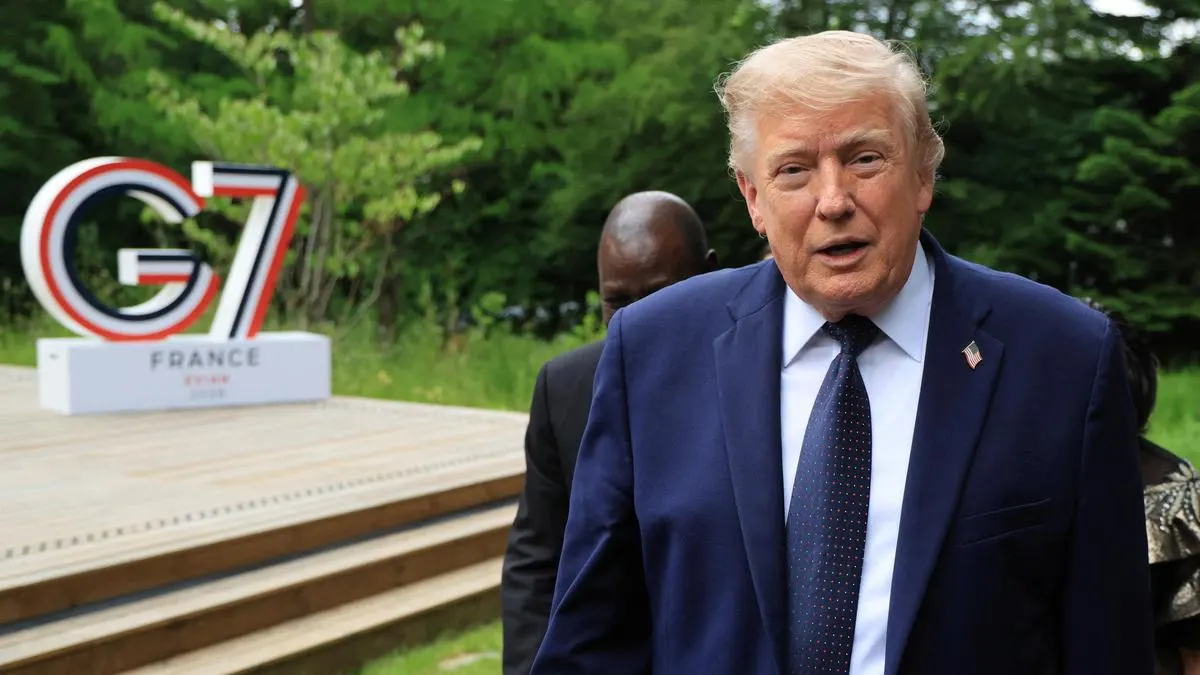
Politico Europe reported that European officials believe US President Donald Trump will drop his proposed prohibition on American diesel exports, following the G7’s October 2 decision to make 100 million barrels of crude and diesel available under International Energy Agency coordination. The coordinated action, involving reserves held by G7 economies, is intended to ease supply pressure and elevated fuel prices in the United States and Europe.124
Reserves offered after US warning
Trump had warned that the United States could halt diesel exports unless European countries placed more of their stocks on the market. He later said Europe had agreed to release heavily stocked diesel and that withdrawals would start immediately. The G7 plan covers up to 100 million barrels over four months, with a large amount of diesel due to enter the market during the opening 20 days, according to The Hindu.12
French President Emmanuel Macron, whose country has the rotating G7 chair, led a virtual meeting of the bloc’s leaders after he and Trump spoke about fuel costs and supplies of petroleum products. Macron said the countries would release “up to 100 million barrels” under IEA coordination and that the action was intended to “bring down the prices of petroleum products, particularly diesel”.12
The G7 also agreed to “refrain from export restrictions on energy and energy products” against fellow members. The group comprises the United States, Britain, Canada, Japan, Germany, Italy and France, while the European Union takes part in its meetings, according to the BBC. Ed Miliband represented Britain at the leaders’ meeting.1
Politico Europe reported that European officials were confident Trump would ultimately set aside the export proposal. That outcome has not been formally confirmed, and the president’s final decision remains unknown. European countries had opposed the threat to interrupt US diesel exports, the BBC reported.14
Prices and trading partners
A US export restriction could reduce domestic price pressure while driving costs higher in overseas markets, according to the BBC. Treasury Secretary Scott Bessent said American farmers, truck operators and businesses “should not be left carrying the burden” as fuel prices rose. Diesel is widely used in farming and road freight, allowing higher fuel costs to affect the price of essentials including food, the BBC reported.1
The Hindu reported that the average US diesel price stood at $6.37 a gallon on October 2, after reaching a record $6.52 on September 22. It also reported that an AP-NORC poll found most US adults blamed Trump for higher prices and that his approval rating on management of the economy had fallen to a new low.2
The New York Times reported that economies in Europe and Latin America depend on diesel supplied by the United States. It said an interruption could push some countries into recession and damage their trade with the US. Those potential effects were reported by one source and have not been independently established in the dossier.3
The reserve agreement gives the G7 a joint response to the immediate supply and price concerns, but it does not settle the status of the proposed American ban. The amount of the overall release that will be diesel rather than crude oil was not specified, beyond commitments to provide a large diesel component early in the four-month programme.124
Why it matters
European economies use diesel imported from the United States, according to The New York Times, making the prospect of export restrictions a risk to fuel availability and trade. The G7 reserve release is designed to reduce petroleum-product prices, particularly diesel, while the group’s pledge against restrictions offers members some protection if it is observed.13
Videos
Related stories

same actors
follow-up
Version history
- version 1 ·