World · United States of America
Trump says MAGA Inc. will fund future television advertisements featuring him
The US president said taxpayer money would no longer finance the advertisements after criticism from lawmakers and legal experts. The White House did not explain whether earlier public spending would be reimbursed.
Listen to the story
Short version
Trump says public financing for television advertisements praising him will end, with MAGA Inc. expected to pay future costs. Questions remain about repayment, total spending and possible violations of federal law.
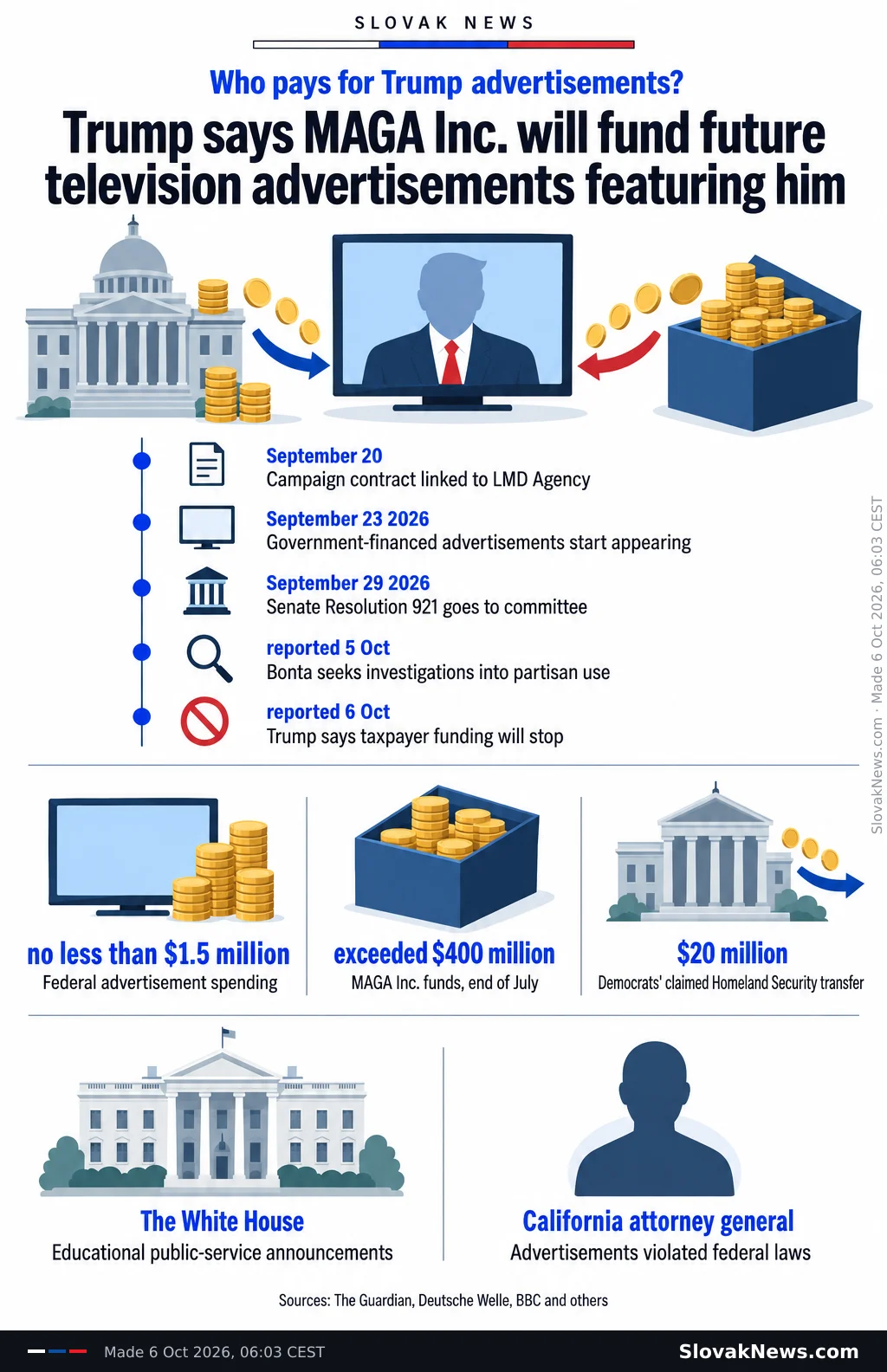
- Public financing for the advertisements totaled no less than $1.5 million.
- Trump says taxpayer funding will stop.
- MAGA Inc. is expected to cover future advertising.
- No reimbursement plan has been disclosed.
- Federal watchdogs have been asked to investigate.
Infographic
What's new
- Trump says taxpayer funding for the advertisements will stop.
- The White House says MAGA Inc. will cover future advertising costs.
- No repayment plan for advertisements already aired has been announced.
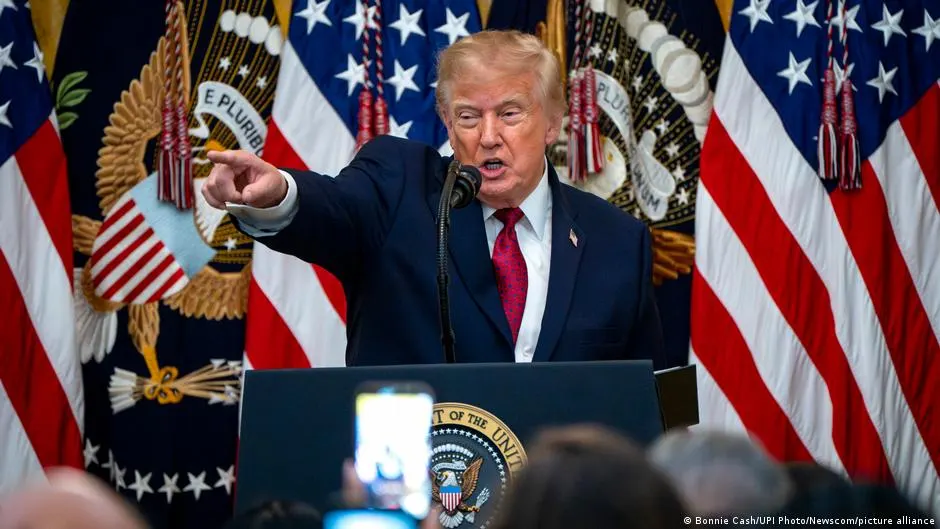
US President Donald Trump said on Oct. 6 that taxpayer funds would no longer pay for television advertisements featuring and praising him, after the commercials aired nationally in September. Trump said he would bear the cost himself or use money raised by MAGA Inc., while the White House said the Trump-affiliated Super PAC would finance such advertising in future.1256
Infographic
Public funding draws scrutiny
Several outlets, citing reports, put the federal spending on the advertisements at no less than $1.5 million. AdImpact calculated that broadcast spending was no lower than $1.4 million as of late September, while noting that the eventual figure may exceed that amount. Each commercial closed by identifying the US government as its funder.125
According to Democrats, the administration moved $20 million out of the Department of Homeland Security for the advertising campaign. That claim has prompted calls for independent inquiries, but neither Trump nor the White House has provided details about reimbursing taxpayers for commercials that have already run.1257
The spots highlighted Trump's tax-cut agenda, domestic manufacturing and public-safety policies. Some also showed him warning against communism and globalists or promising action against the “deep state” and other perceived adversaries. The BBC reported that more than a dozen advertisements had appeared ahead of the November midterm elections.23
Political and legal objections
Legal experts said the advertisements could breach federal restrictions covering publicity, propaganda and partisan political activity. Critics from both parties objected to the use of public money, although the White House described the commercials as educational public-service announcements rather than political propaganda.123
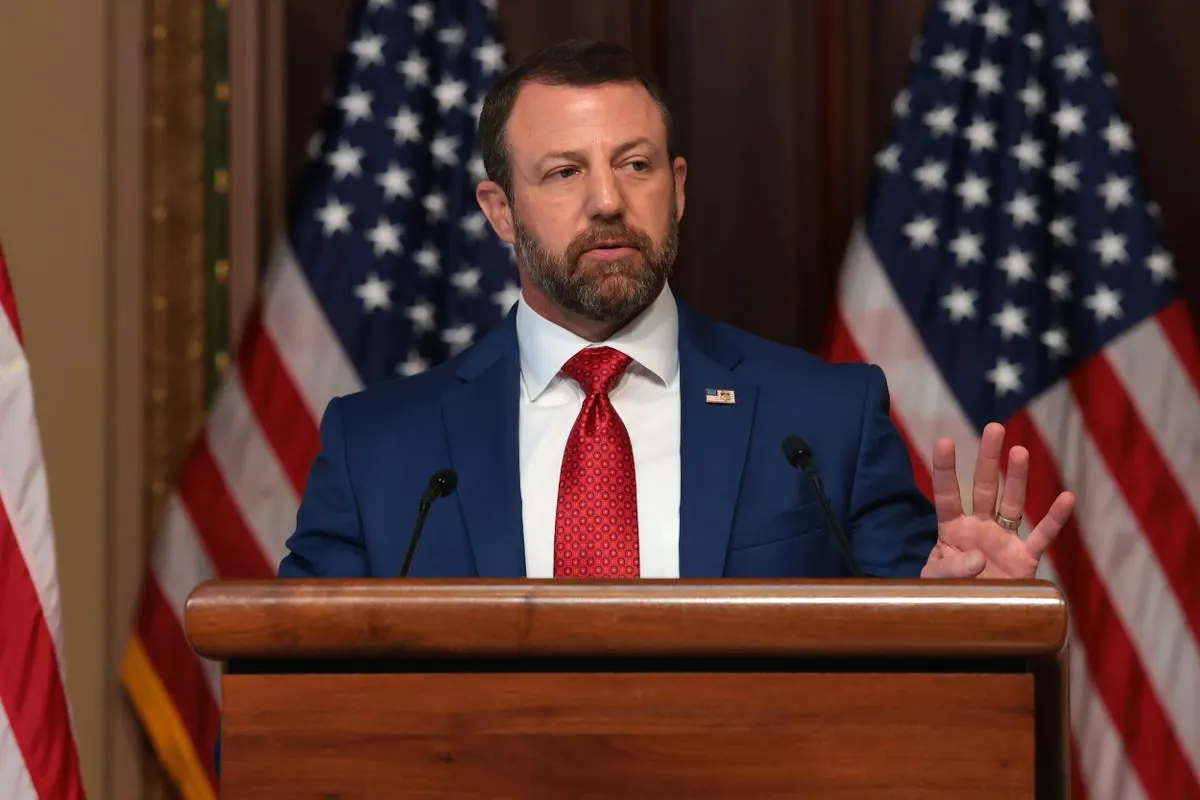
Democratic representatives Jamie Raskin and George Whitesides asked the Government Accountability Office and the Office of Special Counsel to investigate. They sought an accounting of the public funds involved and an examination of possible Hatch Act violations. California Attorney General Rob Bonta separately submitted a complaint asking the same watchdogs to examine what he alleged was partisan use of taxpayer money.89
Democratic Senator Maggie Hassan introduced a resolution stating that government money should not finance advertisements promoting Trump. Senate Resolution 921, filed on Sept. 29 and sent to the Appropriations Committee, addressed September advertisements that identified the US government as their source of funding.310
Republican senators also questioned the financing. John Thune said he supported the advertisements’ message but not their use of taxpayer funds, while John Kennedy said public officials should not spend public money on advertisements promoting themselves.3
Future financing remains unverified
Trump characterised the advertisements as a positive promotion for the United States and said such advertising was standard. He announced that he had instead decided to pay personally and through money raised for MAGA Inc. A White House official confirmed that the Super PAC was expected to fund the advertisements going forward.256
By the close of July, MAGA Inc. had raised over $400 million and had started deploying those funds to back Republican candidates ahead of the midterms. However, no documentation has been released showing how political funds will meet future advertising costs, and the announced shift in financing has not yet been independently confirmed.1257
Why it matters
For European readers following US politics, the dispute highlights questions about how an incumbent administration separates official public communication from partisan promotion. It also concerns enforcement of US restrictions on government propaganda and political activity as congressional elections approach.123
Videos
Related stories
same actors
Version history
- version 1 ·