World · Yemen
Yemeni government widens strikes against Houthis in Taiz
A government military spokesperson reported 20 air strikes in three hours as fighting intensified around Taiz. Earlier official accounts gave substantially higher operation totals, but the battlefield claims remain independently unverified.
Yemeni government forces report an expanding campaign against Houthi positions in Taiz, accompanied by road closures and worsening displacement. Major battlefield and casualty claims remain unverified.
- Warplanes reportedly conducted 20 strikes in Taiz on Oct 2.
- Earlier official operation totals varied substantially.
- About 19 roads into Taiz were ordered closed.
- Roughly 130,000 people were reportedly displaced since July.
- Red Sea shipping routes could be affected.
What's new
- A spokesperson reported 20 government air strikes in Taiz on Oct 2.
- Authorities closed about 19 roads leading into Taiz for military operations.
- Saudi and Houthi accounts conflict over an alleged attack in Medina.
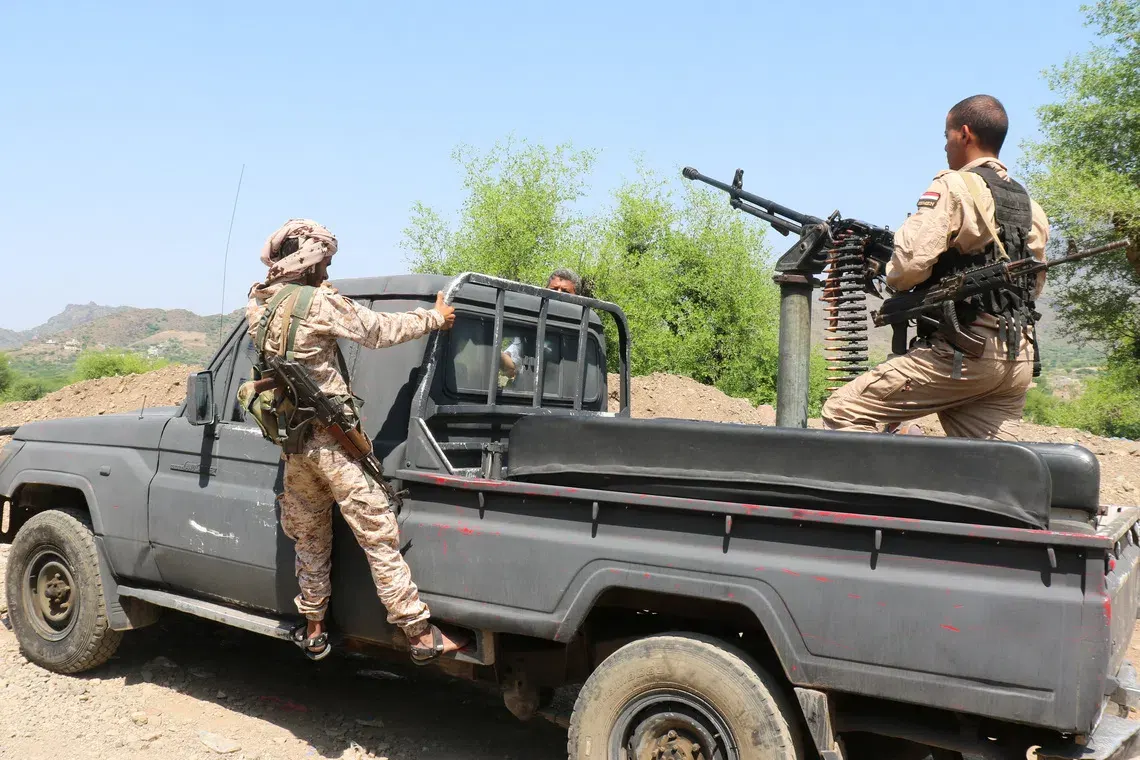
A government military spokesperson said Yemeni warplanes conducted 20 attacks over three hours on Oct 2, targeting Houthi activity, fighters, vehicles and military assets in the southwestern province of Taiz. The reported attacks followed several days of expanding air and ground operations around the province.12
A widening offensive
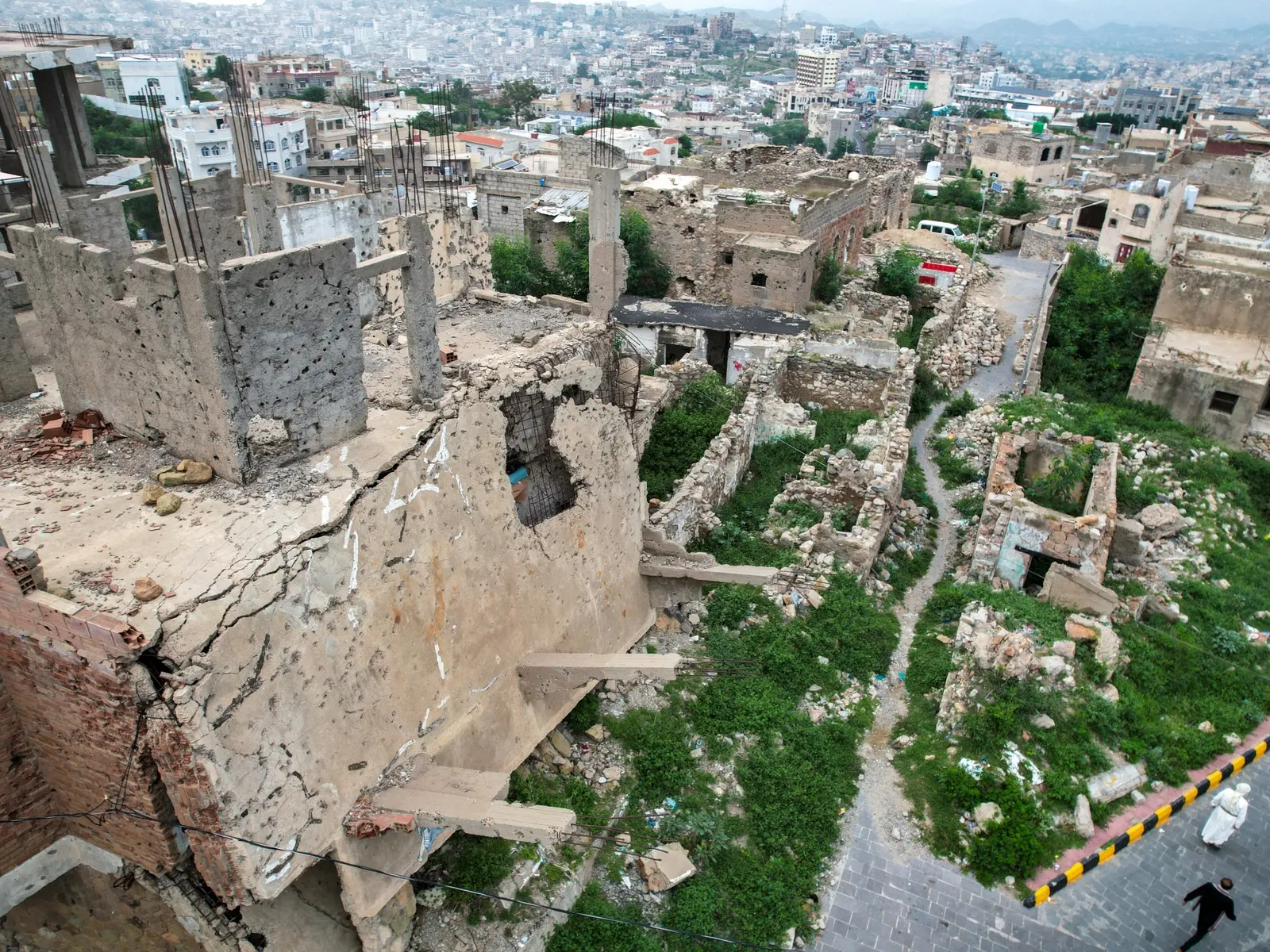
The latest announcement followed government reports on Sept 27 that forces had attacked Houthi positions at five locations across Taiz province during the preceding 24 hours. Government forces also reported taking several areas and elevated positions in southern Taiz, including Jabal Bazel. Yemen’s Military Media Centre said dozens of Houthi fighters, among them field commanders, had been killed or wounded and that several military vehicles were damaged. Al Jazeera said it could not independently verify those battlefield claims.1
Further official figures reported on Sept 29 described operations across a broader area. Middle East Eye cited separate government accounts of 356 operations and 414 strikes against Houthi positions over 24 hours; the relationship between those totals was not explained. The armed forces also claimed that 476 Houthi members had been killed or wounded. Spokesperson Majid al-Nuzaili referred to command centres, weapons stores and field artillery across 10 fronts, and said eight strikes had hit Houthi positions, vehicles, equipment and personnel in Taiz’s al-Wazi’yah district.3
The armed forces warned civilians to avoid locations used by the Houthis for military purposes, which the army said it regarded as lawful targets. It also said operations against those locations would comply with international humanitarian law and that the army was tracking Houthi activity on multiple fronts. Separately, al-Masirah reported numerous attacks in Taiz, Hodeidah and Sa’dah governorates.3
Road closures and control of Taiz
Authorities ordered all roads into Taiz closed and classified them as military operational areas, according to the Oct 2 report. About 19 roads were affected, including the principal route connecting southern Sanaa with Taiz. The duration of the closures and their immediate effect on civilian movement were not stated.2
The Straits Times reported that Houthi control of Taiz would consolidate the group’s position in northern Yemen, strengthen its hold along the Red Sea coast and make access towards the south and Aden easier. Al Jazeera separately reported that the Houthis had taken Mocha and extended their control around the Bab al-Mandeb Strait, although that account was not independently confirmed in the dossier.12
Humanitarian pressure
The fighting has forced large numbers of people from their homes. Al Jazeera reported that about 130,000 people had been displaced since fighting began in July, with at least 130,000 displaced during a three-week period, mostly from or within Taiz. Earlier in September, more than 3,000 people travelled across the Red Sea to Djibouti over a period of several days. The relationship between the two estimates of 130,000 displaced people was not clarified.1
According to the same report, UNICEF had verified that 15 children were killed, 14 injured and three missing from early September. It also said more than 22 million people across Yemen required humanitarian assistance and protection services. The renewed fighting has displaced tens of thousands, according to The Straits Times.12
Regional claims and denials
The escalation has also produced competing claims about attacks on Saudi Arabia. The Saudi-led coalition said on Sept 27 that it shot down two ballistic missiles and two drones headed for Riyadh and Khamis Mushait. Saudi Arabia alleged on Oct 2 that the Houthis struck an electricity distribution facility in Medina serving the Prophet’s Mosque, an accusation rejected by a Houthi military source.12
Saudi Arabia further said it brought down a Houthi drone south of Mecca before the aircraft reached the city’s restricted airspace. The Houthis said they had not aimed at Mecca or any other sacred Islamic location. Separately, Yemeni government forces accused the group of deploying Iranian air-defence weapons that threatened aircraft over the Red Sea, while Iran denied playing any role in the conflict.12
France said it was sending troops to protect the oil terminal at Yanbu but was not entering the conflict. According to The Straits Times, the clashes represented the gravest rise in tensions between Saudi Arabia and the Iran-aligned Houthis since a 2022 truce had largely halted cross-border attacks.12
Why it matters
The Straits Times reported that the renewed conflict could affect Red Sea shipping routes and the Bab el-Mandeb Strait. For European readers, the principal wider concern identified in the reporting is therefore the potential effect on maritime traffic through that corridor.2
Videos
Related stories

Version history
- version 1 ·