Hurricane Nolo Strengthens Near Hawaii's Big Island, Bringing Flooding Rain
Nolo brushed past Hawaii's Big Island as a strengthening hurricane, prompting evacuations, road closures and an emergency declaration from President Trump while officials warned of heavy rain and dangerous surf.
Listen to the story
Short version
Hurricane Nolo strengthened near Hawaii's Big Island, prompting warnings, flooding, road closures and a federal emergency declaration.
- Nolo strengthened, with reports ranging from Category 2 to Category 4 intensity
- Hurricane watch and tropical storm warning issued for Hawaii County
- Highway 11 flooded and closed near Waiohinu before reopening
- Trump approved emergency declaration; National Guard activated statewide
- Nolo followed earlier hurricanes Lowell and Lala within two months
What's new
- Nolo strengthened to Category 3 and later Category 4 with 130 mph winds while passing well south of Hawaii
- Trump approved an emergency declaration for Hawaii, freeing federal recovery funding
- Highway 11 closed and reopened due to flooding near Waiohinu and Naalehu
- Governor Josh Green activated more than 400 National Guard troops statewide
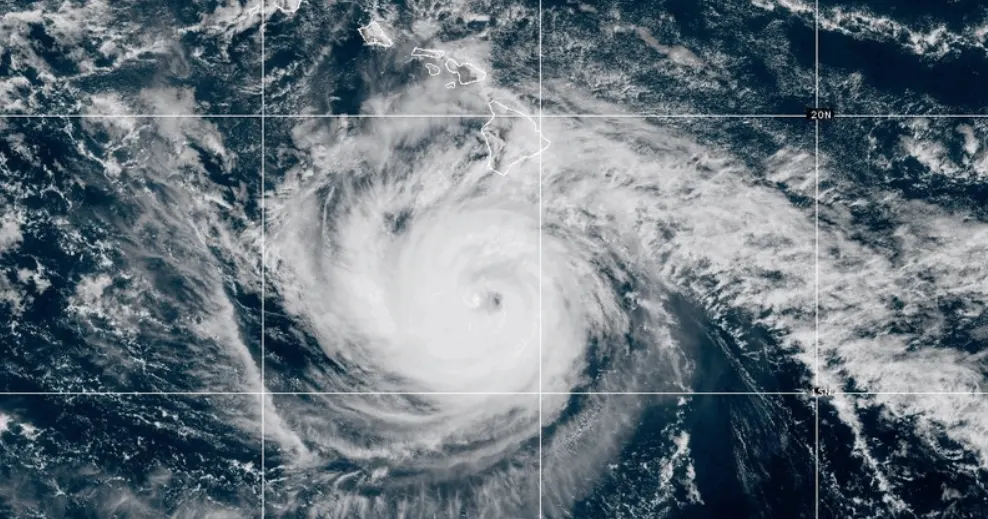
Hurricane Nolo strengthened as it moved west of Hawaii's Big Island in late September 2026, bringing heavy rain, flooding and dangerous surf, prompting a hurricane watch and tropical storm warning for Hawaii County and an emergency declaration approved by President Donald Trump.125
Storm track and intensity
Early Saturday, several outlets described Nolo as a Category 2 storm packing 100 mph sustained winds, a figure that one other source challenged.136
Forecasters said Nolo was expected to strengthen into a major hurricane over the weekend, according to NBC News, and staradvertiser.com and Maui Now reported it was predicted to reach major hurricane strength by Sunday or Sunday night with peak intensity by Monday.136
CBS News noted that by Sunday, Nolo had regained major hurricane status as a Category 4 system packing 130 mph winds, though PBS News reported a different figure. Staradvertiser.com projected Nolo would top out at 130 mph as it moved south-southwest of Kauai late Sunday night, then lose strength amid rising wind shear, dropping to Category 1 status by the time it passed well to Kauai's west on Tuesday.234
Staradvertiser.com placed the storm roughly 200 miles to the south-southwest of South Point and 335 miles south of Honolulu at 11 p.m., with subsequent updates locating it 260 miles southwest of South Point packing 105 mph winds, and later still 700 miles southeast of French Frigate Shoals as a Category 3 hurricane with 115 mph winds.3
Multiple sources concurred that Nolo would likely track well to the south and southwest of the main Hawaiian islands without its center making direct landfall.562
Rain, wind and surf
NBC News cited forecasts calling for between 8 and 12 inches of rain across the Big Island's eastern and southern regions, with isolated totals as high as 16 inches, and just 1 to 3 inches in western areas — figures other outlets reported differently. CBS News instead reported that Maui could receive 4 to 8 inches and the rest of Hawaii 1 to 3 inches, with 5 inches at most.12
Staradvertiser.com put possible rainfall totals for the eastern and southern Big Island at 10 to 15 inches, with pockets seeing as much as 20 inches — a figure other sources contested as well. Over a 24-hour span, Laupahoehoe measured close to 10 inches of rainfall, with 8.4 inches recorded at Saddle Quarry and 7.6 inches at Glenwood.3
Hawaii County was under both a hurricane watch and a tropical storm warning, while a high surf advisory applied to the Big Island's south- and east-facing coastlines as well as the eastern shores of Maui and Molokai. Staradvertiser.com reported a high surf warning for Hawaii island's southeast shores with surf of 12 to 16 feet, and said the threat of significant storm surge had diminished, though water levels remained elevated from wave action.153
Maui County and the Big Island were under a high wind warning anticipating easterly winds between 30 and 45 mph with gusts reaching 75 mph, whereas Kauai County and Oahu faced a wind advisory for 25 to 35 mph easterly winds and gusts up to 55 mph. A gust of 62 mph was recorded at higher elevation on the northwest Big Island, and 60 mph at Hanaula in the West Maui mountains.3
NBC News said tropical storm-force winds could arrive on the Big Island by Friday afternoon, potentially escalating to hurricane force by late evening, and warned Nolo might generate tornadoes and large waterspouts in the vicinity.1
Impacts and emergency response
Staradvertiser.com reported that overnight downpours triggered flooding in Waiohinu close to Kamaoa Road, as well as around Kaalaiki Road in Naalehu and along Highway 11 near Honuapo and Kawa. The highway shut down in both directions from Pinao Street to Kaalualu Road in Waiohinu, later reopening along the stretch between Hilo and South Kona. PBS News reported that heavy rain across the southern Big Island prompted partial closures of Highway 11 and that National Guard members guided residents through flooded streets near Naalehu.34
The storm knocked out power for roughly 12,370 customers across West Maui and Upcountry, along with about 3,900 on Oahu's windward side, while Hawaiian Electric Co. worked to restore power to some 626 customers spread across Ocean View, Hamakua, lower Puna, Kau and North Kohala.3
Governor Josh Green issued an emergency proclamation activating more than 120 National Guard members on the Big Island and roughly 400 statewide, according to PBS News, and President Trump approved an emergency declaration authorizing FEMA to coordinate assistance and provide funding.42
Hawaii County Civil Defense prepared at its Hilo headquarters, and shelters opened including an additional site at Ikuo Hisaoka Gym in Kapa'au; the Salvation Army temporarily relocated its Hilo Overnight Safe Space to Hilo High School. Eighteen residents stayed at county shelters Thursday evening into Friday, most at the Kea'au Armory, with about a dozen people checked in there by Friday morning. Because of the storm, every state park on the Big Island and Maui was shut down.52
NBC News noted Nolo is the third hurricane to affect Hawaii within a two-month span, coming after Hurricane Lowell — which battered Kauai and Niihau with strong winds and heavy rainfall, toppling trees, damaging roadways and knocking out power for thousands — and Hurricane Lala, which swept away roughly 100 homes and set off landslides and extensive power outages the previous month.21
Why it matters
Hawaii's exposure to a rapid succession of hurricanes illustrates the scale of disruption a single active storm season can cause to island communities, prompting federal emergency funding and large-scale National Guard mobilisation. For European readers, the event offers a comparative case in how governments respond to intensifying tropical storm activity that some sources link to an active Pacific hurricane season.14
Version history
- version 1 ·