Business · India, United States of America
US says India trade agreement is close but not imminent
Negotiators have mapped the remaining areas of disagreement after talks between senior officials and a call between Donald Trump and Narendra Modi. Tariffs and India’s purchases of Russian oil continue to complicate the negotiations.
US and Indian officials say trade talks are advanced and the remaining disputes have been identified, but Washington says no agreement is imminent.
- Greer says the deal is close but not imminent.
- Officials have mapped the outstanding areas.
- Goyal seeks an early interim trade agreement.
- Tariffs and Russian oil purchases remain obstacles.
- Trump and Modi held a constructive call.
What's new
- Greer says an agreement is not imminent despite progress. [s1, s2]
- Both sides have identified the remaining sticking points. [s1, s2]
- Goyal and Greer discussed concluding an interim agreement early. [s1]
- Trump and Modi held a constructive call about the negotiations. [s1, s2]
On October 2, 2026, the United States and India remained in trade talks following discussions in Milwaukee and a phone call involving President Donald Trump and Prime Minister Narendra Modi, but US Trade Representative Jamieson Greer said a deal was not close at hand despite both countries having pinpointed the unresolved issues.12
Negotiators narrow the issues
Greer said the countries were approaching the final stage of negotiations and had established the full range of unresolved items. Staff from the two governments were continuing to meet, he said. Although he described his discussion with Indian Commerce and Industry Minister Piyush Goyal as constructive, Greer cautioned: “At the same time, I don’t think there’s something imminent.”12
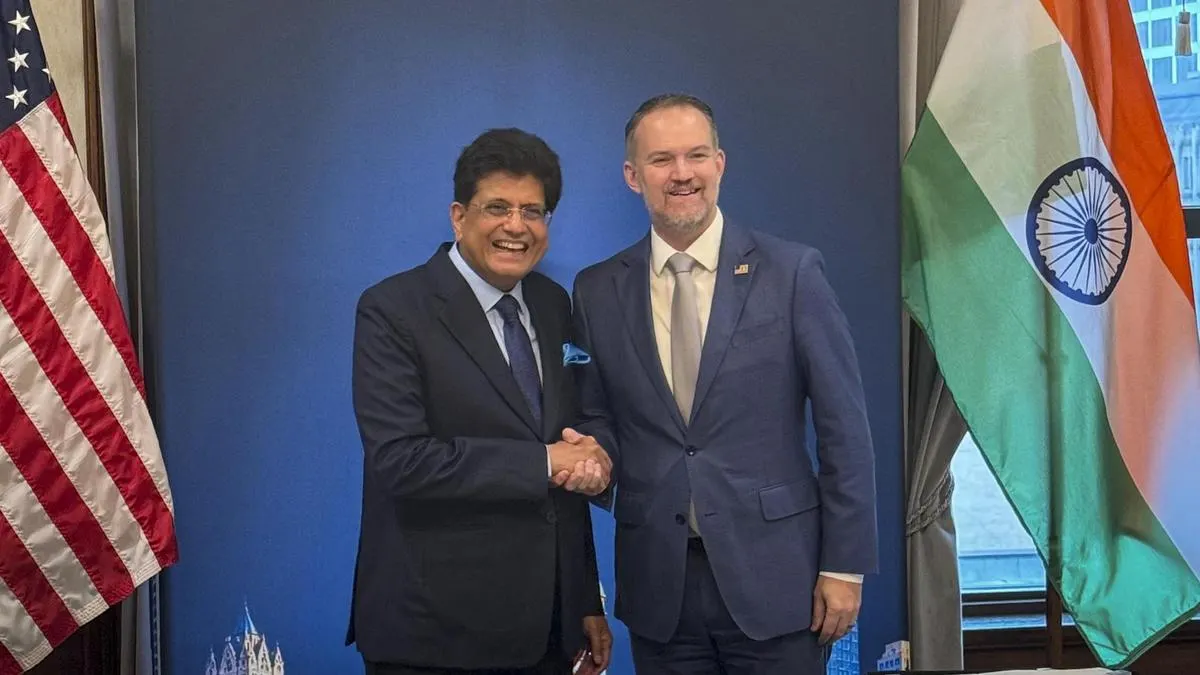
The Hindu said Goyal and Greer met in Milwaukee, Wisconsin, on September 30 during the G20 Trade Ministers’ Meeting. Goyal said their talks were aimed at securing an early conclusion to a mutually beneficial interim agreement within the wider India-US Bilateral Trade Agreement. The ministers also discussed deliberations taking place under the US presidency of the G20.1
Trump and Modi also spoke by telephone on September 30. Both sources described the call as constructive in relation to the trade negotiations. The Hindu reported that the leaders considered bilateral cooperation in commerce, defence, energy, critical technology and other fields, while CNBC said Modi described the call as productive.12
A prolonged path to agreement
The Hindu reported that India and the United States announced the completion of a framework for the first phase of their bilateral trade agreement in February 2025. Subsequent changes in the US tariff environment led to further negotiations, and neither an interim accord nor the broader bilateral agreement has been finalised, according to the newspaper.1
Goyal said on September 24 that the pact itself was complete but would be implemented only after Washington offered India an appropriate competitive position against other suppliers in the US market, The Hindu reported. The newspaper identified ASEAN countries, China and Bangladesh among India’s competitors. It also reported that New Delhi would not sign until it secured that comparative advantage.1
Tariffs and Russian oil
The tariff picture remains central to the talks. CNBC reported that Indian exports currently face a 10 per cent US tariff, although a substantial portion of shipments—including generic pharmaceuticals and smartphones—falls outside that duty. The outlet also reported that Washington had previously imposed a 25 per cent punitive tariff and raised duties on Indian imports to 50 per cent over purchases of Russian oil, before reducing duties to 18 per cent in February.2
Both reports described a risk of additional US tariffs of as much as 100 per cent connected to India’s continued imports of Russian oil. CNBC said Washington regards those purchases as helping to finance the war in Ukraine. Trump has claimed that India agreed to stop buying Russian oil and increase purchases from the United States and potentially Venezuela, but CNBC reported that New Delhi did not endorse those details and said energy security alone determined its purchases.12
The Hindu separately reported that the United States had imposed an additional 10 per cent tariff on India over imports linked to forced labour and was preparing further duties concerning excess capacity. The newspaper described these tariff questions as significant obstacles to an agreement.1
Limits of a possible accord
India’s priorities include safeguards for agriculture and preferential tariff treatment, according to CNBC. Arpit Chaturvedi, a South Asia adviser at Teneo, said the countries could be approaching the limits of what their trade structures allow under present conditions, potentially leaving negotiators to accept some differences while completing an agreement around them.2
The timing remains unresolved. The Hindu reported that another call between Trump and Modi could take place soon to review progress, but Greer’s public comments indicated that the completion of either the interim arrangement or the wider bilateral agreement was not immediate.12
Why it matters
For European readers following changes in international trade policy, the negotiations show how tariffs, energy purchases and protection of sensitive sectors are shaping a major bilateral commercial relationship. The outcome could alter the tariff treatment of Indian exports and India’s competitive position against other suppliers in the US market.12
Videos
Related stories
same actors
Version history
- version 1 ·