World · Islamic Republic of Iran
Iran and US clash over reports of enrichment-for-sanctions deal
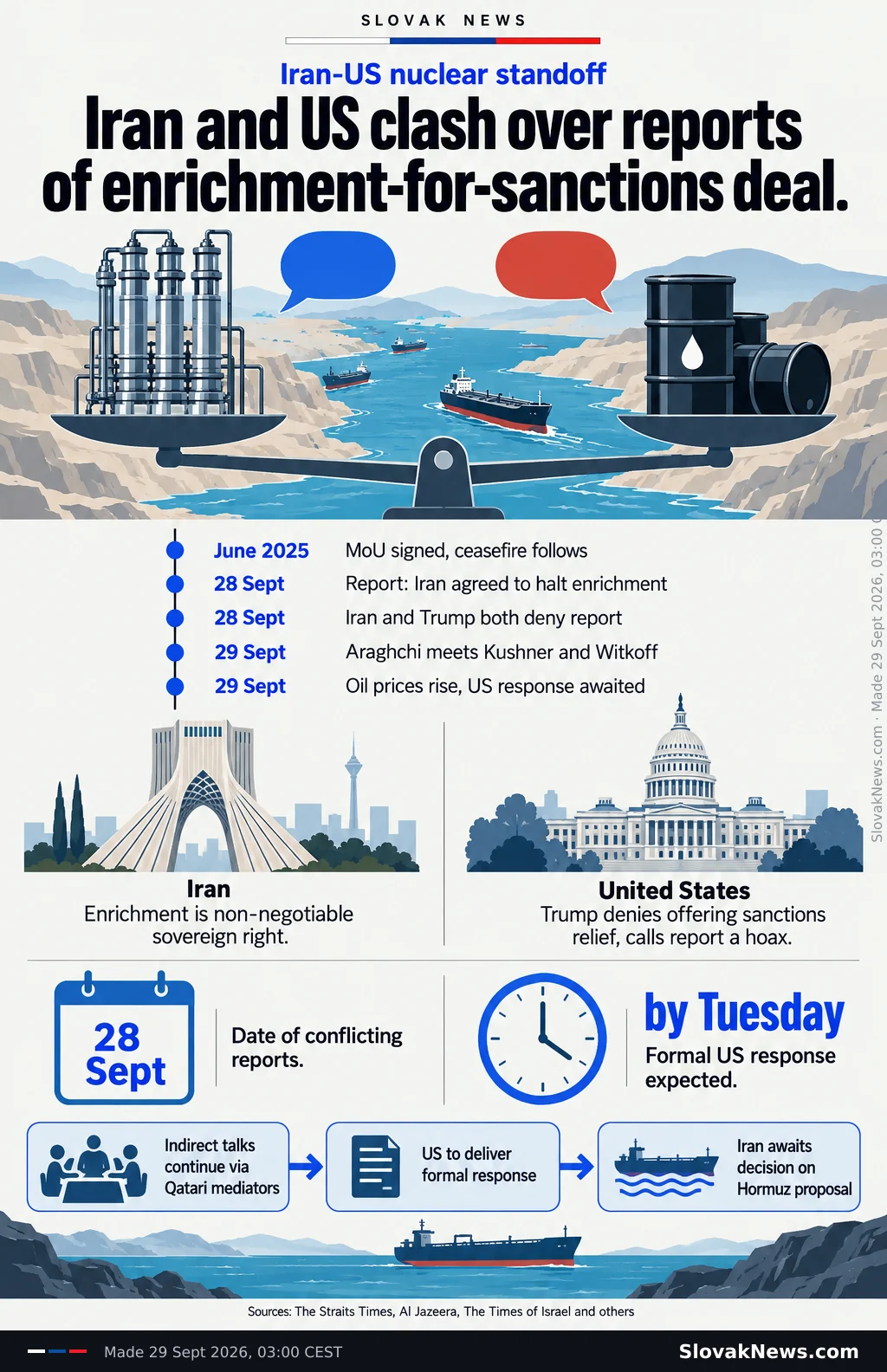
Conflicting accounts emerged on Sept 28 over whether Iran agreed to halt uranium enrichment in return for sanctions relief, with Tehran and Washington both denying elements of the reports as indirect talks continued in New York.
Listen to the story
Short version
Iran and the US gave contradictory accounts of whether Tehran agreed to halt uranium enrichment for sanctions relief, while indirect talks continued in New York.
- Bloomingbit reported Iran agreed to suspend enrichment for sanctions relief
- Iranian officials denied this, calling enrichment non-negotiable
- Trump denied offering Iran sanctions relief, calling report a hoax
- Araghchi met Kushner and Witkoff; talks made little progress
- Iran expects US response on Hormuz proposal; oil prices rose
What's new
- Bloomingbit reported Iran agreed to suspend enrichment for US sanctions relief
- Iranian officials called enrichment 'absolutely non-negotiable' and denied any such deal
- Trump denied offering Iran sanctions relief, calling the Axios report a 'HOAX'
- Araghchi noted that the mediating parties had yet to officially pass along any American refusal of Tehran's plan
On Sept 28 and 29, Iranian and US sources offered clashing versions of events regarding a possible pause in Tehran's uranium enrichment tied to relief from sanctions, even as Qatar-brokered indirect negotiations proceeded alongside the UN General Assembly in New York.762
Competing reports on enrichment
Bloomingbit, citing reporter Walter Bloomberg, said Iran had agreed to suspend uranium enrichment activities on condition that Washington eased sanctions, though the specific terms were not disclosed and neither government had made an official announcement.7
Al-Hadath, the Saudi-owned network, had previously stated that Tehran agreed to pause enrichment activities as part of a swap involving sanctions easing and unfreezing of assets. Iranian Deputy Foreign Minister Majid Takht-Ravanchi said no enrichment proposal had been discussed, and Foreign Ministry spokesman Esmaeil Baghaei said enrichment was "absolutely non-negotiable".4
An Iranian official described the reports of nuclear flexibility as false and as a psychological operation, saying the US administration was "trapped in the Strait of Hormuz" and was raising the nuclear issue as a diversion. Iranian officials continue to insist that enrichment falls within their sovereign entitlements under the Nuclear Non-Proliferation Treaty, while the IAEA has stated it lacks the ability to confirm where Iran's enriched uranium supply is kept or how much exists, a stockpile once estimated at 440.9 kg enriched to 60 percent.54
Trump denies sanctions relief offer
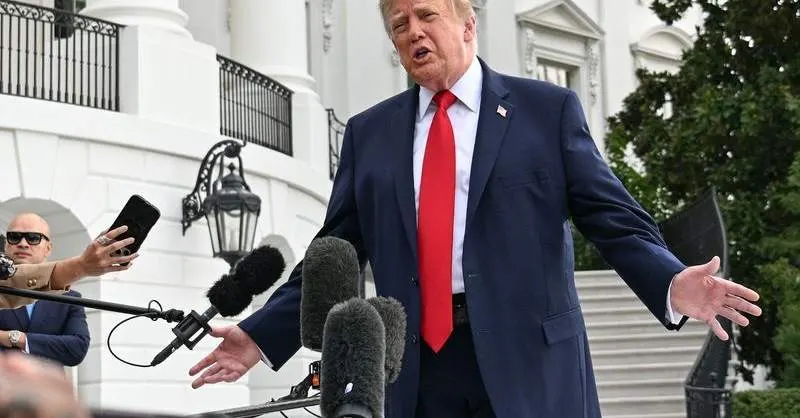
Trump publicly rejected claims that he had proposed easing sanctions on Iran and unlocking frozen funds as part of a trade for nuclear concessions, pushing back against a media report on the issue. He wrote that the story was untrue and should be withdrawn immediately.623
Iran's top diplomat Abbas Araghchi indicated that the go-betweens had not yet officially delivered word of an American rejection, and that Tehran remained on hold for a clear answer from Washington regarding its own week-long timeline proposal for the Strait of Hormuz. Araghchi additionally noted that Iran had continued indirect discussions with Washington via Qatar's go-betweens, anticipating an official American reply by Tuesday.32
Iranian officials said Araghchi sat down with presidential representatives Jared Kushner and Steve Witkoff in New York to go over the latest proposals and share perspectives, though the meeting yielded minimal advancement.1
Hormuz, distrust and stalled diplomacy
A June-signed Memorandum of Understanding brought about a ceasefire and boosted vessel traffic through the Strait of Hormuz, yet it fell apart roughly two weeks later, drawing criticism from many US lawmakers who viewed it as granting Iran too many financial concessions. Iran kept limiting maritime passage through the strait, with traffic volumes staying well beneath what was seen before the conflict.1
Tehran has proposed a one-week timeline to restore normal strait access contingent on specific US actions, after earlier demanding that Washington end its naval blockade and oil-related sanctions. Trump turned down Tehran's offer, and crude prices climbed on Sept 28 as hopes for a resolution diminished.1
According to a US official, Washington's mediator-facilitated dialogue with Iran remains productive, though any agreement hinges on resolving nuclear concerns; the official added that Trump would consider lifting sanctions and freeing frozen assets if Iran makes tangible headway on the nuclear front. Iran's President Masoud Pezeshkian stated his nation has no intention of pursuing nuclear weapons, though it will not relinquish its claim to nuclear technology for civilian economic use.1
Pressure of the midterms
Behind closed doors, Iranian officials voiced doubt that an accord with the US could materialize ahead of the Nov 3 midterms, and anticipate a strong likelihood of tensions worsening once voting concludes. Iran's representatives have repeatedly signaled openness to negotiation while expressing doubt that the Trump administration would honor any deal's conditions, and reports suggest the White House harbors comparable skepticism toward Iranian intentions.1
Reporting on the negotiations indicates that rising energy costs, stemming from the conflict the US and Israel launched in late February, have politically damaged Trump and Republicans.1
Why it matters
A confirmed halt to Iranian enrichment paired with sanctions relief would ease a major proliferation concern and could stabilise oil markets through the Strait of Hormuz. The conflicting denials from Tehran and Washington show how far the two sides remain from a confirmed agreement.12
Videos
Related stories
same actors
same actors
same actors
same actors
Version history
- version 1 ·