World · Islamic Republic of Iran, United States of America
US Central Command Rejects Iran's Claims of 'Complete Control' Over Strait of Hormuz
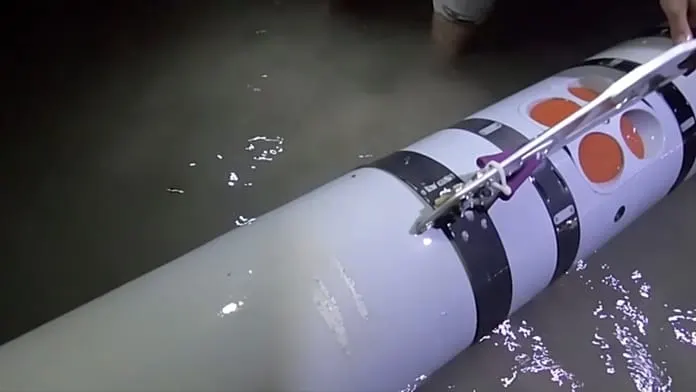
Iran's Revolutionary Guards say they have seized a second US underwater vehicle in the Strait of Hormuz, but US Central Command has publicly disputed Tehran's broader claims of controlling the waterway.
Iran claims two US underwater drone captures near the Strait of Hormuz, but US Central Command has publicly rejected Tehran's broader claims of controlling the waterway.
- IRGC claims captures of a Dive-LD (Sept 9) and a Remus 600/Kingfish (Sept 27)
- CENTCOM calls Iran's 'complete control' claim over the Strait false
- IRGC declared the Strait closed, warned of action against unauthorised traffic
- Iran proposed a ceasefire; Trump reportedly rejected it
- Analysts doubt any capture gives Iran major military advantage
What's new
- US Central Command publicly rejected Iran's assertion of 'complete control' over the Strait of Hormuz, calling it false
- CENTCOM said Iran currently lacks any naval fleet since American forces wiped it out, and that Tehran does not hold sway over the Strait
- Details emerged of an earlier claimed capture of a Dive-LD submersible on September 9, with Iran's embassy in Hyderabad promising an 'unboxing ceremony'
- Analysts quoted by National Security Journal said Iran is unlikely to gain major military advantage from any capture despite its propaganda value
US Central Command publicly rejected Iranian claims of 'complete control' over the Strait of Hormuz on September 28, 2026, days after Iran's Revolutionary Guards Navy said it had seized a second unmanned US underwater vehicle in the waterway.617
A second capture claimed
According to Iranian and Russian state media, Iran's Navy reported halting and capturing an American Remus 600 autonomous underwater craft within the Strait of Hormuz on September 27.64
The Iranian army described the operation in a statement carried by TASS: "During a complex operation involving electronic warfare and intelligence data, Iranian Navy servicemen were able to intercept a state-of-the-art US military drone conducting espionage activities in the Strait of Hormuz." Euronews reported that the IRGC Navy attributed the capture to a joint intelligence and electronic-warfare effort, and said the device was turned over to Iranian military specialists so its data could be extracted.61
The Jerusalem Post likewise reported the IRGC's account that the vehicle had been conducting espionage and was captured using intelligence and electronic warfare capabilities, though this characterisation has not been independently confirmed.4
Identification revised
By September 28, the IRGC had changed its description of the captured device, saying it was in fact a Mk 18 Mod 2 Kingfish worth several million dollars rather than the Remus 600 it had named a day earlier, according to the Tribune. IRGC spokesperson Hossein Mohebbi confirmed the seizure on social media, and Iran's state broadcaster IRIB reported the IRGC statement characterising the drone as espionage equipment.5
An IRGC statement quoted by the Tribune said: "The Strait of Hormuz is not only open, but a hunting ground for the IRGC Navy targeting American submarines; the second catch has been reeled in, this time the Mk 18 Mod 2 Kingfish." The IRGC also declared the waterway closed, adding: "The IRGC Navy firmly declares that the Strait of Hormuz is closed and we are taking strong and relentless action against dangerous movements."5
Closure declared, ceasefire proposal rejected
The report said Donald Trump rejected the proposal.2
Warnings of confrontation
The Jerusalem Post reported that Army spokesperson Mohammad Akraminia cautioned that the US might mount another strike on Iran because of the country's regional standing, adding that Iranian forces stood ready for battle and that any fresh American assault would incur heavier losses for Washington. Amir Hatami, the Army's commander-in-chief, described the conflict as having reached a pivotal and decisive point.4
Euronews pointed out that this marked the second occasion within a short span that Iran had asserted it captured American underwater equipment, following an earlier claimed seizure of a Dive-LD device near the Strait's mouth, a claim that Washington likewise has not addressed publicly. Euronews also reported that Iran has announced plans to charge vessels transit fees through the Strait and that Washington has introduced restrictions on access to Iranian ports.1
The vehicle in question
Euronews reported that Remus 600 units are operated by the US Navy along with multiple NATO countries and are capable of diving as deep as 600 metres. Per Wikipedia, 175 Remus 600 units have gone to buyers in America, Britain, Australia and Japan, the model reaches speeds of up to 5 knots with roughly 70 hours of endurance at normal cruising speed, and it entered service with the US Navy's Fifth Fleet in the Persian Gulf in 2012. Wikipedia also notes an earlier case in 2018 in which Houthi forces in Yemen captured a US Navy Remus 600, and a 2024 video showing Ansar Allah fighters with a captured unit.13
CENTCOM disputes Iran's claims
Middle East Eye reported that US Central Command publicly rejected Iranian assertions of 'complete control' over the Strait of Hormuz, calling the claims false and pushing back on a senior IRGC commander's statement.6
CENTCOM posted a statement on X calling the notion that Iran holds full command of the Strait of Hormuz untrue, and asserted that Iran has no navy left since American forces destroyed it and does not control the waterway. The command added that upward of a billion barrels of oil had passed through the Strait recently and that US forces were sustaining commercial shipping despite what it characterized as Iran's own blockade against its maritime trade.6
The first capture: a Dive-LD submersible
National Security Journal reported that Iran's Revolutionary Guards Navy first claimed capture of a Dive-LD submersible, a 20-foot vessel made by Anduril Industries valued at about $2.5 million, near the Strait of Hormuz on September 9 – before announcing the later seizure it described as a Remus 600 or Mk 18 Kingfish. According to Mehr News Agency, the Dive-LD had joined the ranks of the US Navy's Unmanned Undersea Vehicle Group 1 only in 2025, not long before the incident.29
The Iranian embassy in Hyderabad posted a photograph of the captured vessel and promised an 'unboxing ceremony,' while IRGC spokesperson Hossein Mohebbi said: 'the most advanced US technologies have come under Iran's control. Reverse-engineering will begin.' The Defense Post reported that Tehran intended to dismantle and study the captured device's technology for its own purposes.2
Experts question the military payoff
Reuters reported that Iran is unlikely to gain a major military advantage from any capture despite its propaganda value. Farzin Nadimi of the Washington Institute for Near East Policy said Iran would treat any seizure 'as a propaganda win' and might use a captured vessel to improve its own designs, while Bryan Clark of the Hudson Institute said Iran might obtain hardware but that built-in defences would likely protect any software.2
CENTCOM Captain Tim Hawkins said the United States remained in full command of every one of its drone assets currently in operation. National Security Journal pointed to earlier instances of Iranian claims about reverse-engineering captured American equipment, including the 2011 seizure of a US RQ-170 Sentinel stealth drone that then-President Barack Obama pressed to have returned, as well as a 2022 episode in which Iran nearly seized a US Saildrone surface vessel in the Persian Gulf.2
Why it matters
About a fifth of global oil and liquefied natural gas shipments pass through the Strait of Hormuz, meaning any interruption or closure assertion has consequences for shipping costs and energy prices felt in European markets. CENTCOM's public denial that Iran controls the Strait directly contradicts Tehran's declarations, underscoring that the standoff over passage rights, blockade claims and a proposed ceasefire remains contested and unresolved.162
Videos
Related stories
same actors

same place

Version history
- version 2 · US Central Command publicly rejected Iran's claim of 'complete control' over the Strait of Hormuz, and new reporting detailed an earlier claimed capture of a Dive-LD submersible on September 9 alongside expert scepticism about any military benefit to Iran.
- version 1 ·