World · Israel
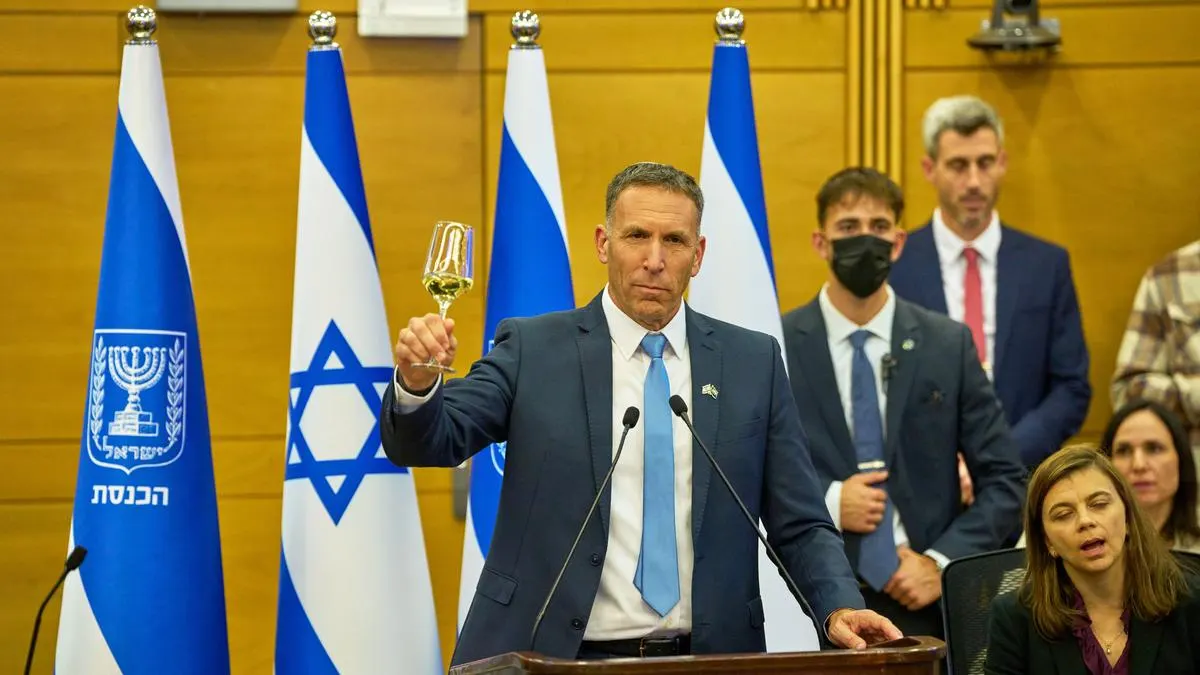
Matan Kahana elected Israeli parliament speaker as Eisenkot seeks coalition
Kahana’s election gives Gadi Eisenkot’s allies influence over legislation, but not a governing coalition. New reporting puts Eisenkot’s bloc at 48 seats and Netanyahu’s at 53, with Arab-minority parties holding the remaining 19.
Listen to the story
Short version
Kahana’s election strengthens Eisenkot’s parliamentary position, but a governing coalition remains unresolved. Netanyahu continues as caretaker prime minister.
- Kahana defeated Ofir Katz by 66 votes to 52, the Guardian reported.
- Eisenkot’s bloc holds 48 seats; Netanyahu’s alliance holds 53, reports The Straits Times.
- Arab-minority parties hold 19 seats and oppose Netanyahu alongside Eisenkot.
- Ynetnews reports judicial-overhaul repeal legislation was postponed until Monday.
What's new
- The Straits Times reports Eisenkot’s bloc holds 48 seats, Netanyahu’s 53 and Arab-minority parties 19.
- Netanyahu remains caretaker prime minister while Eisenkot tries to form a government.
- Election officials say they have seen no evidence of fraud affecting the result, according to The Straits Times.
Matan Kahana’s election as Israel’s parliamentary speaker has strengthened Gadi Eisenkot’s legislative position without resolving his path to government. The Straits Times reports that Eisenkot’s Yashar party and its partners hold 48 of the Knesset’s 120 seats, while Benjamin Netanyahu’s alliance holds 53. Netanyahu remains caretaker prime minister as Eisenkot seeks a coalition.2
Parliamentary control before a coalition
Kahana received 66 votes in the 120-seat chamber, against 52 for Ofir Katz, according to the Guardian. The newspaper reported that the debate lasted more than seven hours. Kahana succeeds Amir Ohana; Ynetnews identified Katz as the Likud candidate and reported that Arab lawmakers voted alongside Eisenkot’s allies.14
The outcome gave the camp seeking to replace Netanyahu control of important parliamentary posts and the legislative agenda while government negotiations remained unsettled, Ynetnews reported. The New York Times described Kahana’s new role as putting him in charge of the legislative process as the opposition sought to challenge Netanyahu on several fronts.34
The Guardian reported that the 27 October elections left Netanyahu’s camp without a majority in parliament. Eisenkot has been tasked with trying to form a government. Anadolu Agency reported that the president gave him 28 days to do so, with the possibility of a further 14 days.16
The Straits Times identifies Kahana’s party as Eisenkot’s centre-right Yashar. According to the newspaper, Yashar and its partners have 48 seats, compared with 53 for the bloc comprising Netanyahu’s party, far-right factions and ultra-Orthodox parties. Arab-minority parties hold the other 19 and are aligned with Eisenkot in opposing Netanyahu; that parliamentary alignment has not yet produced a government.2
Legislation and the courts
Ynetnews reported that the opposing camps reached a deal that cleared the way for the speaker vote and prevented Netanyahu’s departing coalition from carrying out its proposed delaying tactic. As part of the deal, Eisenkot’s bloc consented to wait until Monday before advancing a bill to undo the departing government’s changes to the judiciary.4
Eisenkot’s camp has promised to reverse some Netanyahu policies. The Guardian reported that the bloc and unaffiliated Arab-led parties had introduced bills addressing term limits, an investigation into the 7 October attacks and the reversal of measures restricting judicial powers. Introducing a bill is only one stage: committee consideration and several votes are required before passage, the newspaper noted.1
The Guardian identified laws increasing the government’s influence over judicial appointments and reducing the attorney general’s powers as likely priorities for reversal. It also reported that Netanyahu’s opponents accuse him of obstructing an independent investigation into military or intelligence failures surrounding 7 October. That accusation remains a claim by his opponents.1
Kahana said parliament would follow court decisions without conditions throughout his tenure as speaker, Ynetnews reported. Eisenkot welcomed the appointment as reflecting the election outcome and rejected attempts to challenge the legitimacy of Arab lawmakers’ participation, according to the same outlet.4
Government talks remain open
Netanyahu, meanwhile, renewed his appeal for a national unity government and said a broad coalition should include ultra-Orthodox parties, Ynetnews reported. As of 17 November, the outlet said, his bloc and Eisenkot’s had not reached a unity-government agreement. The Straits Times said Netanyahu will continue serving as interim premier pending the formation of a government and that lawmakers took office before any new administration was in place.24
The Straits Times reported that the election left Eisenkot without a clear route to power despite Netanyahu’s loss of a majority. The newspaper said failure by all sides to assemble an administration would trigger a fresh vote in 2027.2
Disputes over the vote
Likud condemned Kahana’s election by characterising some of those backing him as supporters of terrorism, The Straits Times reported. The newspaper also reported that Netanyahu had alleged voter fraud by Arabs without substantiation. Election officials said they were examining possible misconduct but had found no evidence of fraud affecting the result.2
The Straits Times said authorities were examining whether members of Netanyahu’s staff intentionally circulated information that led to an inquiry into alleged vote-buying. Netanyahu’s office rejected the Channel 12 report about the matter as false. The investigation does not establish that officials planted information.2
Why it matters
Control of parliament’s agenda does not itself establish a governing majority. Arab-minority parties oppose Netanyahu alongside Eisenkot, but government formation remains unresolved. The speakership gives Eisenkot’s camp influence over proposals concerning judicial powers, prime-ministerial term limits and an independent inquiry into the 7 October 2023 Hamas attack.24
Videos
Related stories
same actors
background
Version history
- version 2 · This update adds the parliamentary seat breakdown, Netanyahu’s caretaker status, the prospect of another election and attributed reporting on election-related allegations, while correcting source references.
- version 1 ·