World · Islamic Republic of Iran, Saudi Arabia, Pakistan
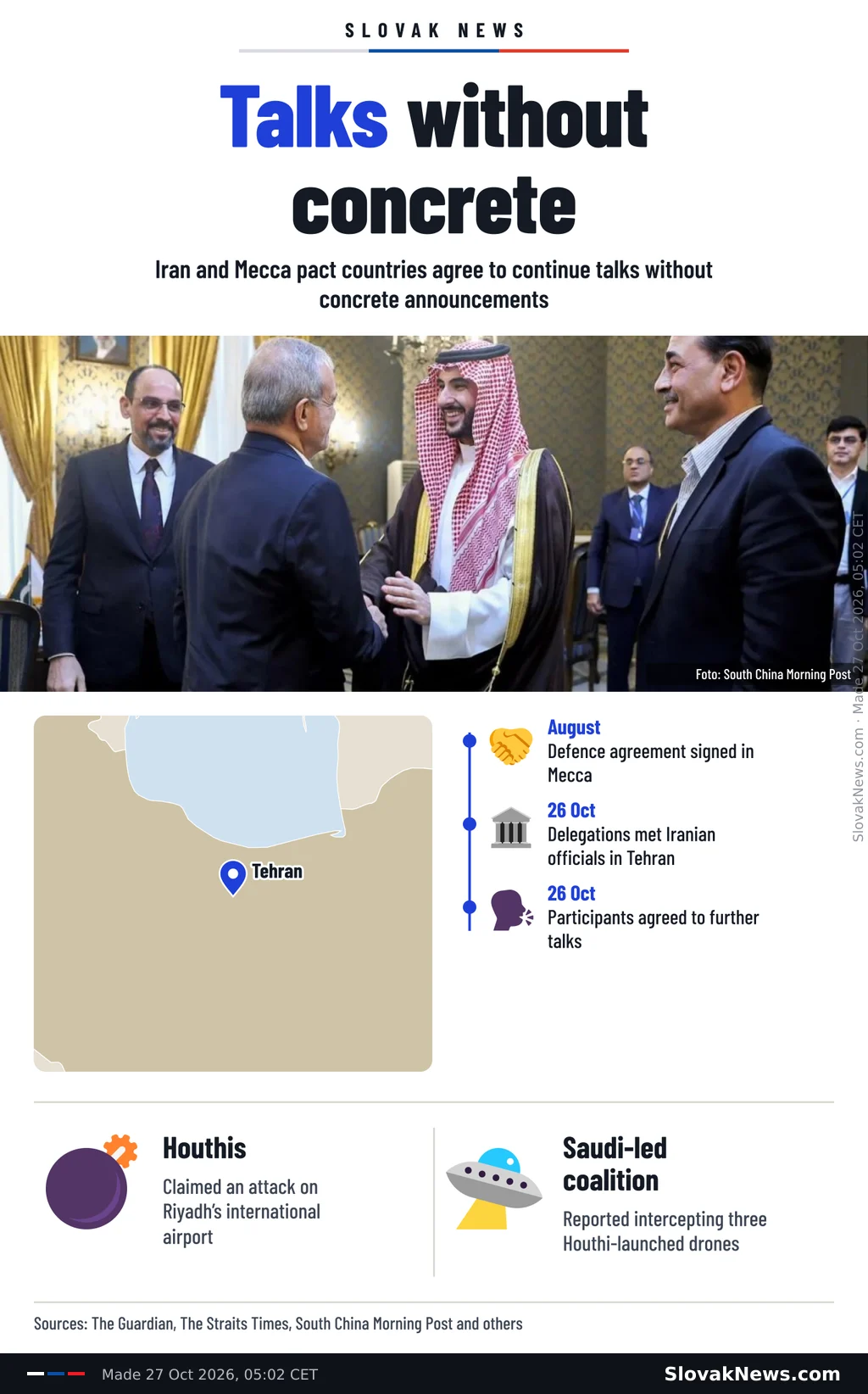
Iran and Mecca pact countries agree to continue talks without concrete announcements
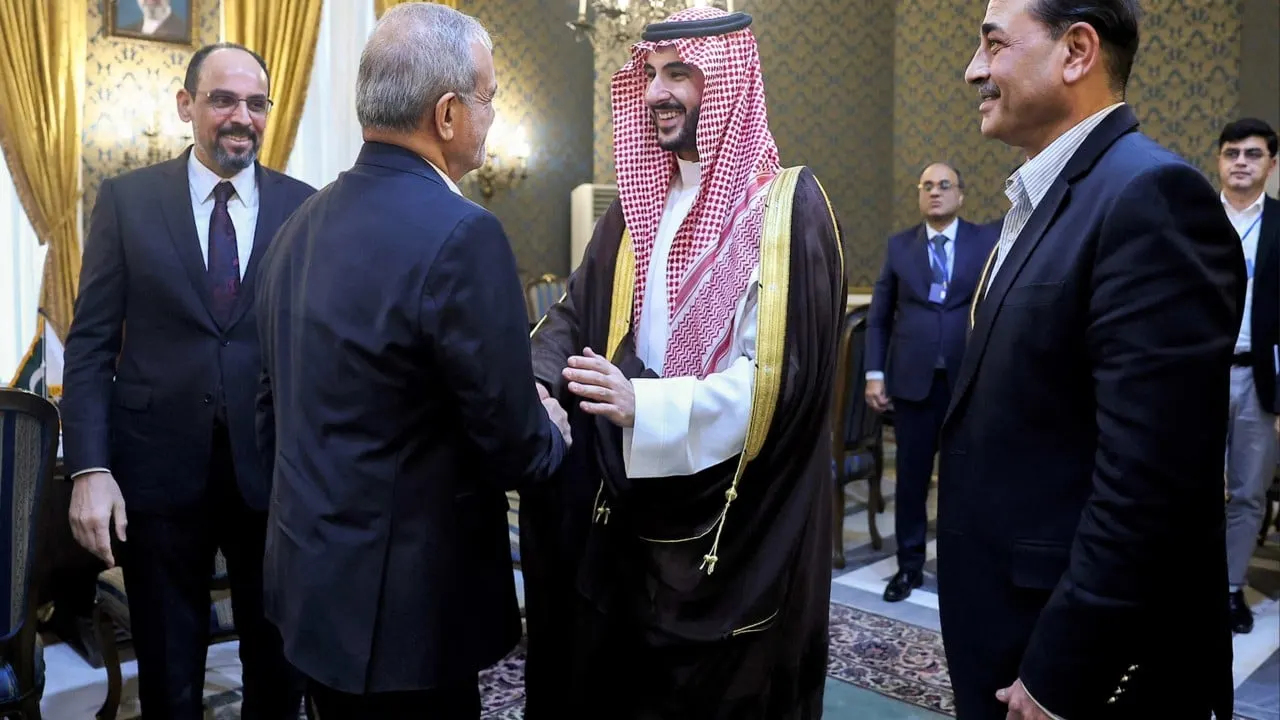
Saudi, Pakistani and Turkish delegations met Iran’s president and foreign minister in Tehran. Qatar also visited for mediation as the Houthis claimed another airport attack and the Saudi-led coalition reported drone interceptions.
Listen to the story
Short version
Iran and visiting Saudi, Pakistani and Turkish delegations agreed to continue talks without concrete announcements. The diplomacy aims to prevent renewed regional fighting.
- Delegations met Iran’s president and foreign minister in Tehran.
- This was the alliance members’ first joint Tehran visit since the Mecca agreement.
- Qatar also visited Tehran as part of US-Iran mediation.
- Houthis claimed an airport attack; the Saudi-led coalition reported intercepting three drones.
Infographic
What's new
- The Tehran talks ended with agreement to continue discussions, but no concrete announcements, the Straits Times and South China Morning Post reported.
- Iranian security official Mohsen Rezaei described the discussions as “very good”.
- A Qatari delegation also visited Tehran as part of US-Iran mediation.
- The Houthis claimed another attack on Riyadh’s international airport; the Saudi-led coalition reported intercepting three drones.
Saudi, Pakistani and Turkish delegations agreed with Iranian officials to continue discussions after meeting Iran’s president and foreign minister in Tehran on October 26, 2026, without making concrete announcements, according to the Straits Times and South China Morning Post. The talks sought to prevent renewed regional fighting.23
Infographic
Talks to continue
The visiting delegations met Iran’s president and foreign minister and agreed to continue discussions without making concrete announcements, the Straits Times and South China Morning Post reported. Arab News reported that Saudi Defence Minister Khalid bin Salman met President Masoud Pezeshkian and also held talks with Pakistan’s army chief, Asim Munir, and Turkey’s intelligence chief, Ibrahim Kalin.237
Mohsen Rezaei, who leads Iran’s Supreme National Security Council, described the discussions as “very good”. He said participants agreed that regional countries should provide their own security and prevent foreign intervention. According to the Straits Times and South China Morning Post, the talks also focused on areas under Israeli occupation in Lebanon’s south, Syria’s south, Gaza and the West Bank.23
Ali Bagheri, deputy secretary of Iran’s Supreme National Security Council, had announced the visit, according to Middle East Eye. Dawn reported that the agenda covered Palestine, Lebanon, regional security and the consequences of US and Israeli actions against Iran.68
The Saudi foreign ministry described the visit as an effort “to encourage dialogue and diplomatic solutions”, according to Arab News. The outlet reported that the initiative also supported mediation by Qatar and Pakistan, with Saudi Arabia stressing negotiations as a means of preventing further military escalation.7
Security pact under discussion
Saudi Arabia, Pakistan and Turkey formed a defence alliance in Mecca in August. The talks marked their first joint visit to Tehran since its formation, according to the Straits Times and South China Morning Post. According to the Guardian, the countries that signed the agreement call it a collective defence deal, while officials were believed to be weighing whether Iran could join a new security framework for Islamic nations.123
Esmaeil Baghaei, a spokesperson for Iran’s foreign ministry, described the talks as an opportunity to broaden regional security cooperation based on shared interests. The Guardian also reported that Iran’s foreign ministry has repeatedly advocated a regional arrangement giving Iran a role in place of the United States.1
Former Iranian foreign minister Javad Zarif argued for cooperation built around commitments against aggression, greater trust and mutual prosperity. “Regional security is not imported, it must be created by the people of this very region together,” he said, according to the Guardian.1
Parallel diplomatic efforts
The New York Times reported that the United States and Israel were drawing up plans to resume war against Iran. The Guardian said the visiting officials were seeking an agreement between Tehran and Washington and were expected to discuss how Iran might persuade the Houthis to halt missile and drone attacks on Saudi infrastructure.14
A Qatari delegation also visited Tehran as part of US-Iran mediation efforts led by Qatar and Pakistan, according to the Straits Times and South China Morning Post. The Guardian reported that Qatari mediators sought terms for reopening the Strait of Hormuz. It said a security pact could take months to negotiate and might not meet Washington’s demand for the strait to reopen before sanctions were lifted.123
The Houthis claimed a new attack on Riyadh’s international airport, according to the Straits Times and South China Morning Post. In a separate account, the Saudi-led coalition said it had brought down three drones launched by the Houthis in the skies above the Riyadh area and Saudi Arabia’s south. Those reports do not establish the damage, if any, from the claimed airport attack.23
Why it matters
The talks are part of efforts to prevent renewed fighting involving Iran, the United States and Israel. They coincide with US-Iran mediation by Qatar and Pakistan, discussions of a possible regional security pact, and efforts to reopen the Strait of Hormuz.123
Videos
Related stories
background
background
Version history
- version 2 · The talks concluded without concrete announcements but with agreement to continue, as new reporting detailed Qatari mediation and competing accounts of Houthi attacks and Saudi-led interceptions.
- version 1 ·