World · Islamic Republic of Iran, United States of America
Iran ties Strait of Hormuz reopening to US acceptance of seven conditions
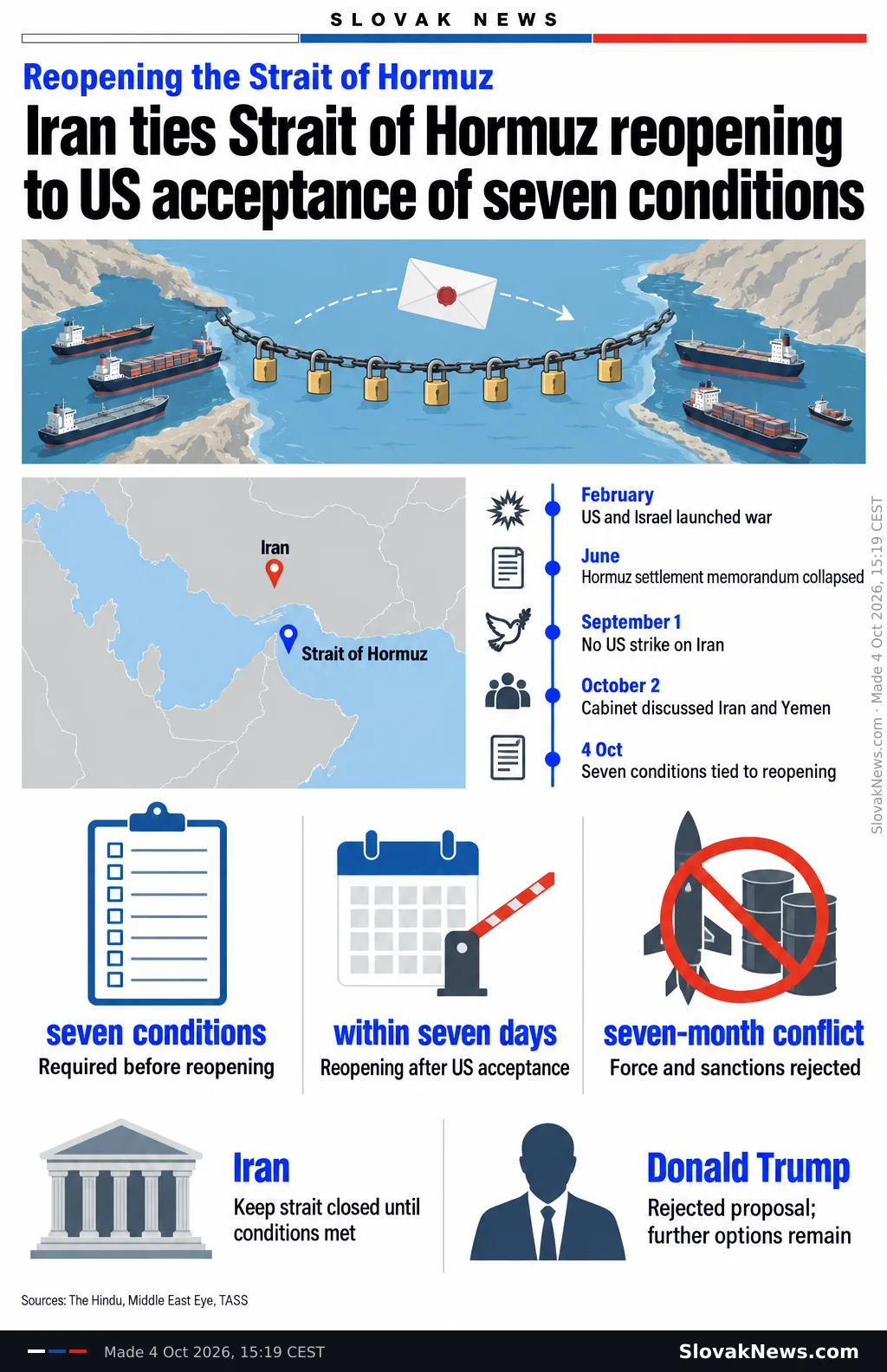
Iranian officials say the waterway could reopen within seven days if Washington accepts Tehran’s proposal. The conditions remain central to indirect truce negotiations.
Listen to the story
Short version
Iran has linked reopening the Strait of Hormuz to US acceptance of seven conditions. Iranian officials say diplomacy remains possible but warn against renewed military confrontation.
- The strait remains closed pending seven Iranian conditions.
- Iran offers reopening within seven days after US acceptance.
- Washington reportedly sent proposals through a mediator.
- Trump rejected Tehran’s plan, according to The Hindu.
- The precise conditions have not been disclosed.
Infographic
What's new
- Iran says the strait will stay closed until Washington meets seven conditions. (s2)
- Tehran says acceptance of its plan could bring reopening within seven days. (s3)
- Washington submitted proposals through a mediator, according to Iran’s Parliament Speaker. (s2)
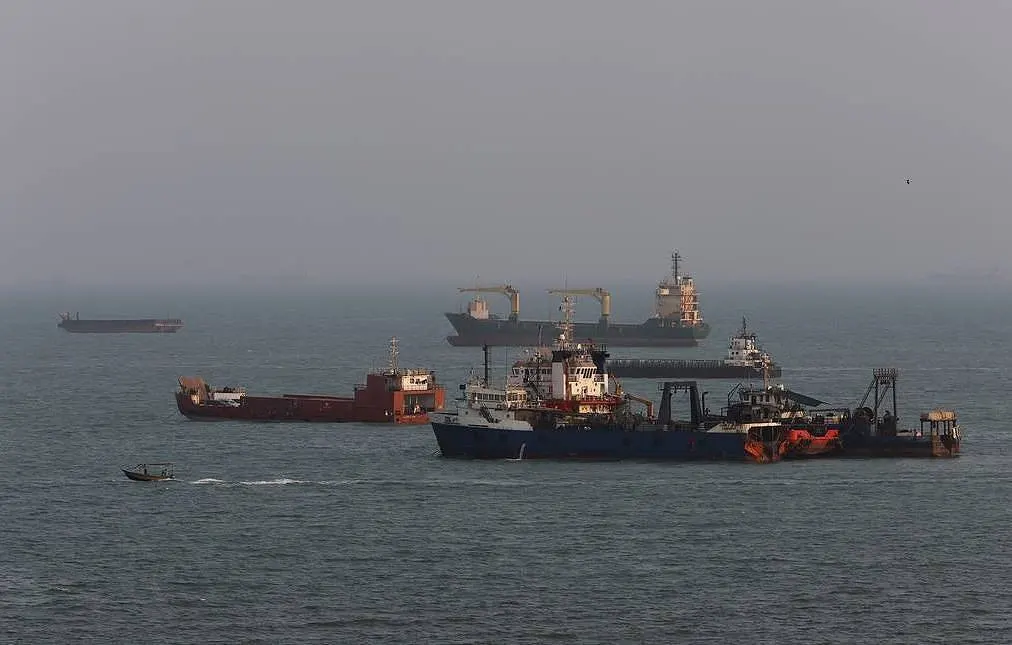
Iranian officials said on October 4 that the Strait of Hormuz would remain closed until the United States met seven conditions, while a separate report said Tehran could reopen the waterway within seven days if Washington accepted its proposal. The strait is now the principal issue in indirect truce negotiations between the two countries, according to Iran’s foreign ministry spokesman.23
Infographic
Conditions for reopening
Mohammad Bagher Ghalibaf, Iran’s Parliament Speaker and, according to Middle East Eye, Tehran’s chief negotiator, said the seven conditions were based on the Islamabad memorandum of understanding. He said Iran had presented a seven-day roadmap and that the United States subsequently conveyed proposals through an intermediary. Details of the conditions and the American proposals were not provided.2
Ghalibaf said Tehran’s position was settled and that the strait would not reopen until Washington met the conditions. TASS separately reported that Iran had presented a plan this year to address its disputes and conflict with the United States, and that the waterway would reopen within seven days if Washington agreed to the proposal.23
The Hindu reported that Iranian and American officials discussed the strait in indirect negotiations held on the sidelines of the United Nations General Assembly. According to that account, Iran presented seven conditions but US President Donald Trump rejected the proposal while leaving open the possibility of further talks or renewed military action.1
Diplomacy and the nuclear file
Foreign ministry spokesman Esmaeil Baghaei described reopening the Strait of Hormuz as the main focus of the truce discussions. He said Iran’s priority was “to reach a solution and to have peace and stability restored within this waterway”.2
Baghaei said Washington’s approach to ending the conflict centred on Iran’s nuclear programme. He also said Iran’s leadership had not discussed the return of International Atomic Energy Agency inspectors. According to Baghaei, changes in US demands and statements had obstructed the peace process.2
Foreign Minister Abbas Araghchi told foreign ambassadors that the seven-month conflict had “no military solution or any solution based on new sanctions”. He said diplomacy was the way forward, although he also warned that Iran would respond with greater force if its adversaries returned to military confrontation.12
Seven months of conflict
According to The Hindu, the United States and Israel began the war against Iran in February. The outlet reported that an extensive bombing campaign did not produce a decisive end to the conflict, and that Washington later reduced its military operations while favouring economic pressure. It also said the United States had not struck Iran since September 1.1
A memorandum agreed in June was meant to establish a framework for a lasting settlement, The Hindu reported, but it foundered largely over disagreements concerning the Strait of Hormuz. The same report said Iran sought control of the waterway and attacked vessels attempting to pass without its permission.1
Axios reported that senior members of Trump’s cabinet met on October 2 to discuss both the war in Iran and the conflict in Yemen, according to The Hindu. That report described the Houthis as backed by Tehran and said they had fought government forces in Yemen and attacked Saudi Arabia.1
Why it matters
For readers in Europe, the central development is that the status of the Strait of Hormuz has become tied to unresolved conditions in Iran-US negotiations. Iranian officials are presenting reopening, diplomacy and the restoration of stability in the waterway as connected issues, while rejecting military action and additional sanctions as solutions.123
Videos
Related stories
background
background
same actors
Version history
- version 1 ·