US Cancels 760,000 ACA Enrollees Over Alleged Fraud
The Trump administration says it has canceled roughly 315,000 Affordable Care Act enrollments covering 760,000 people, citing suspected fraud, and will further review 419,000 more.
US officials canceled about 315,000 ACA enrollments covering 760,000 people, citing suspected fraud, and will review 419,000 more.
- 315,000 ACA enrollments, 760,000 people, canceled over alleged fraud
- 419,000 more enrollees face residency and income verification
- Action projected to save about $2.2 billion in subsidies
- 569 brokers barred; new broker registrations frozen for six months
- Democrats and some analysts have criticized the process
What's new
- CMS canceled about 315,000 ACA marketplace enrollments covering 760,000 people
- 419,000 additional enrollees face further verification of residency and income
- CMS barred 569 brokers and imposed a six-month freeze on new broker registrations
- HHS report estimates nearly half of new 2021-2024 enrollments may have been improper
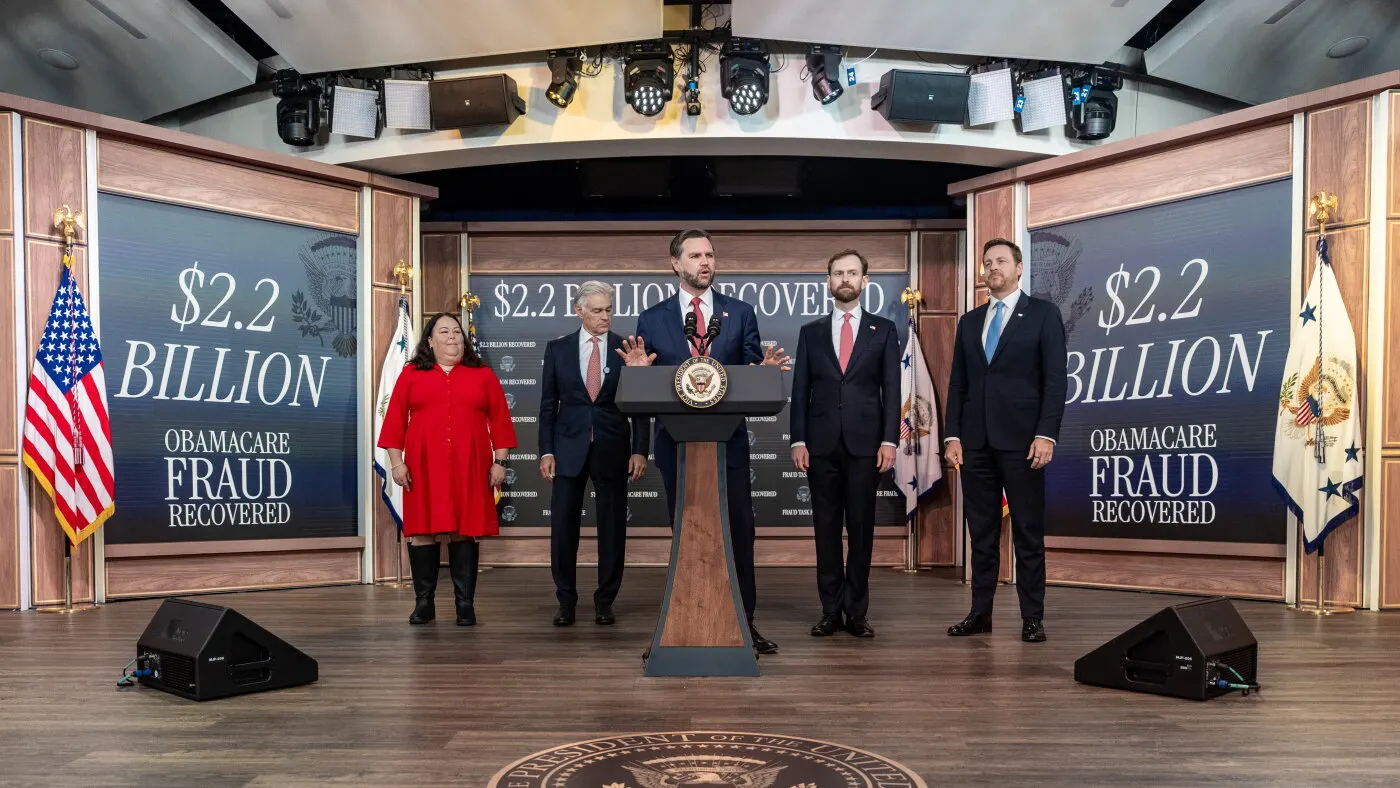
The Trump administration announced this week that it has canceled approximately 315,000 Affordable Care Act marketplace enrollments, affecting about 760,000 people, after officials alleged widespread fraudulent or ineligible sign-ups. Vice President JD Vance, flanked by CMS Administrator Mehmet Oz and other officials, disclosed the action at a briefing in Washington, D.C., saying the government will also verify eligibility for another 419,000 enrollees.124
The cancellations
CMS reported that roughly 315,000 enrollments, affecting 760,000 people, have been stripped from the ACA marketplace, with officials saying a large share involved fictitious individuals or people who had no idea they were signed up. CMS said roughly 19.2 million Americans remain actively enrolled in ACA marketplace plans as of early 2026, and enrollment had dropped to that level in February, a year-over-year decrease of 2.9 million.126
CMS Administrator Oz said, "phantoms because officials believe most either do not exist or were unaware they had coverage," and separately said, "We're not paying insurance for non-existent ghosts, and so we've collected that money back." He added that the agency had tried multiple ways to reach affected enrollees: "We have been writing them, telexing them, walking to them, FedExing, whatever we could possibly do to get in touch with them," and said those people would get another chance to confirm eligibility: "We're giving another chance to them to be able to try to tell us that they really have a Social Security number, or they really did have the insurance."36
The anti-fraud task force, led by Vance and including Health Secretary Robert F. Kennedy Jr., Oz and FTC Chairman Andrew Ferguson, projected that the move would spare taxpayers about $2.2 billion in subsidy costs. The dossier indicates that, left unchecked, these unauthorized sign-ups might have driven improper federal outlays as high as $6.6 billion for the 2026 plan year.1235
Allegations of fraud
Vance charged that the previous administration had run a setup ripe for exploitation, remarking, "You have a system where, on the one hand, brokers are paid money to feed patients into the system, while on the other hand, the government isn't even checking whether the people enrolled are actually eligible for the program. What do you have? Of course, rampant, rampant fraud." CMS noted that about 35% of current ACA enrollees have never actually used their coverage, and that since 2019 there has been no monetary fine for lacking health insurance.2
An HHS report referenced in the dossier calculated that close to half of all fresh Obamacare sign-ups from 2021 through 2024 could have been fraudulent, nonexistent or otherwise improper. CMS said some enrollments lacked verified citizenship or immigration documentation, and described canceled enrollees as either non-existent or as people who never filed claims and could not be reached, according to CMS.32
CMS also pointed to a Government Accountability Office exercise, according to which covert testing approved subsidized coverage for almost all of 24 fake enrollees, which the agency cited as evidence of fraud risk in the advance premium tax credit system.1
Broker crackdown
CMS blocked 569 brokers accused of filing 2026 plan-year applications at suspiciously high volumes that lacked necessary applicant details, and put a six-month nationwide freeze on new broker sign-ups, shutting out those without existing 2026 agreements through February 1, 2027. Oz described this as a "temporary national moratorium for six months" and, alluding to the larger scope of fraud, called it "the tip of the iceberg." CMS had previously sidelined 850 brokers over fraud concerns from June through October of 2024, and Forbes reported that some rogue agents had used social media ads to sign people up without their knowledge.37
Mychal Walker, who leads the National Association of Benefits and Insurance Professionals, argued the freeze "would punish legitimate professionals instead of targeting the bad actors responsible for fraud." Morningstar's Julie Utterback warned the shifts "may negatively affect enrollment and potentially margins related to higher risk pool in a market that is already contracting."3
Reaction
Democratic Representative Nancy Pelosi denounced the action, stating, "Using the false pretext of fighting fraud to strip Americans of their healthcare is as cynical as it is cruel." Brad Woodhouse said, "The administration is piling on more red tape, more confusion and more opportunities for people to lose the coverage they rely on." The dossier notes that Massachusetts Democrat Richard Neal, the top Democrat on the Ways and Means Committee, likewise objected to the disenrollments.6
KFF's Cynthia Cox questioned the process used to identify fraudulent enrollees, and former CMS official Ellen Montz said the administration's announcement lacked detail, according to the dossier.6
CMS points to background showing that enrollment surged after the American Rescue Plan Act, enacted under President Joe Biden, boosted ACA subsidies during the pandemic, pushing participation up from roughly 10 million pre-pandemic to about 22 million at its highest point. Those enhanced subsidies expired at the end of 2025, and the dossier notes millions dropped coverage as premiums rose. President Donald Trump, who had failed to overturn the ACA during his first term, has proposed the current changes.235
Why it matters
The cancellations affect coverage for hundreds of thousands of people and touch on broader debates about fraud, cost and access in a major US public health program. For European readers, the episode illustrates how changes to subsidy rules and enrollment verification in a market-based health system can produce large, rapid shifts in coverage numbers.26
Related stories

same actors
Version history
- version 1 ·