Climate · United States of America
Trump announces rollback of US methane rules for oil and gas
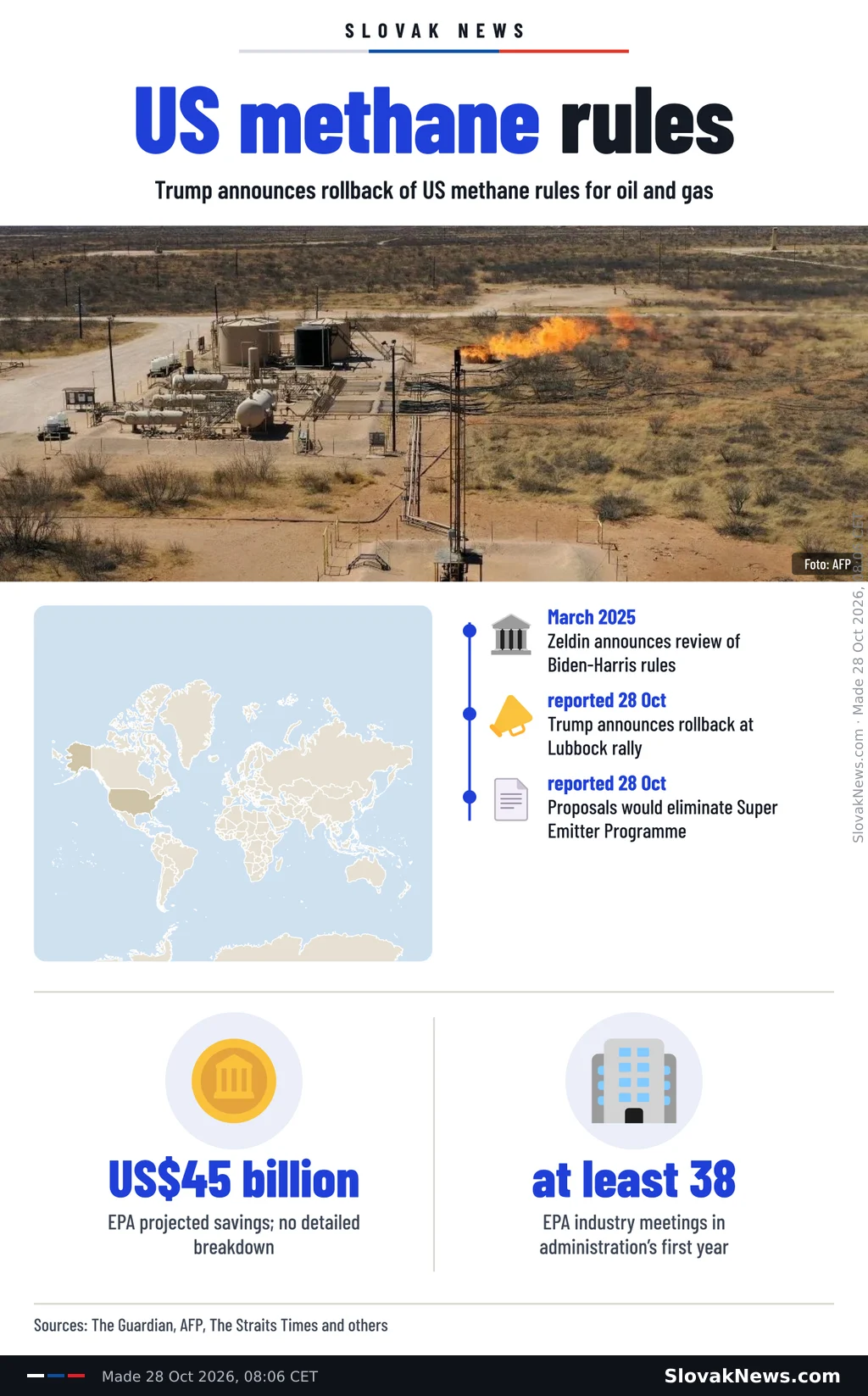
The proposed changes would reduce oversight of smaller wells and relax flaring restrictions. Trump and the EPA cite US$45 billion in savings, without a detailed agency breakdown.
Listen to the story
Short version
Trump announced an end to Biden-era methane restrictions, with the EPA proposing reduced requirements for oil and gas producers.
- The EPA cited US$45 billion in savings without a detailed breakdown.
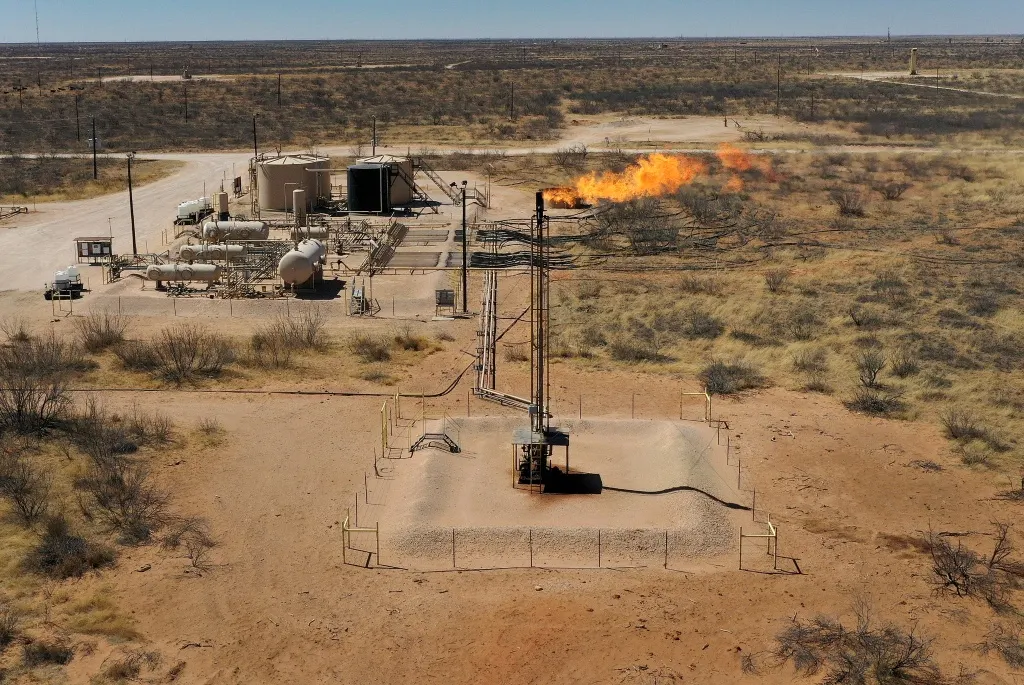
- Proposals would ease marginal-well regulation and routine-flaring restrictions.
- The Super Emitter Programme would be eliminated.
- Methane accounts for roughly one-third of warming since the pre-industrial era.
Infographic
What's new
- Trump announced that his administration was ending Biden-era methane restrictions.
- Proposed changes would remove the Super Emitter Programme and ease regulation of marginal wells.
- The EPA cited US$45 billion in savings without detailing its calculation.
US President Donald Trump announced a rollback of methane restrictions on oil and gas producers at a rally in Lubbock, Texas, according to reports published on October 28, 2026. He said his administration was terminating rules introduced under Joe Biden, while the Environmental Protection Agency outlined proposed regulatory changes.1234
Infographic
Savings claim accompanies proposed changes
Trump made the announcement while supporting Texas attorney-general Ken Paxton’s Senate campaign. He said scrapping the rules would deliver US$45 billion in combined savings for energy producers and consumers while increasing the supply of natural gas from Texas. The EPA gave the same savings estimate but did not provide a detailed breakdown.234
EPA administrator Lee Zeldin defended reducing requirements on producers, arguing that regulatory burdens made household heating and travel to work less affordable. His argument linked the changes to consumers’ energy costs; the agency’s statement did not set out how the projected savings would be divided between producers and consumers.234
The proposed revisions would eliminate the Super Emitter Programme, weaken regulation of marginal wells and relax restrictions on routine flaring of gas produced alongside oil. Marginal wells are defined as producing no more than 15 barrels of oil equivalent daily. Associated Press also reported that requirements for smaller wells would be eased.2345
In the Permian Basin, operators often burn associated gas because capturing it costs more than the gas would fetch on the market. The proposed relaxation of flaring rules concerns this practice, alongside changes affecting methane leaks and oversight of oil and gas facilities.1234
Climate implications and criticism
Methane is the principal constituent of natural gas and ranks behind carbon dioxide as a cause of global warming. It accounts for roughly one-third of the heating since the pre-industrial era, or about 0.5C. Methane remains in the atmosphere for seven to 12 years, compared with hundreds of years for carbon dioxide.234
Oil and gas operations release methane throughout the production and supply process, from extraction to distribution. The United States has the largest methane emissions from this sector, followed by Russia. Julia Kane, a researcher at the watchdog Fieldnotes, criticised the changes, alleging that they would leave an ineffective standard while companies continued leaking and flaring gas.234
According to the Guardian, the 2024 rule was the first nationwide federal requirement limiting methane from existing oil and gas facilities. The newspaper reported that the EPA announced in March 2025 that it would reconsider the regulations and would no longer enforce oil and gas rules. It also reported at least 38 meetings between the agency and industry representatives during the administration’s first year.1
Why it matters
For European readers, the significance is the contribution of US oil and gas emissions to planetary warming. The United States leads the sector’s methane emissions, and methane accounts for about one-third of warming since the pre-industrial era.234
Related stories

same actors
same actors

Version history
- version 1 ·