World · United States of America, People's Republic of China
Trump and Xi Meet at White House, Trade Truce Extended
During Xi Jinping's three-day state visit, the two leaders extended a trade truce, launched an AI dialogue and clashed indirectly over Taiwan, while Tokyo sought details from Washington.
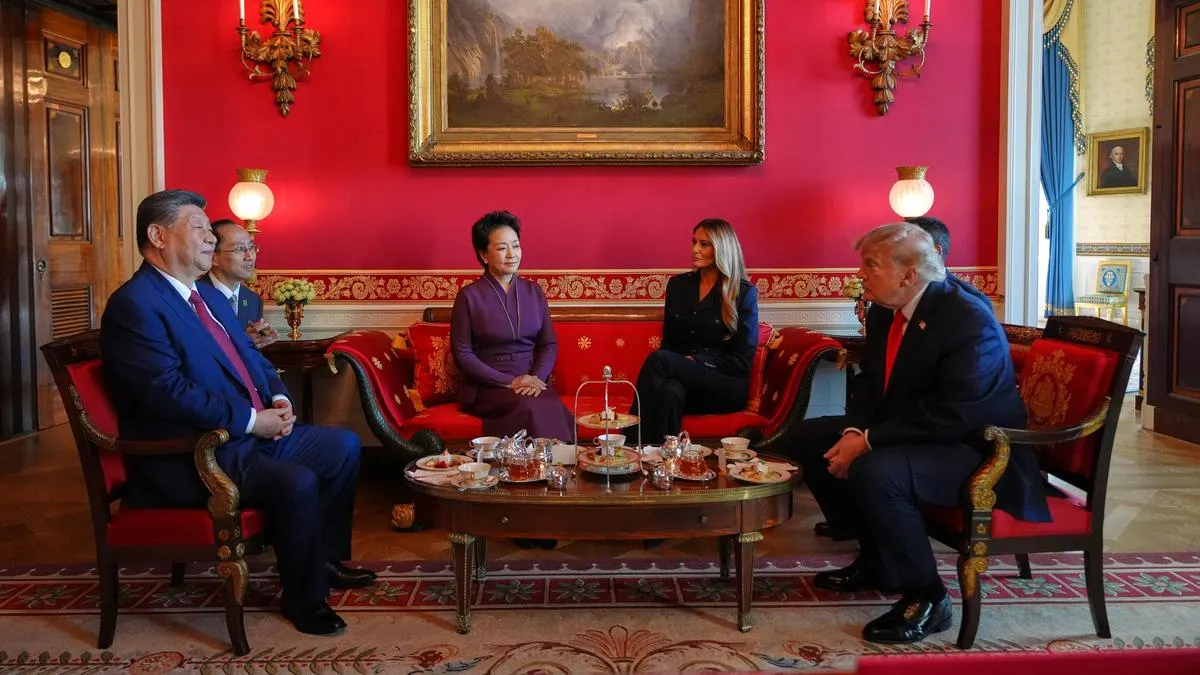
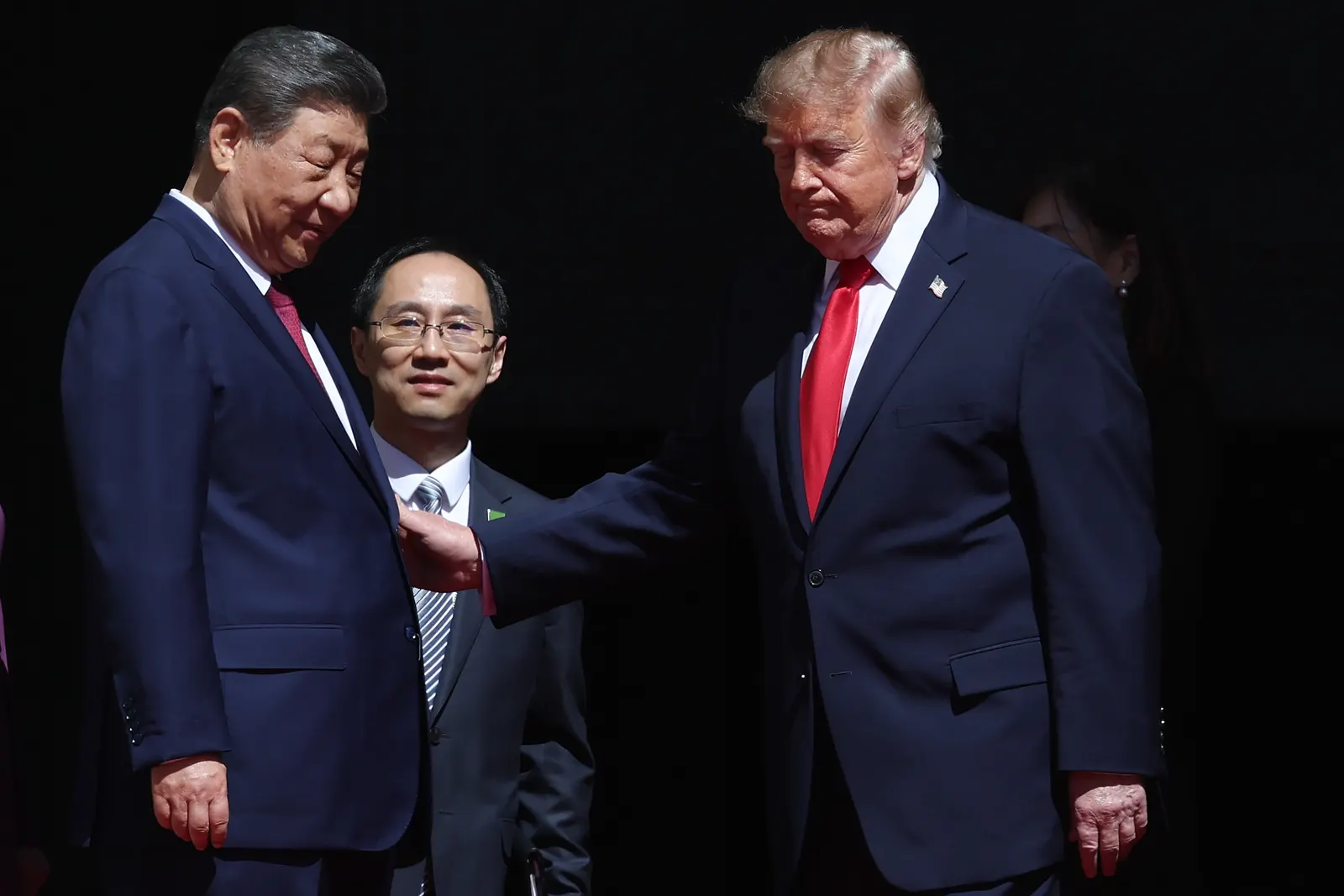
Donald Trump and Xi Jinping met at the White House during Xi's three-day state visit, extending a trade truce and agreeing to new mechanisms including a Board of Investment and a U.S.-China Super Intelligence Dialogue, according to a White House fact sheet. China's foreign ministry said Xi pressed Washington to oppose Taiwan independence, a characterisation Taiwan's foreign ministry rejected; the U.S. fact sheet did not mention Taiwan. Analysts said a $14 billion U.S. arms package for Taiwan may be delayed, possibly until 2027.
Xi also announced pandas for Zoo Atlanta and a large U.S.-China student exchange, gestures the BBC linked to a personal rapport between the leaders that has shaped gift diplomacy at past summits. Trump briefed Japan's Prime Minister Takaichi by phone after the meeting, and the two confirmed close coordination. Trump said he and Xi would meet again in China in November and at the G20 in Miami in December.
Trump and Xi met at the White House during Xi's state visit, extending a trade truce and launching new dialogues, while Taiwan remained a point of public disagreement.
- Trump and Xi met at White House, third meeting since 2025.
- New Board of Investment and AI dialogue announced.
- China urged U.S. to oppose Taiwan independence; U.S. statement omitted Taiwan.
- Taiwan arms package may be delayed until 2027.
- Xi announced pandas and student exchange as gifts.
What's new
- Trump and Xi held their third face-to-face meeting since 2025, at the White House.
- The two sides agreed to a Board of Investment and a U.S.-China Super Intelligence Dialogue.
- China's readout urged Washington to oppose Taiwan independence; the U.S. fact sheet omitted Taiwan.
- Analysts say a $14 billion Taiwan arms package may be delayed until 2027.
U.S. leader Donald Trump and China's Xi Jinping came together at the White House on Thursday, the third day of Xi's American state visit, and agreed to prolong their trade truce and open new channels of dialogue, even as their public accounts of the Taiwan conversation diverged, according to statements from the White House, China's foreign ministry and Taiwan's foreign ministry.2367
Agreements announced
According to a White House fact sheet, the two countries established a Board of Investment and agreed to build what they called a constructive relationship of strategic stability based on respect, fairness and reciprocity. The leaders also agreed to support each other as hosts of the G20 and APEC summits and discussed fostering peace and prosperity to bolster global business and consumer confidence.2
The fact sheet also said both countries tackled joint security worries, concurring that Iran must never acquire nuclear arms and that no nation or organization should be allowed to charge tolls on international waterways. In addition, Trump and Xi decided to adopt the phrase 'super intelligence' in place of artificial intelligence, creating the U.S.-China Super Intelligence Dialogue and a two-way communication line for handling incidents tied to the technology. The next exchange under that dialogue is set for November 2026.2
Diverging accounts on Taiwan
According to Focus Taiwan, a readout from China's foreign ministry stated that Xi pressed the United States to reject Taiwan independence and manage the Taiwan issue with caution. The White House statement and fact sheet, by contrast, made no mention of Taiwan, the same report said.3
Taiwan's foreign ministry pushed back against Beijing's version of events, restating its position that neither Taiwan nor the People's Republic of China holds authority over the other and that only the Taiwanese people can determine the island's future.6
David Perdue said Trump stayed dedicated to America's one-China policy, the Taiwan Relations Act, the three joint communiqués and the Six Assurances, adding, "there's no change in the Taiwan policy here." Trump indicated that he and Xi planned to convene again in China in November and subsequently at the G20 summit in Miami in December.3
Zack Cooper of the American Enterprise Institute said he doubted a Taiwan arms package would win approval before the upcoming Trump-Xi meetings, saying, "My gut is that President Trump is more likely to wait until 2027 and maybe do an arms sales package then." He said Beijing was signaling that a U.S. arms sale would jeopardize the wider relationship, adding, "What's different is that the U.S. side seems to be respecting this now and sort of giving a lot of leverage to Beijing." Back in December 2025, the Trump administration had cleared $11 billion worth of arms sales to Taiwan.3
Gift diplomacy
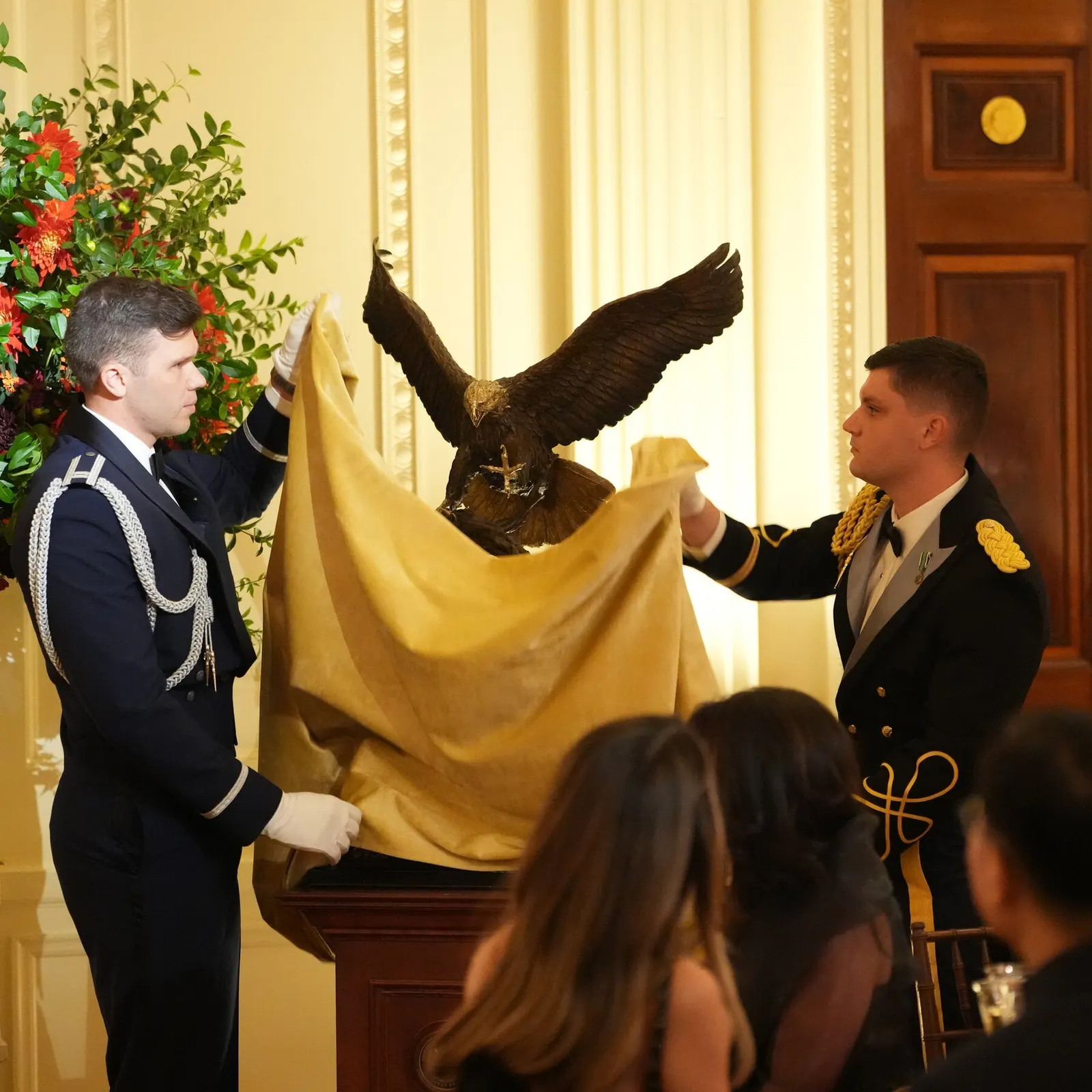
According to the BBC, Xi unveiled a gift of two pandas, Ping Ping and Fu Shuang, for Zoo Atlanta, along with a student exchange initiative that would send 100,000 American students to China across a five-year period. It was unclear whether Xi gave further presents; the BBC said it had contacted the White House for comment.1
Former U.S. diplomat Daniel Kritenbrink, who spent more than three decades working mostly in Asia, said gift exchange forms part of the personal relationship between the two leaders, which he described as underpinning what he called the most complex and consequential relationship in the world, according to the BBC. Ole Jacob Sending of the Norwegian Institute of International Affairs said gift-giving is very much part of how Trump operates and noted that diplomatic gifts are negotiated for weeks in advance rather than chosen at the last minute.1
The BBC noted that lavish diplomatic gift-giving today survives mainly among Gulf states and autocratic governments, citing Morten Skumsrud Andersen's comment that autocracies such as China give more expensive gifts than Western democracies, where constitutional limits apply. Under the U.S. emoluments clause, a president may accept gifts from a foreign government worth no more than $525; anything above that threshold becomes federal property unless bought back personally, the BBC reported. Earlier examples mentioned include a 2013 present from Obama to Xi consisting of a redwood bench bearing an inscription, and a 2009 swap in which Gordon Brown presented Obama with a pen holder crafted from wood salvaged from a ship once used to combat slavery, while Obama's reciprocal gift to Brown was a set of DVDs said to be incompatible with British DVD players.1
Japan seeks details
Prime Minister Takaichi told reporters she held a telephone call with Trump for about 20 minutes, saying, "I have just held a telephone call with President Trump for approximately 20 minutes from 9:00 p.m." She said Trump called her immediately after Xi's visit and explained the summit in detail, adding, "President Trump called me immediately after President Xi Jinping's visit to the United States and explained the latest U.S.-China summit meeting in quite a lot of detail."5
Takaichi said she and Trump exchanged views on China-related issues, including economic security, and confirmed close coordination between the two countries, saying, "Japan and the United States have now become each other's most trusted allies" and that "together we will contribute to peace and stability in the region and the world." She declined to detail the diplomatic exchanges further, saying, "I will refrain from commenting, as they concern diplomatic exchanges."5
Why it matters
The outcome shapes the world's largest bilateral economic relationship and its trade truce, with direct consequences for global supply chains and markets that touch European businesses. The new U.S.-China dialogue on advanced AI, and the unresolved dispute over Taiwan and arms sales, also bear on the wider security balance in the Indo-Pacific that allies such as Japan are watching closely.123
How the story unfolded
The story's events over time. Click a person, place or related story.
What we know
- Trump and Xi met at the White House during Xi's three-day state visit.
- The White House fact sheet lists agreements on investment, G20/APEC hosting, Iran and an AI dialogue.
- China's and Taiwan's foreign ministries issued conflicting statements on how the Taiwan discussion was framed.
- Xi announced pandas for Zoo Atlanta and a student exchange programme.
- Takaichi and Trump spoke by phone after the summit and confirmed close coordination.
What we don't know yet
- Whether Xi gave any further gifts beyond the pandas and exchange programme.
- Whether Trump and Xi agreed any specific AI safety safeguards.
- When, or whether, the delayed Taiwan arms package will be approved.
- Full content of what Trump told Takaichi about the summit.
Timeline
- Sep 22Takaichi and Trump held a summit meeting in New York.5
- Sep 25The U.S. and China established the Board of Investment and agreed on strategic stability principles.2
- Sep 25The two countries agreed to support each other as G20 and APEC hosts and discussed Russia, North Korea and Iran.2
- Sep 25The U.S. and China agreed to use the term 'super intelligence' and set up a dialogue and incident communication channel.2
- Sep 25Taiwan's Foreign Ministry rejected Beijing's characterisation of the summit and reiterated its position on Taiwan's status.6
- Sep 26Trump and Xi met at the White House during Xi's three-day state visit.3
- Sep 26China's Foreign Ministry issued a readout urging the U.S. to oppose Taiwan independence; the White House fact sheet omitted Taiwan.3
- Sep 26Trump said he and Xi would meet again in China and at the G20 summit in Miami.3
- Sep 26David Perdue said there was no change in U.S. Taiwan policy.3
- Sep 26Takaichi held a 20-minute phone call with Trump after Xi's visit.5
- November 2026The next Super Intelligence Dialogue exchange is scheduled.2
- NovemberTrump and Xi are set to meet again in China.3
- DecemberTrump and Xi are set to meet at the G20 summit in Miami.3
- December 2025The Trump administration authorised $11 billion in arms sales to Taiwan.3
Quotes
My gut is that President Trump is more likely to wait until 2027 and maybe do an arms sales package then,
What's different is that the U.S. side seems to be respecting this now and sort of giving a lot of leverage to Beijing,
there's no change in the Taiwan policy here.
President Trump called me immediately after President Xi Jinping's visit to the United States and explained the latest U.S.-China summit meeting in quite a lot of detail.
Videos
Related stories
Version history
- version 1 · 27 September at 08:15