Business · Islamic Republic of Iran, Oman
Trump Claims Record Oil Flow Through Strait of Hormuz
The US president said a record volume of oil moved through the Strait of Hormuz over three days, as tanker-tracking data shows crude exports have returned to prewar levels even though refined fuel shipments remain sharply reduced.
Trump claimed record oil moved through the Strait of Hormuz over three days, a claim partly backed by data showing crude flows near prewar levels, though fuel shipments remain far below normal and diplomatic tensions with Iran persist.
- Trump: record oil flow through Hormuz over three days
- Kpler data: crude exports matched prewar levels by Sept 30
- Refined fuel shipments still far below prewar volumes
- Trump rejected Iran's offer to reopen strait in 7 days
- Iran's parliament speaker warned over strait security
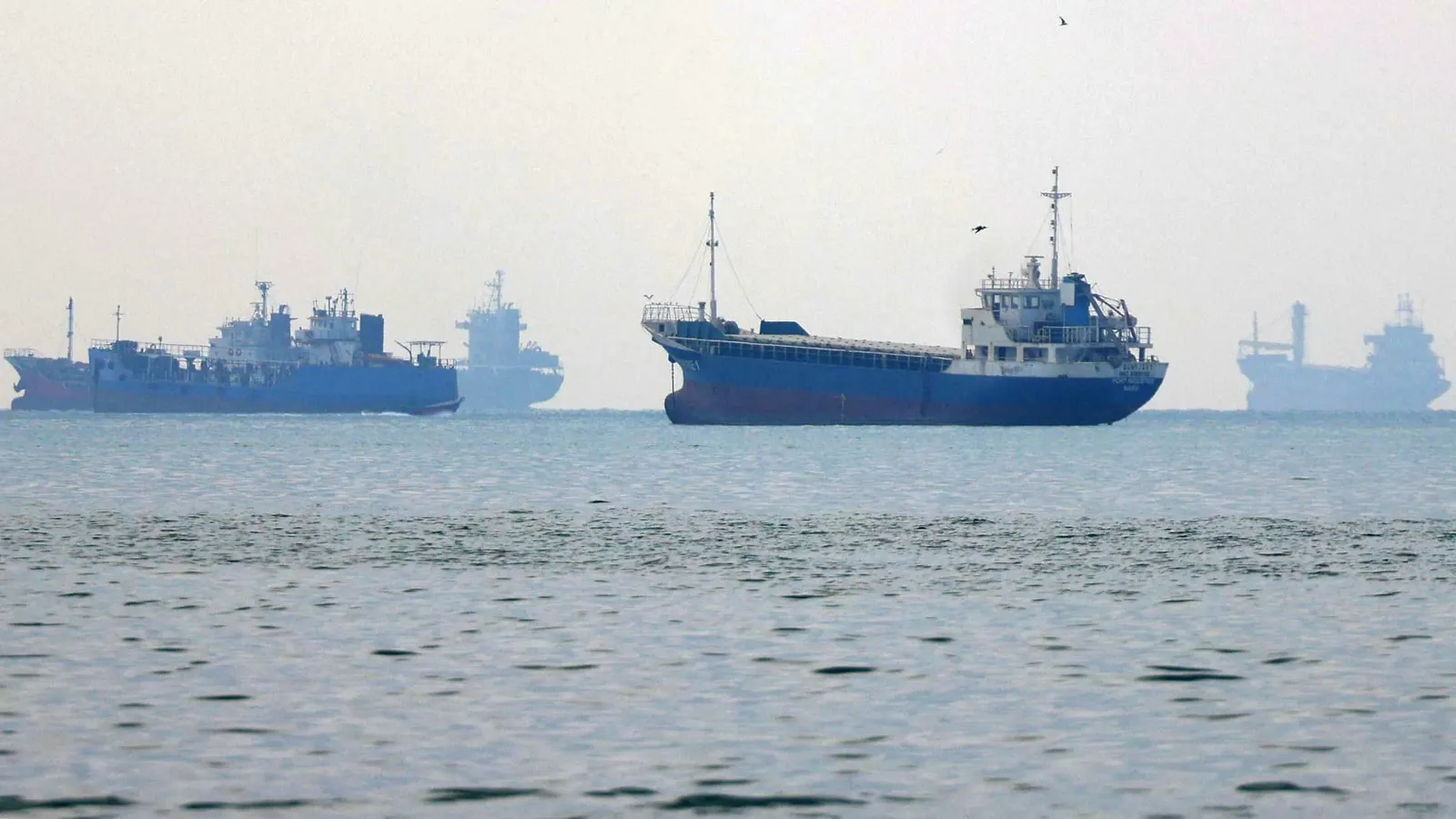
What's new
- Trump said that during a recent three-day span, no other period in the waterway's entire history had seen as much oil pass through it
- Kpler data shows crude exports matched the prewar seven-day average of 13.5 million bpd
- Trump rejected an Iranian offer to reopen Hormuz within seven days
- Iran's parliament speaker warned no infrastructure would be safe if Iran's security is not ensured
President Donald Trump said on September 30 that a record amount of oil had moved through the Strait of Hormuz over the preceding three days, a claim repeated into October even as tanker-tracking data showed crude exports through the waterway had only just returned to prewar levels.4571
Trump's claims
Speaking from the White House, Trump said, "Over the last three days, more oil has come out of the Strait of Hormuz than at any time in the history of that strait," and predicted US victory over Iran, saying, "We are going to win, one way or another, very soon."4
Reuters reported that he made the same assertion again a day later, stating that America now controlled the strait almost entirely and that the preceding three-day flow volume had never been matched before.7
Trump also said Iran would "give up," adding, "We took more oil out of the Hormuz Strait over the last couple days than at any point in history," according to tribuneindia.com.5
What the data shows
According to CNBC, the ship-tracking company Kpler found that crude exports moving through Hormuz hit a weekly average of 13.5 million barrels daily as of September 30, equal to the level seen before the war began.1
That same dataset showed total Middle East crude shipments averaging 19.5 million barrels daily over a week-long span, exceeding the roughly 17 million bpd recorded before the conflict.1
Refined product shipments through Hormuz, however, fell to 677,000 bpd from 3.6 million bpd before the war, and combined crude and product flows stood at 14.2 million bpd, about 80% of the prewar baseline, CNBC reported citing the data. In a separate account, Reuters found that oil exports from the broader Middle East region remained roughly 11% under their pre-conflict volume.17
JPMorgan's Natasha Kaneva said the "crude market has largely normalized even as refined product supplies remain constrained," while Bank of America's Francisco Blanch said "the biggest source of pain is the diesel market," according to CNBC, which reported that the shortfall has pushed US diesel prices to record highs.1
CNN, citing Kpler's Matt Smith, separately noted that combined oil and fuel shipments passing through Hormuz had hit a daily average of 13.1 million barrels—roughly 80% of pre-war figures—with Smith remarking, "Strong volumes show Iran is losing its grip on the strait even as it ramps up tanker attacks."3
Routing around Hormuz
CNBC reported that more than 70% of crude oil crossing Hormuz in August switched tankers off the coasts of the UAE or Oman, and that about 40% of Gulf crude now bypasses Hormuz via pipelines, compared with 17% before the war.1
Saudi Arabia had shut down its East-West pipeline after drone-strike damage, but loadings picked up at the Red Sea port of Yanbu, indicating the pipeline was running again, and Reuters reported that Saudi pipeline flows had been restored.17
RBC's Helima Croft noted that while the US military-guarded shuttle arrangement lowers the chances of an Iranian strike, it comes at a steep price and demands substantial American resources, calling it "very expensive and it's a huge U.S. military commitment," adding, per CNBC, that Gulf nations do not regard escorted convoys or vessel-to-vessel oil transfers as a true replacement for a freely passable Hormuz.1
Diplomacy and escalation
Iran offered to reopen Hormuz within seven days if the United States returned to a failed June memorandum on administration of the strait, but Trump rejected the offer and told aides to expect a resumption of bombing after the midterm elections, CNBC reported.1
CNBC reported that Treasury Secretary Scott Bessent indicated Iran's last crude shipments to China would occur within roughly a fortnight, while Rapidan Energy's Scott Modell commented, "There is no hard evidence that U.S. economic pressure will fundamentally change Iran's positions," adding that events were trending toward greater conflict rather than resolution.1
Iranian Parliament Speaker Mohammad Bagher Ghalibaf dismissed Trump's remarks as a repetition of previous claims and warned, "Both Americans and other countries should know: As we said before, in a region where we do not sell oil, no one will sell oil, and if our security is not ensured, no infrastructure will be safe."5
Per tribuneindia.com, Iran's Foreign Minister Abbas Araghchi engaged in US talks mediated by Qatar and said he was hoping Washington would deliver its formal reply by Tuesday. CNN quoted a US official as saying Trump stood ready to lift sanctions and unfreeze Iranian assets in return for nuclear progress, though any agreement remained contingent on resolving nuclear matters first.5
Wider context
Trump additionally announced that American troops had fully pulled out of Iraq, and he drew a comparison between the two conflicts' death tolls, remarking, "Likewise, in Iran, we have been there six months and 18 have died. One is too many, but they lost 4,500 and we lost 18," a reference—per The Herald Business—to 23 years of Iraq fighting that claimed 4,500 American lives and left 31,000 US troops gravely wounded.4
Pointing to the ouster of Venezuela's Nicolás Maduro—accomplished in just 148 minutes without a single American death—as proof that military operations can be low-cost in lives, he then urged backers to cast ballots, saying, "We have to go out and vote. You have to go out and let people know how well we're doing," adding that his approval numbers were extremely high. we have to win, and everyone needs to show up."4
Why it matters
Oil prices remain elevated, and global oil supply remains below demand amid the conflict. Continued constraints on refined product flows, even as crude volumes recover, could keep fuel costs elevated for European consumers and industry.72
Videos
Related stories
same place
same actors
follow-up
Version history
- version 1 ·