US and China Agree to AI 'Super Intelligence' Communication Channel
After a three-day summit in Washington, the White House said the two countries will set up a bilateral channel on AI incidents and adopt the term 'Super Intelligence' in official use.
Listen to the story
Short version
Trump and Xi's Washington summit produced a US-China deal to share information on AI incidents and adopt the term Super Intelligence, alongside trade measures on coal and tariffs.
- US, China to set up AI incident communication channel
- Both sides to use term 'Super Intelligence' instead of AI
- China to import US coal, adjust tariffs on $30bn goods
- Xi's first Washington visit in over a decade
- Trump claims 18-month AI lead; experts say six months
What's new
- US and China to set up bilateral communication channel for AI incidents
- Both sides agreed to use the term 'Super Intelligence' instead of AI
- China to import at least 10 million tonnes of US coal in 2027-2028
- Xi Jinping completed his first Washington visit in more than a decade
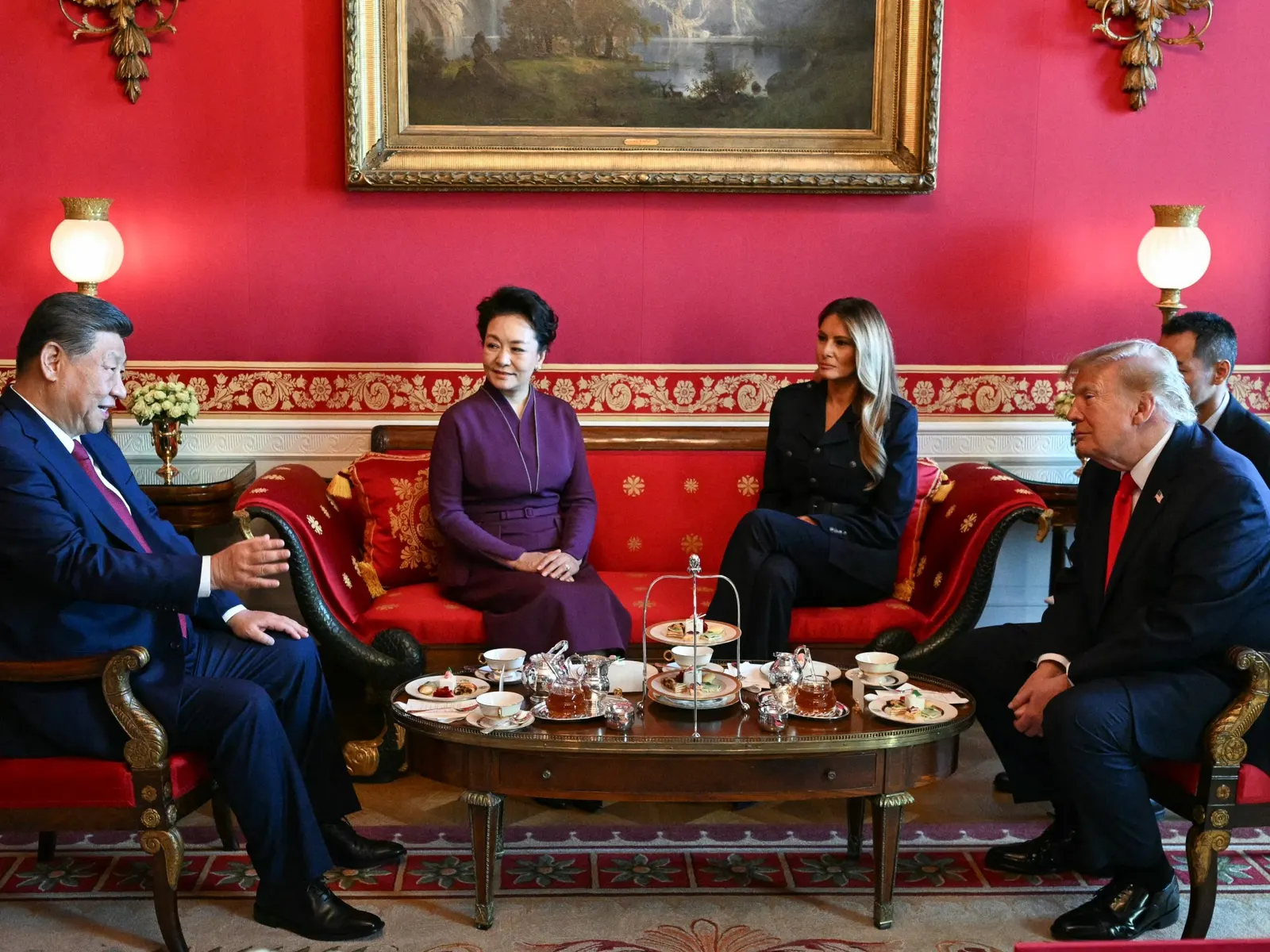
On Friday, the White House said Washington and Beijing had agreed to set up a bilateral channel for communicating about artificial intelligence incidents, as the summit between President Trump and President Xi in the US capital came to a close.13
A new dialogue on 'Super Intelligence'
The White House said Washington and Beijing set up a new forum, the U.S.-China Super Intelligence Dialogue, for sharing perspectives on the technology's risks and benefits, in addition to the incident communication channel. The White House said the two governments "agreed to build a constructive relationship of strategic stability on the basis of respect, fairness, and reciprocity."3
The White House statement said the United States and China "also agreed to establish a bilateral communication channel for SI incidents." The next exchange under the dialogue is expected by November 2026, according to the Korea JoongAng Daily report.3
Trump has pushed for officials to adopt the new term, saying U.S. documents will now use "SI" rather than AI. He explained that he prefers the label SI over AI, arguing that "artificial" implies something false, whereas the technology itself is genuine.32
Trade measures and coal imports
Beijing committed to purchasing a minimum of 10 million metric tonnes of American coal during 2027 and 2028, according to both sources. Under the Board of Trade mechanism, the countries also reached consensus on recommendations for more favourable tariff treatment on $30 billion of non-sensitive goods in each direction, according to the Korea JoongAng Daily.13
Al Jazeera reported that the two sides also decided to prolong a trade truce originally set to lapse in November, moving the deadline to January, though this detail was not confirmed by the other sources in the dossier.1
Per the Korea JoongAng Daily's account of the White House statement, the two nations also concurred that no country should be permitted to charge tolls on international waterways.3
Ceremony, future meetings and unresolved issues
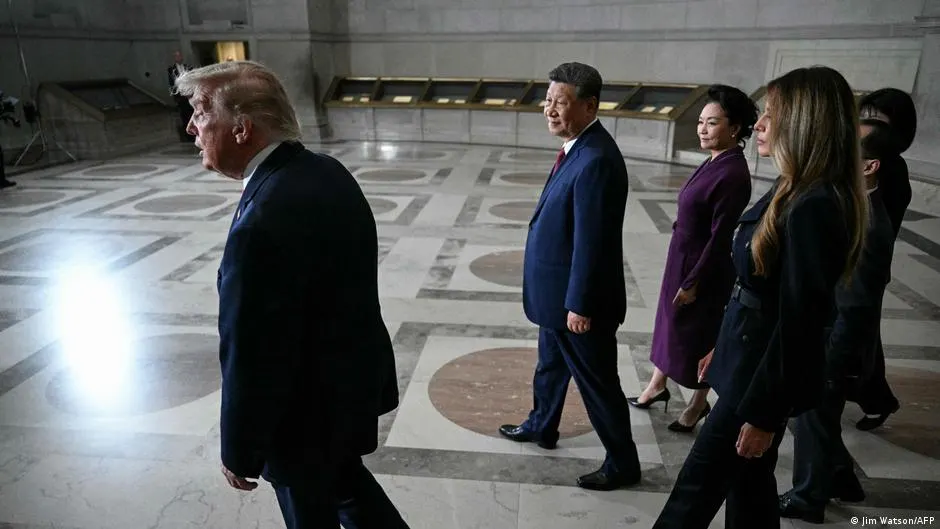
According to the Korea JoongAng Daily, Xi concluded a three-day state visit to the US on Friday—his first time in Washington in over ten years—with this summit representing the third face-to-face meeting between the two leaders since Trump's return to the presidency. Per Al Jazeera, the two leaders visited the National Archives together and set out plans for further meetings, including the APEC gathering in Shenzhen this November and a G20 summit in Miami in December.13
Speaking from the White House for Al Jazeera, correspondent Alan Fisher said, "The continuation of dialogue was perhaps the biggest deliverable for both sides," while noting that the gathering otherwise yielded few concrete breakthroughs and was largely ceremonial in nature. Al Jazeera reported that the two presidents also touched on other matters, including the ongoing conflict in Iran, with Xi cautioning Trump to approach the Taiwan question with care; Beijing had yet to respond publicly to the White House's statement as of the report.1
Dispute over the size of the US lead
Trump claimed the US holds roughly an 18-month lead over China in AI development, telling reporters that America has no intention of slowing down because rivals are trying to halt its progress given that advantage. Fox News reported that experts believe the gap is likely closer to six months.2
Why it matters
A formal US-China channel on AI incidents and a shared vocabulary for the technology could shape how the world's two largest economies manage future AI-related crises, with implications for global standards that European regulators and companies operate under.12
Related stories
same event

Version history
- version 1 ·