World · United States of America
Judge Blocks Trump Bid to Tie Counterterror Funds to Election Rules
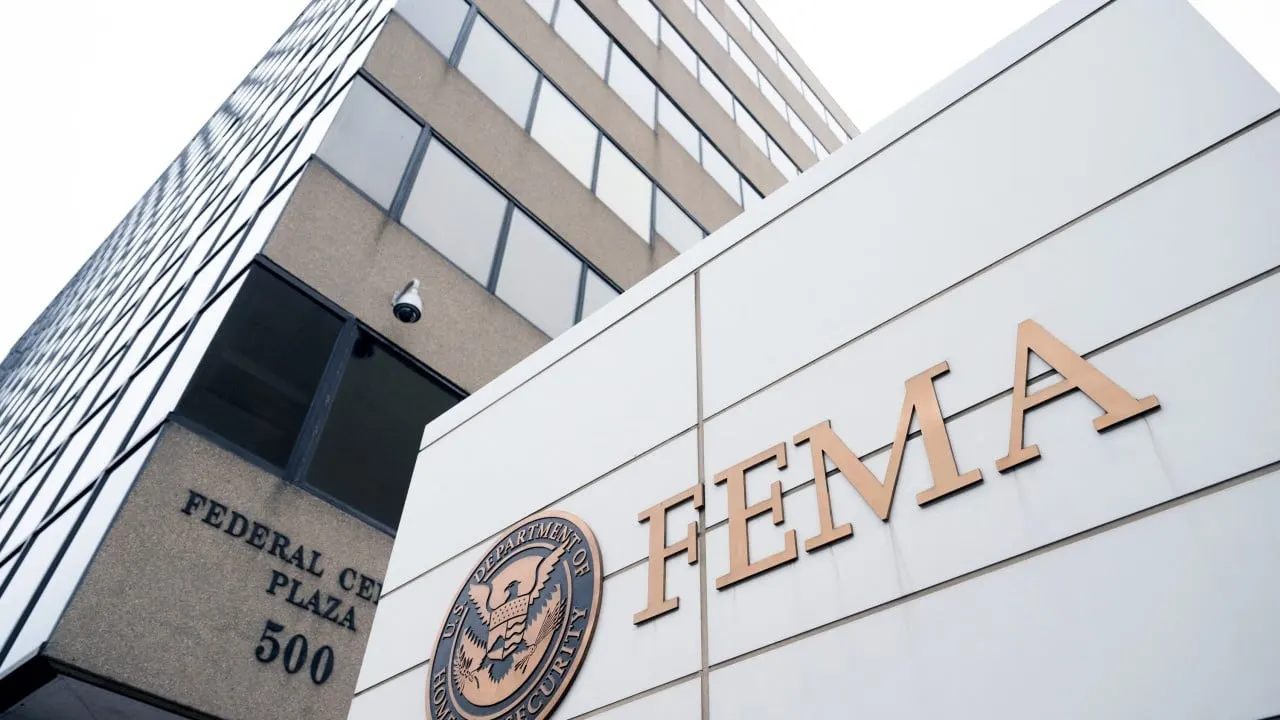
A federal judge in Washington ruled that FEMA exceeded its authority by conditioning counterterrorism grants on states adopting election administration changes.
A US judge ruled FEMA cannot withhold counterterrorism funds from states over election rule changes.
- Judge Amir Ali vacated the FEMA rule on 28 September
- FEMA had threatened to withhold 20% of counterterrorism funds
- Rule required paper ballots, audits and citizenship checks
- Texas, Ohio and Tennessee localities sued to block it
- Brennan Center for Justice backed the legal challenge
What's new
- Judge Amir Ali vacated the FEMA rule tying counterterrorism grants to election changes
- The court sided with six counties and cities in their lawsuit against FEMA and DHS, issuing summary judgment in their favor
- Ruling protects counterterrorism funds from a threatened 20% withholding penalty
A federal judge in Washington on 28 September blocked the Trump administration from conditioning counterterrorism grant funds on states adopting specific election administration changes, ruling that the Federal Emergency Management Agency had exceeded its legal authority.123
The rule and the ruling
In June, FEMA put the rule into effect, mandating that states adopt particular election-related changes or risk losing counterterrorism grant funding. The Department of Homeland Security had announced it would withhold 20 percent of a state's counterterrorism grant allocation for non-compliance.135
Among the requirements were replacing electronic voting machines with hand-marked paper ballots, conducting manual audits covering at least 5 percent of ballots, and comparing voter registration lists with a DHS citizenship database called SAVE.64
Judge Amir Ali of the U.S. District Court in Washington ruled that while FEMA's governing statute allows it to fund projects that states themselves propose, it does not permit the agency to leverage grants as a means of pressuring states into implementing initiatives favored by Washington. "FEMA's conditions here go beyond what Congress authorized," he wrote.41
Ali also found that FEMA had not shown how the desired election administration changes related to preventing terrorism, and that the citizenship verification requirement in particular lacked any explained connection to vulnerabilities to terrorist attacks. "But it never explains how that condition, or any of the others, is tied to the goal of shoring up vulnerabilities to terrorist attacks," he said.1
The plaintiffs
Local governments across three states—Texas, Ohio and Tennessee—filed suit to prevent the funding conditions from taking effect, among them Nashville, Columbus, Harris County and El Paso County. The Brennan Center for Justice, having filed suit in August, served as counsel for the plaintiffs, while an assortment of states led largely by Democratic governors brought their own independent lawsuit against the same policy.5341
Officials from the plaintiff jurisdictions welcomed the decision. Nashville's director of law, Tyler Yarbro, said "Nashville knows how to run secure elections, and we don't need Washington dictating the terms in exchange for public safety funding." Columbus City Attorney Zach Klein said "The Trump administration never had the authority to hold public safety dollars hostage," while Harris County Attorney Abbie Kamin said the court had found that "holding public safety funding hostage to force the president's agenda is dangerous and illegal."4
El Paso County Attorney Christina Sanchez called it reckless to make counterterrorism funding contingent on a citizenship-verification system that has not been proven effective, while Protect Democracy Special Counsel Jacek Pruski said the ruling was "yet another reminder that we have the power to stop them."4
Reaction and context
The Brennan Center, whose lawsuit challenged the FEMA rule, said the conditions violated the Constitution and jeopardized public safety, and that tens of millions of dollars in funding were at risk of withholding. "DHS is holding public safety funding hostage in order to coerce states and local governments into adopting some of the very policies that the administration has tried and failed to impose," the organisation said, adding that courts have largely blocked such attempts over the past two years.1
According to the Brennan Center, the Homeland Security Grant Program was created in the wake of the September 11 attacks with the purpose of equipping local governments to guard against and react to terrorist threats. The organisation described the FEMA conditions as part of a coordinated effort to give the federal government greater influence over state-run elections, and Brennan Center Senior Counsel Lauren Miller Karalunas said "conditioning public safety funding on unrelated election policy demands is unlawful."4
Reuters reporting cited in U.S. News characterized the decision as one instance in a wider series of moves by the Trump administration to influence how elections are run, while pointing out that federal agencies did not have congressional backing to attach such requirements to grant funding. The South China Morning Post said the decision marks the latest defeat for Trump in his bid to expand federal authority over elections.73
Why it matters
The ruling curtails an attempt by the US federal government to use public safety funding as leverage over how states run elections, reinforcing limits on federal reach into an area traditionally controlled by states and localities. For European readers, it illustrates ongoing tensions in the United States over federal versus local control of election administration.24
Videos
Related stories
Version history
- version 1 ·