World · Yemen
Yemeni government forces claim gains near Bab el-Mandeb
Military sources said government troops had taken key positions near the strategic strait, while Houthi-aligned media denied any advance. The claims followed the government’s announcement of a broader operation against the Houthis.
Yemen’s government says its forces are holding key fronts and gaining ground near Bab el-Mandeb, but Houthi-aligned media dispute the latest territorial claims.
- Government sources claim control of much of Dhubab district.
- Houthi-aligned media deny any government advance.
- The army reports extensive strikes and heavy Houthi losses.
- Mobilised personnel have not yet reached frontline units.
- Renewed fighting threatens an oil-export route.
What's new
- Government military sources reported gains in Dhubab district near Bab el-Mandeb.
- Houthi-aligned media denied that government forces had advanced.
- The government has announced operations aimed at retaking territory across Yemen.
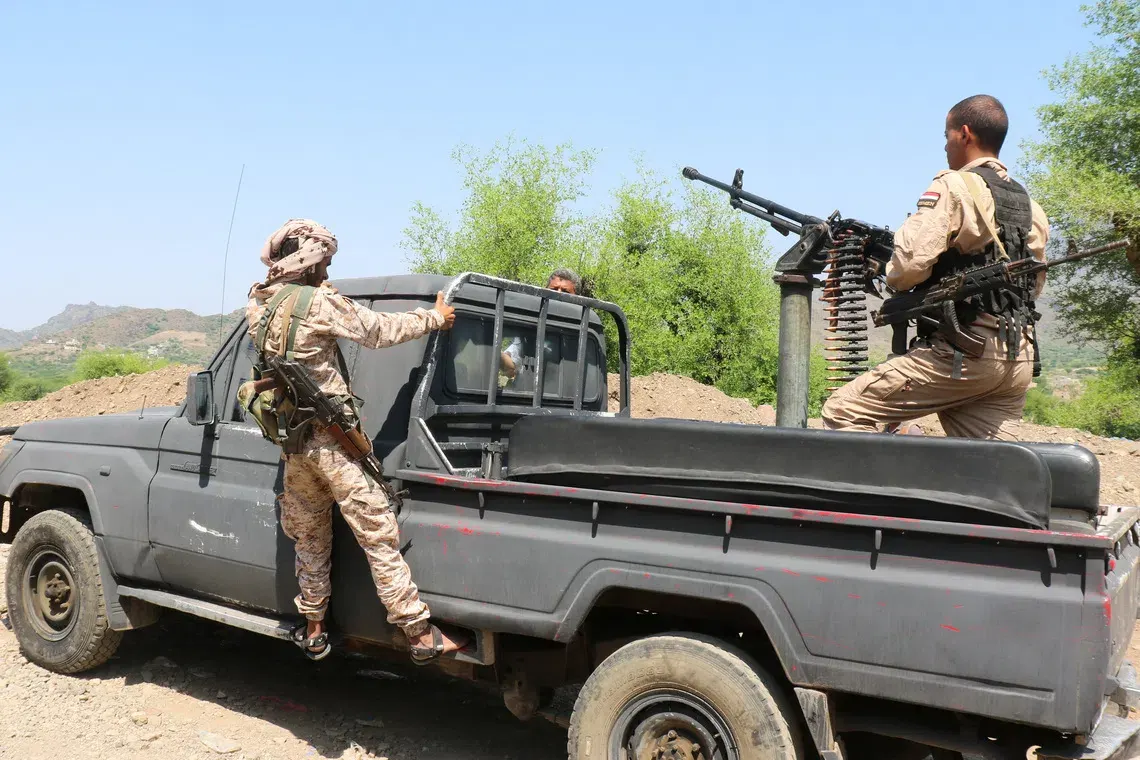
Yemeni government military sources said on Oct 5 that their forces had seized key positions around the Bab el-Mandeb Strait and taken large parts of Dhubab district with extensive air support, several days after halting reported Houthi attacks elsewhere in southwestern Yemen. Houthi-aligned media disputed the claim of a government advance.12
Conflicting claims along the strait
The reported gains came after Yemen’s internationally recognised government announced on Oct 4 that it was beginning military operations against Ansar Allah, another name for the Houthis. Rashad al-Alimi, chairman of the Presidential Leadership Council, said the campaign was intended to recover remaining territory and extend state authority. He said peaceful options had been exhausted before the order to begin operations.23
The Straits Times, citing military sources, reported that government forces had taken large parts of Dhubab district and asserted full control there with heavy air support. Houthi-aligned media denied that government troops had advanced. The same report said a Houthi-run agency claimed the rebels had expelled government forces from al-Mawasit district and reached Alimi’s home.2
The fighting followed Houthi territorial gains along Yemen’s western coast. Al Jazeera said the Houthis captured Mocha and several key islands near the Bab al-Mandeb Strait in mid-September. TASS, meanwhile, reported that Ansar Allah seized Mokha and additional areas along the waterway on Sept 10. Government forces subsequently mounted counterattacks in the area.13
Government forces report heavy strikes
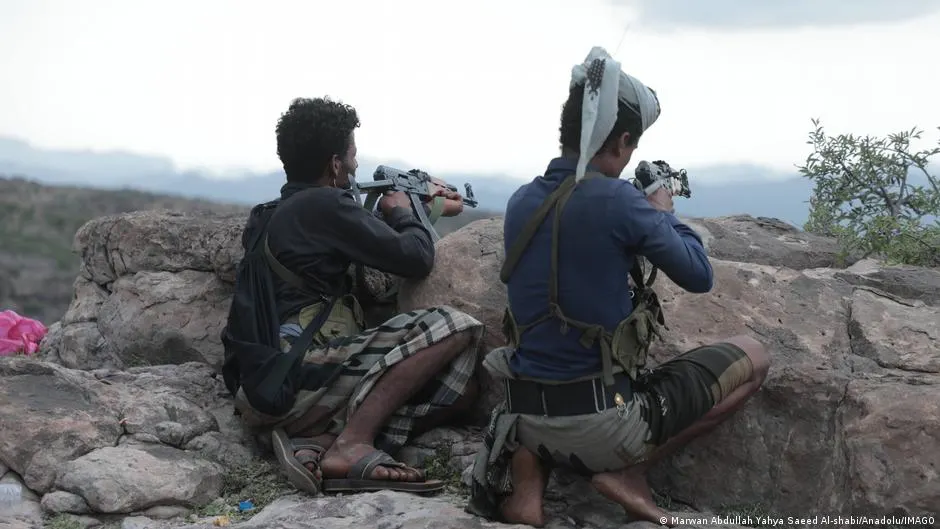
Al Jazeera reported that government troops had maintained their positions during intense Houthi attacks across Taiz governorate. It said defensive terrain in Taiz and Lahj, increased firepower and greater coordination among anti-Houthi forces appeared to have prevented further advances. Neither side had repeated the rapid territorial movement reported on the Red Sea coast.1
Yemen’s army said it had conducted nearly 500 operations over 24 hours, killing or wounding 1,540 Houthi fighters. The army said it deployed aircraft, unmanned aircraft, artillery, missiles and rocket launchers. It said most of the reported casualties occurred in Taiz, where the campaign stopped the Houthi advance. The army spokesman did not disclose losses among government forces, and the casualty figures were not independently confirmed in the dossier.1
The government also closed the al-Houban crossing, a road link between government-held Taiz city and the Houthi-held al-Houban area. Army media official Ammar al-Sami’i attributed the closure to security concerns after an alleged infiltration attempt, nearby attacks and a military buildup. The crossing had reopened to civilians in 2024 after being shut for nine years.1
Mobilisation has yet to reach the front
According to Al Jazeera, Alimi called for a general mobilisation on Sept 25. Under the plan, reservists would be called back and trained again with local forces opposed to the Houthis and civilian volunteers. Government field commanders told the outlet that the effort had not yet delivered reinforcements to frontline units.1
Fighting in Taiz has continued since early September, but Al Jazeera said there had been no major battlefield change directly attributable to the mobilisation. It reported that anti-Houthi forces in Taiz, Lahj and Marib had displayed more cohesion than forces responding to the earlier Red Sea advance, drawing on years of experience resisting Houthi attacks.1
Conflict renewed after ceasefire
After the Houthis took control of Sanaa in 2014, the internationally recognised government relocated to Aden. A Saudi-led coalition intervened the following year with an air campaign intended to restore the government. Saudi Arabia arms and trains government forces and supports the current campaign with air power, according to The Straits Times.12
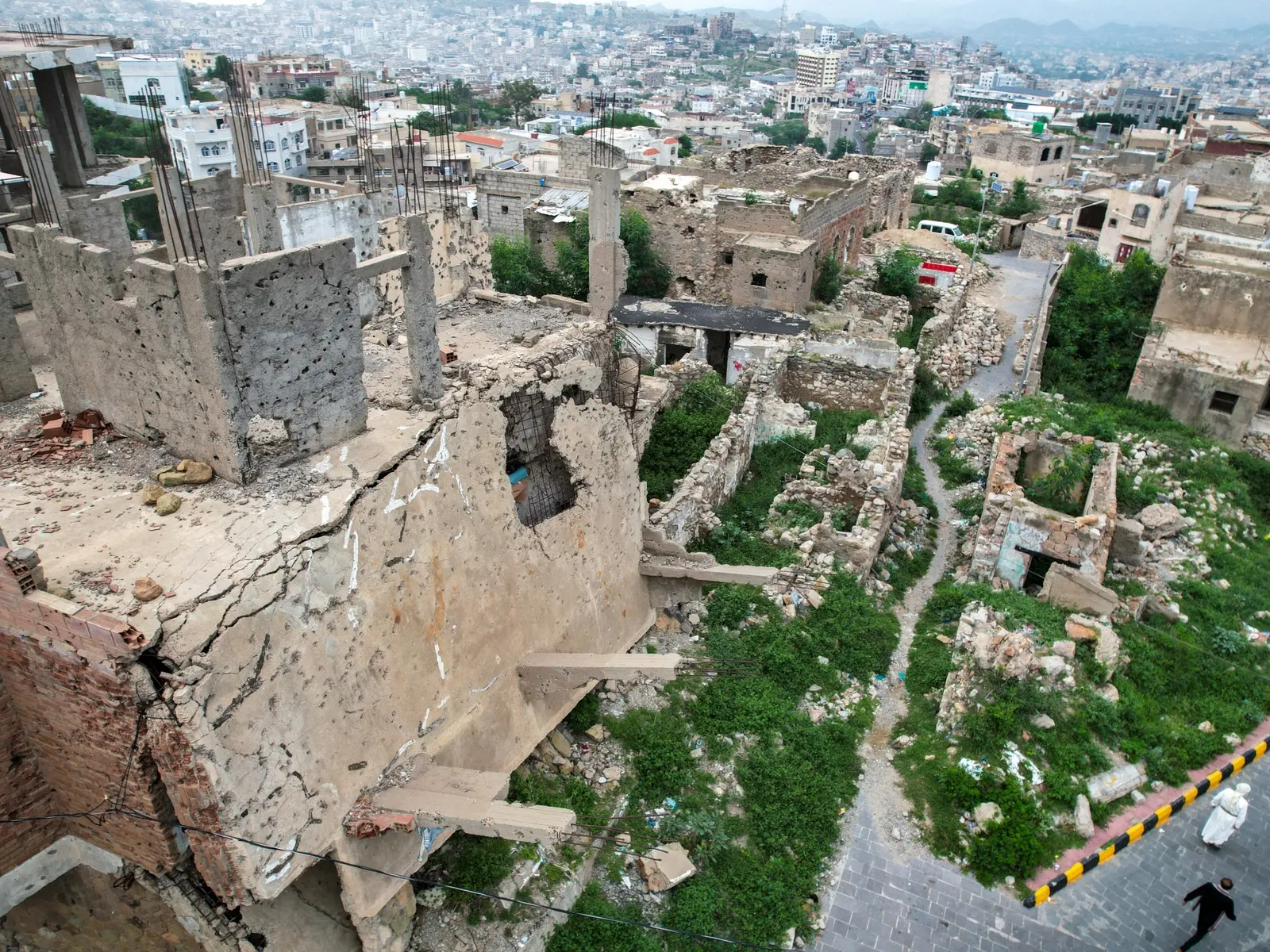
A ceasefire agreed in 2022 held until the summer of 2026, when fighting resumed on several fronts; Al Jazeera reported that the truce collapsed in July. It also reported that hundreds of thousands of people had been displaced since hostilities restarted. The Straits Times said the renewed fighting threatened another major oil-export route and had raised global prices.12
Why it matters
The Straits Times reported that the fighting threatened another important oil-export route and had pushed global prices higher. For European readers, the direct significance lies in the potential effect of continued conflict around Bab el-Mandeb on internationally traded energy and its price.2
Videos
Related stories

Version history
- version 1 ·