World · Islamic Republic of Iran, Oman, United States of America
Iran calls conditional Hormuz reopening offer a sign of good faith
A senior Iranian official described the two-day reopening offer as a sign of good faith. The Hindu reports that it followed intensive mediation aimed at preventing renewed war.
Listen to the story
Short version
Iran describes its conditional two-day Hormuz reopening offer as evidence of good faith. The Hindu reports that the offer followed intensive mediation to prevent renewed war.
- Reopening depends on Washington accepting Iran’s conditions.
- US measures would precede restoration of navigation.
- Demands include lifting the US naval blockade.
- Iranian officials report negotiating progress while preparing for war.
Infographic
What's new
- A senior Iranian official said the conditional reopening offer demonstrated good faith.
- The Hindu reports that the offer followed intensive efforts by mediators to prevent a return to war.
- Reopening remains dependent on Washington accepting Tehran’s demands.
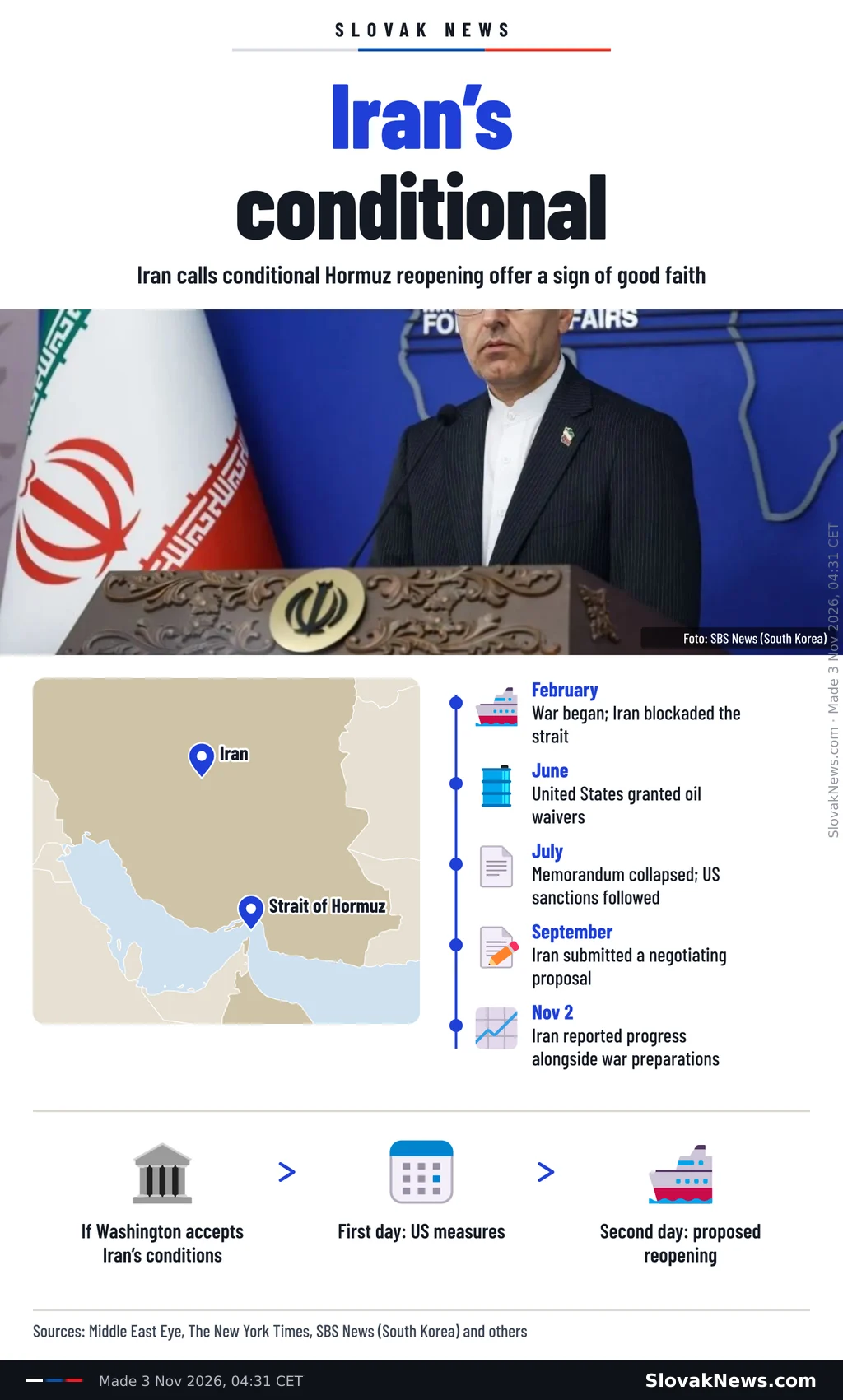
The Hindu reported on November 2 that, after intensive mediation intended to avert renewed war, Iran proposed restoring access through the Strait of Hormuz in two days if Washington agreed to its demands. A senior Iranian official characterised the offer as evidence of good faith, according to Middle East Eye and The Hindu.14
Infographic
A shorter implementation period
The proposal would put US action ahead of the strait’s reopening. According to Middle East Eye’s account of Araghchi’s remarks, Washington would carry out the required measures on the first day, with Iran reopening the passage and restoring navigation on the second.1
Middle East Eye described the proposal as Iran’s original seven-day plan, with its implementation period shortened following discussions involving Qatar. Araghchi said a Qatari delegation had sought a reduction in the time needed to carry it out.1
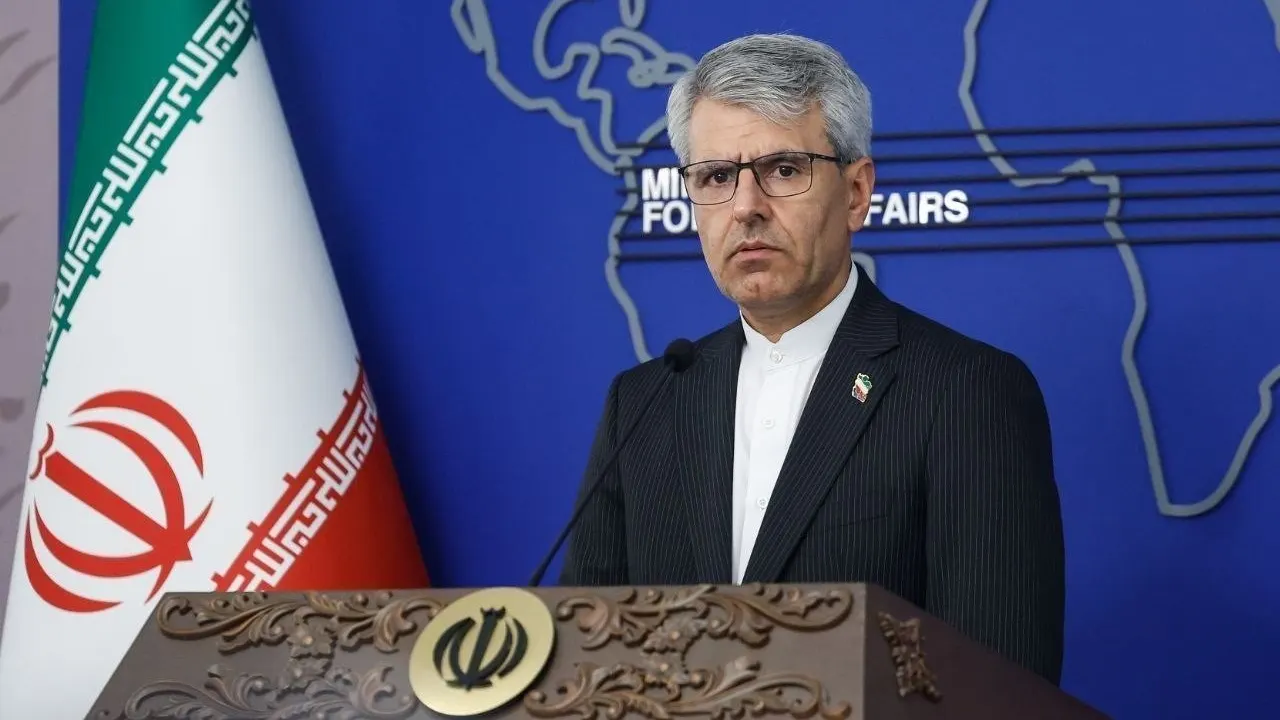
SBS News reported on November 2 that Iranian foreign ministry spokesman Esmaeil Baqaei described the negotiating framework as a seven-step proposal submitted to the United States around the United Nations General Assembly in September. His account likewise described a timetable compressed into two days.3
Conditions on shipping, sanctions and hostilities
According to Middle East Eye, Iran wants formal acceptance of a shipping route designated by Iran and Oman, together with the closure of other routes. Iran is also seeking a reduced US military footprint in the region and a halt to hostilities everywhere, with particular emphasis on Israeli attacks against Lebanon.1
The same report listed financial demands: removing US sanctions imposed after the Islamabad memorandum collapsed in July, restoring oil waivers granted under that memorandum in June, and releasing frozen Iranian money, including funds held in Qatar.1
SBS News also reported demands concerning frozen assets and sanctions. It described the proposal’s estimated contents as including an end to the naval blockade, exemptions from crude-oil sanctions and an end to hostilities on all fronts. Baqaei said an agreement could not advance unless Iran’s demands were met.3
Negotiations alongside military warnings
The Hindu reported on November 2 that Iran’s reopening offer followed intensive efforts by mediators to prevent a return to war. A senior Iranian official characterised the offer as evidence of good faith. Middle East Eye also reported that foreign ministry spokesman Esmaeil Baqaei presented the shortened implementation period as a sign of Iran’s good-faith approach.14
Araghchi said talks with mediators were progressing smoothly, according to SBS News. The outlet also reported continued exchanges of messages with Washington amid Qatar’s efforts, and a visit to Doha by Iranian deputy foreign minister Kazem Gharibabadi.3
The New York Times reported on November 2 that Iranian officials spoke of some negotiating progress while also preparing for all-out war. SBS News reported an Iranian warning of comprehensive retaliation if the Trump administration attacked the country’s core nuclear facilities.23
Middle East Eye reported that Iran had blockaded the strait since the war began in February. It said the passage normally handles oil equivalent to one-fifth of global consumption and that the blockade had driven energy prices higher. The proposed reopening remains conditional on Washington meeting Tehran’s demands.13
Why it matters
For European readers, the story concerns a passage that The New York Times identifies as a major oil and gas shipping route. Middle East Eye reports that its blockade has pushed energy prices higher, making the negotiations relevant to the wider energy market.12
Videos
Related stories
same actors
same actors
same actors
Version history
- version 2 · This update adds Iran’s good-faith characterisation of its conditional offer and reporting on intensive mediation to prevent a return to war.
- version 1 ·