World · Islamic Republic of Iran, Lebanon, United States of America
Iran Offers Seven-Day Plan To End War With US; Trump Rejects It
At the United Nations General Assembly, Iran presented a seven-day roadmap to end hostilities with the United States and Lebanon, but President Trump rejected the proposal even as mediators kept separate channels of talks alive.
Listen to the story
Short version
Iran proposed a seven-day plan at the UN to end its war with the US, but Trump rejected it while talks continued through mediators.
- Iran's plan offers to reopen Hormuz and resume nuclear talks in seven days
- Trump rejected the proposal but expects a deal after US midterms
- June's Islamabad Memorandum collapsed weeks after being signed
- Qatar, Pakistan and Egypt mediate, though each has stated interests
- Yemen's Houthis captured the Red Sea coast amid wider regional tension
What's new
- Iran unveiled a week-long roadmap at the UN General Assembly meant to halt the fighting and restore shipping through the Strait of Hormuz
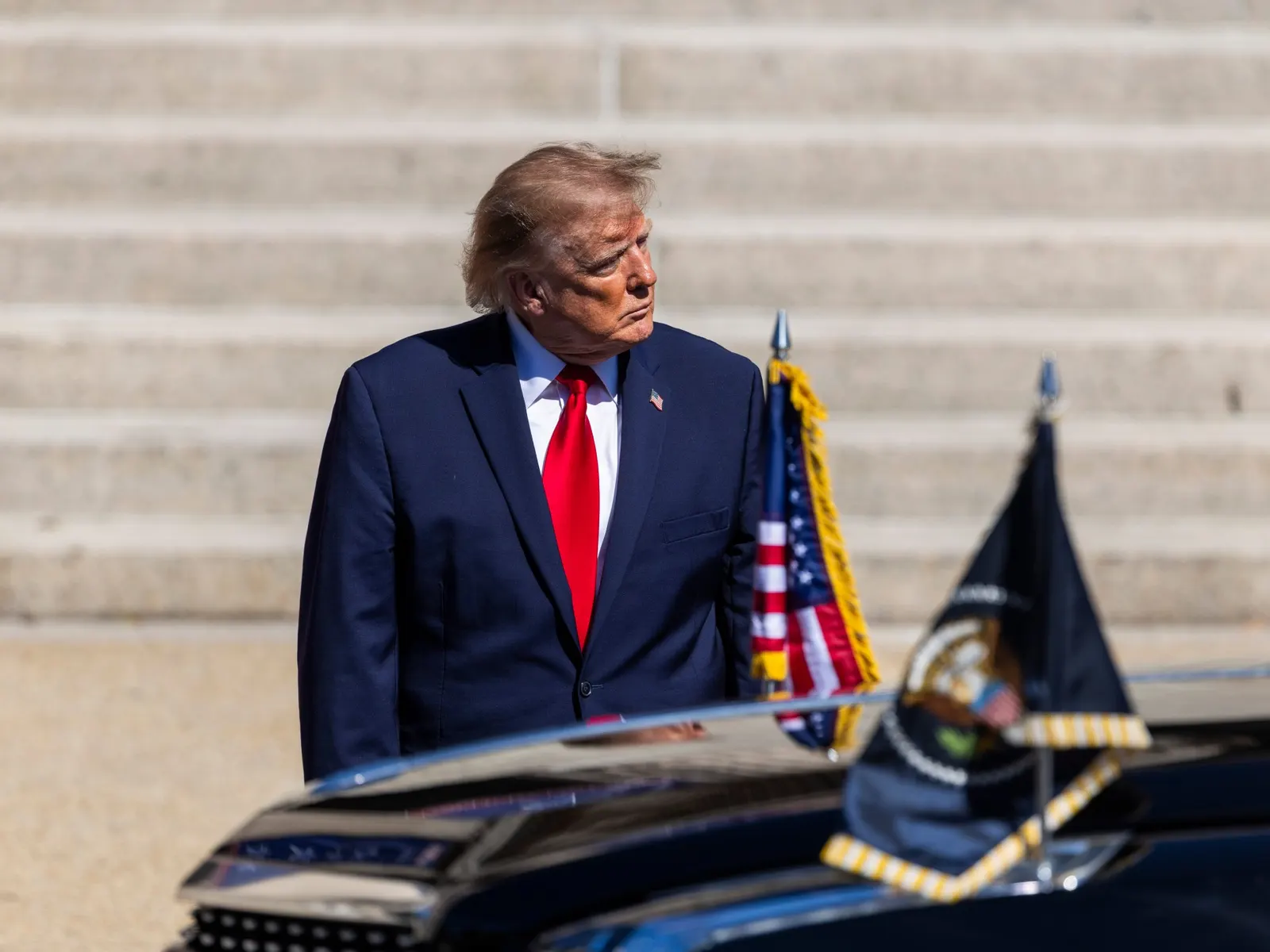
- Trump rejected the proposal but said he expects a deal shortly after the US midterm elections
- Foreign Minister Aragchi said mediators had not formally conveyed Washington's rejection
- Xi Jinping voiced support for a US-Iran return to the June memorandum during talks with Trump
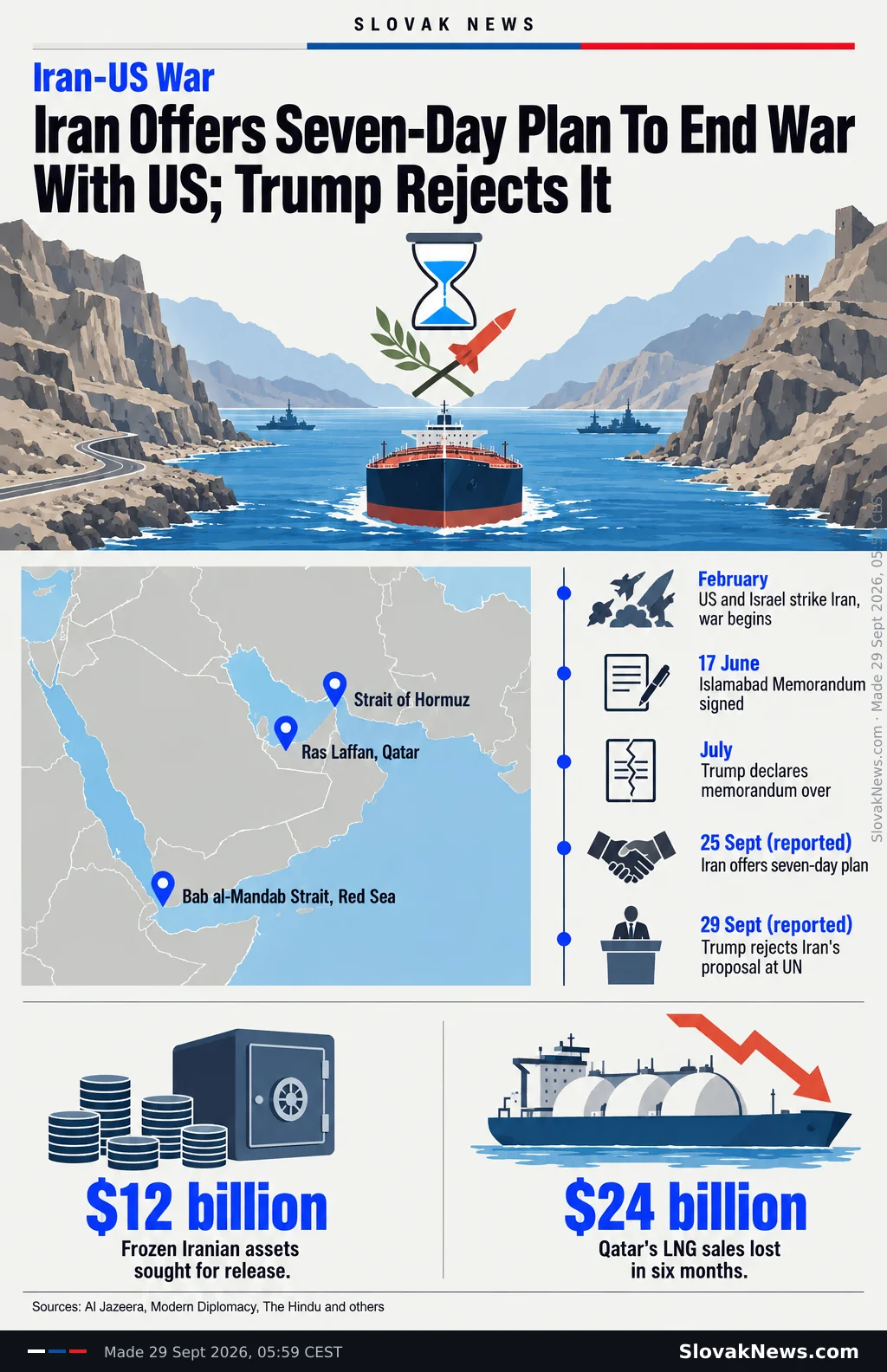
At the United Nations General Assembly in New York, Iran unveiled a week-long framework intended to stop the fighting with the United States and in Lebanon, under which it would allow ships back through the Strait of Hormuz and resume nuclear negotiations if Washington ended its naval blockade, dropped oil sanctions and released frozen funds. President Donald Trump turned down the offer, although officials from both countries kept engaging with mediators separately this week.132
The proposal
Under the plan, Washington would release Iranian assets frozen abroad, estimated at no less than $12 billion, waive sanctions on Iranian oil, and lift the US naval blockade of Iranian ports, according to Al Jazeera. In exchange, ships would be able to pass through the Strait of Hormuz again by the close of the seventh day, with negotiations over Iran's nuclear programme starting right away.1
Foreign Minister Abbas Araghchi said that once the appropriate conditions were satisfied, shipping through the strait could return to normal within a week, noting that what the United States needed to do had already been laid out in the earlier memorandum and that it was now up to Washington to act.4
The Hindu reported that Iran's plan also envisaged unfreezing billions of dollars in assets, ending sanctions on Iranian oil, and lifting the blockade on its ports, though it noted these details came from a single account.3
A collapsed memorandum
The war, triggered by US and Israeli strikes in late February, is nearing its seventh month. A Pakistani- and Qatari-brokered memorandum signed on 17 June set a 60-day window for negotiations, promising a comprehensive ceasefire, a naval blockade lift within 30 days, free Hormuz passage for 60 days and a $300 billion reconstruction fund for Iran, according to Modern Diplomacy. That agreement unravelled within weeks, reportedly because of vague wording over control of shipping lanes through the strait, with the June text setting out two incompatible routes and never specifying who would fund the reconstruction package.21
According to The Hindu, the United States and Iran have reached ceasefire agreements twice before, in April and June, both of which broke down; this account remains single-sourced. According to The Washington Times, the truce called for under the Islamabad memorandum fell apart in July as clashes broke out over control of the strait.36
Diplomacy on parallel tracks
Iranian officials held roughly three hours of talks with US Special Envoy Steve Witkoff, alongside Jared Kushner, on the sidelines of the General Assembly, with Qatar, Pakistan and Egypt acting as mediators, according to Modern Diplomacy. Pakistani Prime Minister Shehbaz Sharif said the "entire Pakistani leadership remained united in its resolve to expedite the peace efforts outlined in the Islamabad MoU," while Iranian President Masoud Pezeshkian said the memorandum "remained totally acceptable to Iran and that Tehran was ready to take it forward."24
During talks with Trump at the White House, Chinese President Xi Jinping said "both parties should resolve differences through dialogue and negotiation and reach a comprehensive agreement that included the nuclear issue," The Diplomat reported. A White House official said the administration was having "positive and constructive discussions" through mediators, though Washington would not rush into a deal, according to The Hindu.41
Rejection and warnings
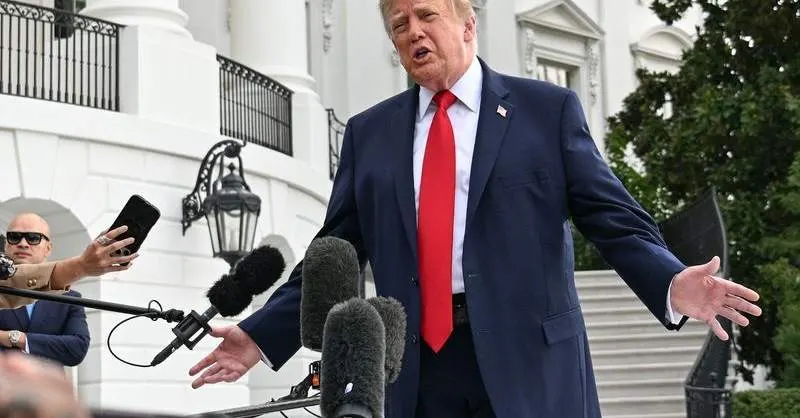
Trump rejected Iran's seven-day proposal, calling the reopening plan unacceptable, according to Modern Diplomacy and The Diplomat. He was also reported to be weighing whether to "annihilate Iran and drive them into hell absent a deal," while saying he believed a deal to end the conflict would come shortly after the midterm elections. A US official told Al Jazeera that the administration felt no urgency to answer Iran's offer.124
Pezeshkian said Iran had no desire to keep fighting, but that ending the war was a decision only the Trump administration could make, adding that Iran "would not bend at knee to Washington." He said Tehran would respond in kind right away if Washington honored its obligations under the memorandum. Iranian officials said they were still waiting to hear back formally from mediators about the ideas being discussed under the Islamabad framework, while also warning of "new military surprises" and saying that any renewed conflict could spread into the Arabian Sea.14
Analysts were sceptical of near-term progress. Paul Musgrave said the US "doesn't want to end the war on unfavourable terms" and warned of "unilateral actions, including perhaps a resumption of warfare," adding that an Iranian diplomatic success "would also mean that Iran would have delivered a really stinging political blow to President Trump." Cyrus Schayegh said nothing had really changed in the diplomatic positions of either side, and analysts said no significant movement toward ending the conflict was likely before the US midterm elections in November. Araghchi said settling matters ahead of the midterm elections would be preferable.1
Regional stakes
Modern Diplomacy argued that none of the three mediating states was neutral. Qatar lost about $24 billion in liquefied natural gas sales in the war's first six months, shipping just 18 LNG cargoes against 509 a year earlier, after an Iranian strike on Ras Laffan in March took out 17 percent of its LNG capacity for up to five years. Roughly 90 percent of Pakistan's oil imports pass through the Gulf, and in 2025 it entered into a defence agreement with Saudi Arabia, later deploying fighter jets to the kingdom that April as part of the pact. Egyptian President Abdel Fattah el-Sisi has estimated that Egypt has forfeited roughly $10 billion in canal earnings.2
Tensions extended beyond the Iran-US track. The Diplomat reported that Houthi forces seized the whole of Yemen's Red Sea coastline, including the Bab al-Mandab Strait, prompting senior military figures from Saudi Arabia, Türkiye and Pakistan to meet under the joint Makkah defence pact to weigh measures backing Saudi Arabia against Houthi assaults. Al Jazeera noted that in normal times, roughly a fifth of the world's oil and gas shipments pass through the Strait of Hormuz.241
Why it matters
The Strait of Hormuz and Gulf LNG routes are central to global energy supplies, and disruption has already cut Qatari gas exports sharply, with implications for markets that include Europe. A durable end to the war would affect oil and gas flows and shipping security far beyond the region.21
Videos
Related stories
same actors
follow-up
follow-up
Version history
- version 1 ·