World · Islamic Republic of Iran, United States of America
Iran warns of unrestricted retaliation as Trump says targets remain
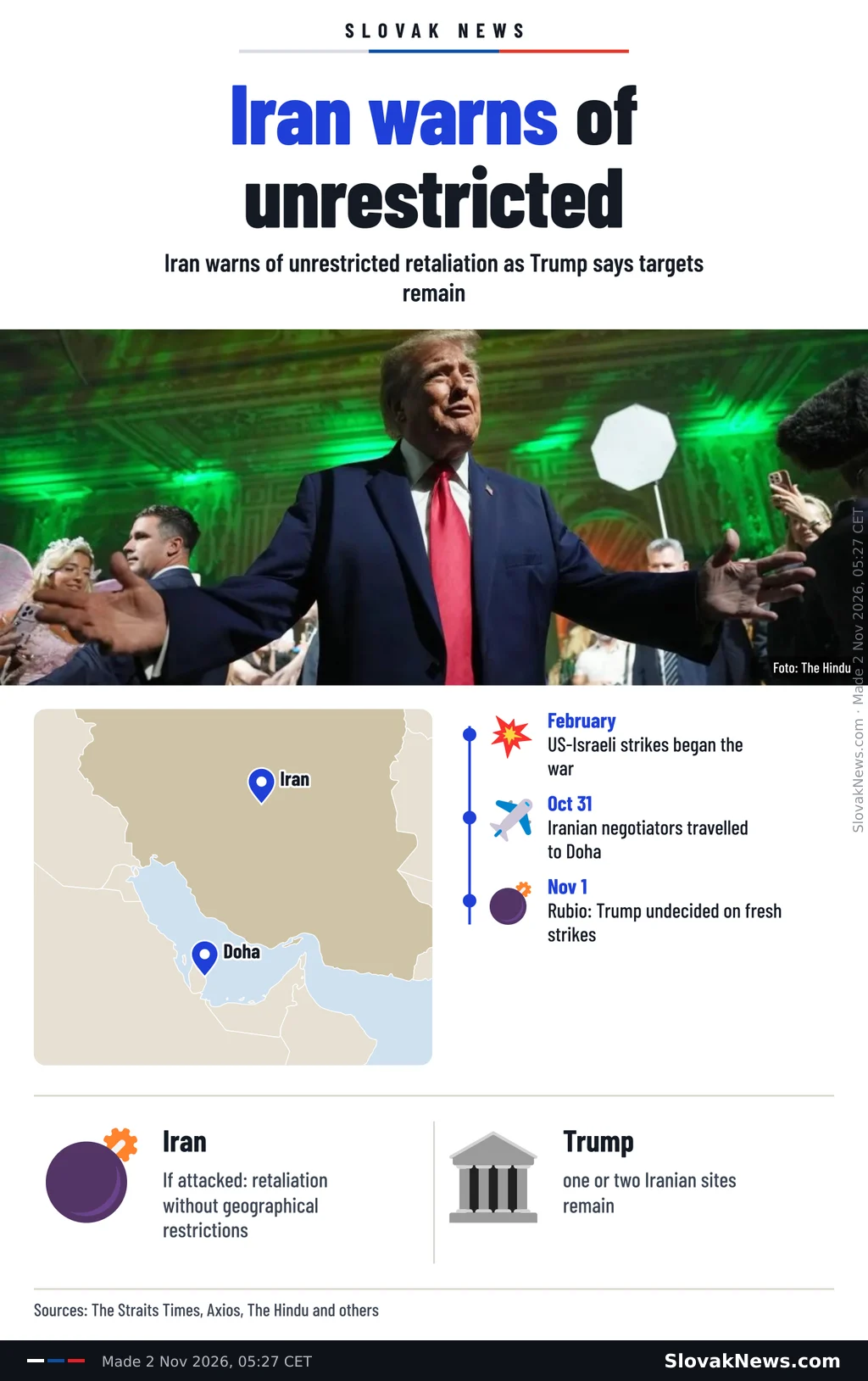
Iran’s supreme leader ordered preparations for a response beyond geographical limits to renewed attacks. Trump said US targets remained in Iran, while diplomatic contacts continued.
Listen to the story
Short version
Iran warned of retaliation without geographical restrictions if attacks resume. Trump said targets remained, while diplomatic efforts continued.
- Khamenei ordered commanders to revise targets involving US and Israeli assets.
- Trump said one or two Iranian sites remained to be addressed.
- Rubio said no decision on fresh strikes had been made.
- Iran received Vance’s letter, The Straits Times reported.
Infographic
What's new
- Khamenei ordered commanders to revise their list of US and Israeli targets.
- Trump said one or two Iranian sites remained to be addressed.
- Iran received a letter from Vance aimed at restarting negotiations, The Straits Times reported.
Iran’s supreme leader, Mojtaba Khamenei, ordered his commanders to prepare an immediate response without geographical restrictions to renewed threats against Iran, according to reports published on October 31. In remarks reported on November 1, US President Donald Trump said American forces still had targets in Iran, as diplomatic efforts continued to prevent further fighting.134
Infographic
Warnings and remaining targets
Khamenei also instructed commanders to revise their list of US and Israeli assets to be targeted, Arab News reported. According to The Straits Times, he said Iran’s armed forces and people would decide the timing and terms of an end to any renewed attacks.14
According to Axios, the statement came after an announced gathering involving Iran’s three highest-ranking military commanders, apparently the first meeting of its kind since the war started. Iranian army spokesman Mohammad Akraminia separately warned that another American attack would extend the conflict to a broader area, The Straits Times reported.12
Trump said the United States had destroyed much of Iran’s military capability and nuclear programme, according to The Straits Times and The Hindu. He said one or two sites remained and could be dealt with in 10 minutes, The Straits Times reported.13
The Hindu quoted Trump as saying the United States was “not in a hurry to take offensive action”. According to The Straits Times, Marco Rubio, the US secretary of state, said no decision had been made by Trump on launching new strikes and that Washington was still open to a diplomatic approach. Axios reported that Trump was considering major strikes after the US midterm elections.123
Diplomacy alongside blockades
The Straits Times reported that Vice-President J.D. Vance, acting at Trump’s direction, sent a letter to Iranian security chief Mohsen Rezaei to restart negotiations and avert further strikes. Iran confirmed receiving it but had announced no reply. Axios also reported diplomatic contacts involving Vance and Iran’s foreign minister.12
Qatar and Pakistan were mediating without having secured a lasting agreement, according to The Straits Times. Arab News reported that Iranian negotiators had travelled to Doha for talks with Qatari mediators. The Straits Times said no meetings between Iranian and American officials were currently planned.14
The war began with US-Israeli strikes in late February that killed Iran’s then supreme leader, Ayatollah Ali Khamenei, and senior military commanders, The Straits Times reported. Iran subsequently targeted US assets across the Middle East and Israel. The newspaper said Iran had blockaded the Strait of Hormuz since the war began, while Washington had imposed a blockade on Iranian ports.1
Rezaei said Iran would maintain its Hormuz blockade until its conditions, including the release of frozen assets, were met, according to The Straits Times. The newspaper also reported that a ship struck a mine and caught fire in the strait; Iran’s Revolutionary Guards said three oil tankers had been stopped following incidents or mine strikes.1
Why it matters
For European readers, the conflict’s energy implications are a central consideration: the Strait of Hormuz normally carries about one-fifth of worldwide oil consumption, according to The Straits Times. The newspaper reported that the blockade had driven up global energy prices.1
Videos
Related stories
same actors
same actors
Version history
- version 1 ·